
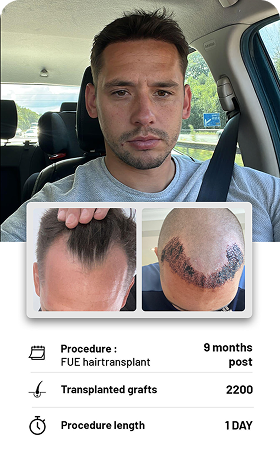
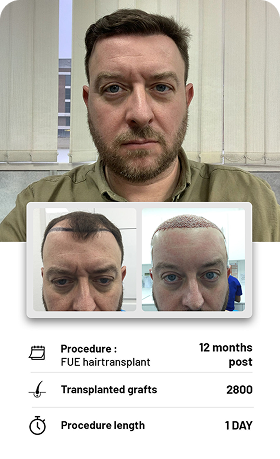
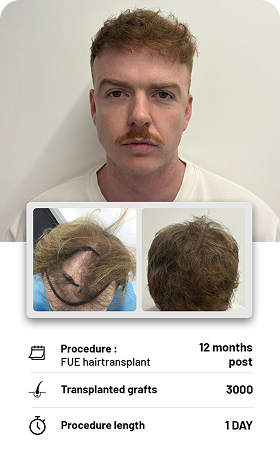
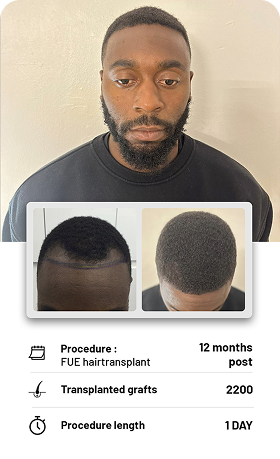
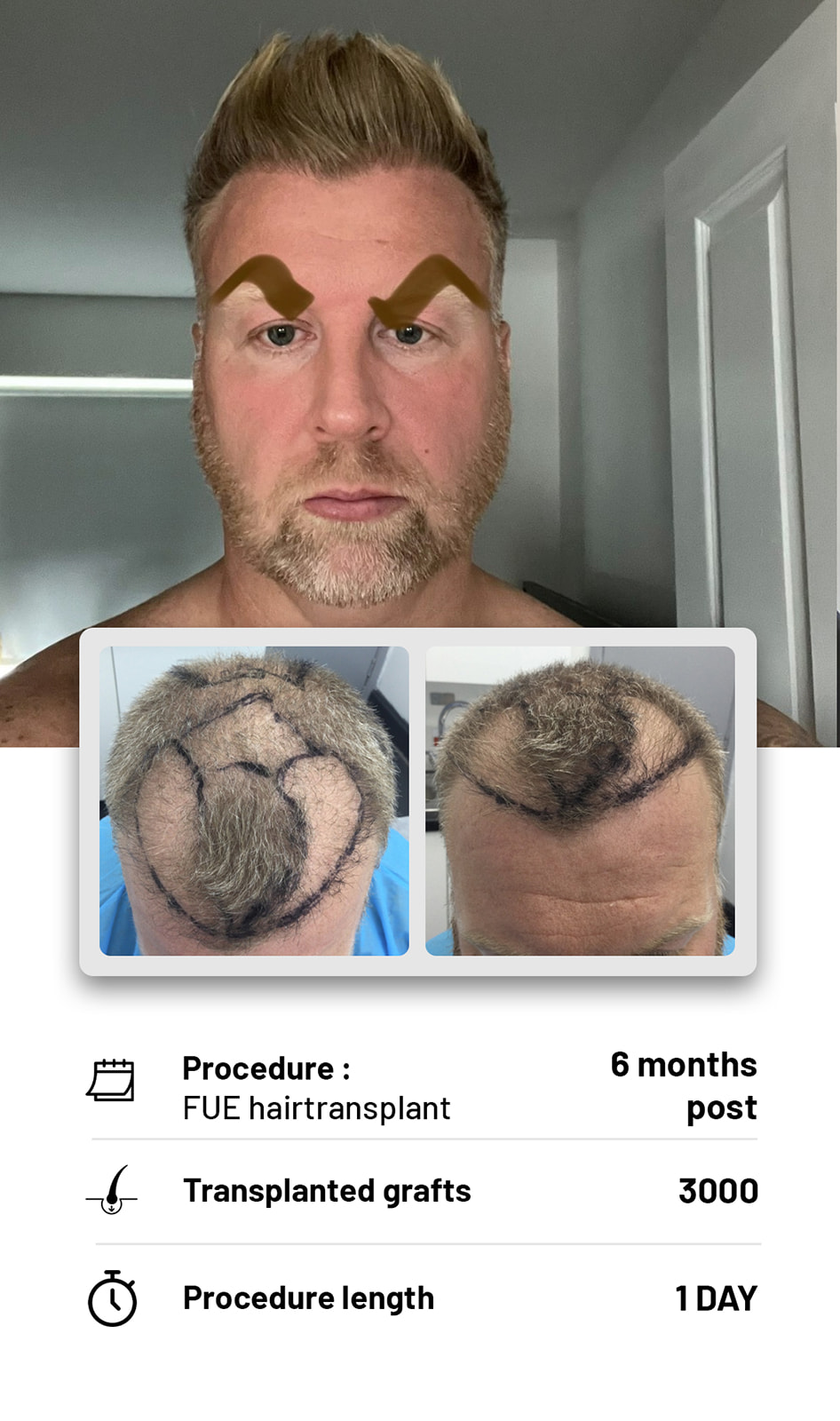
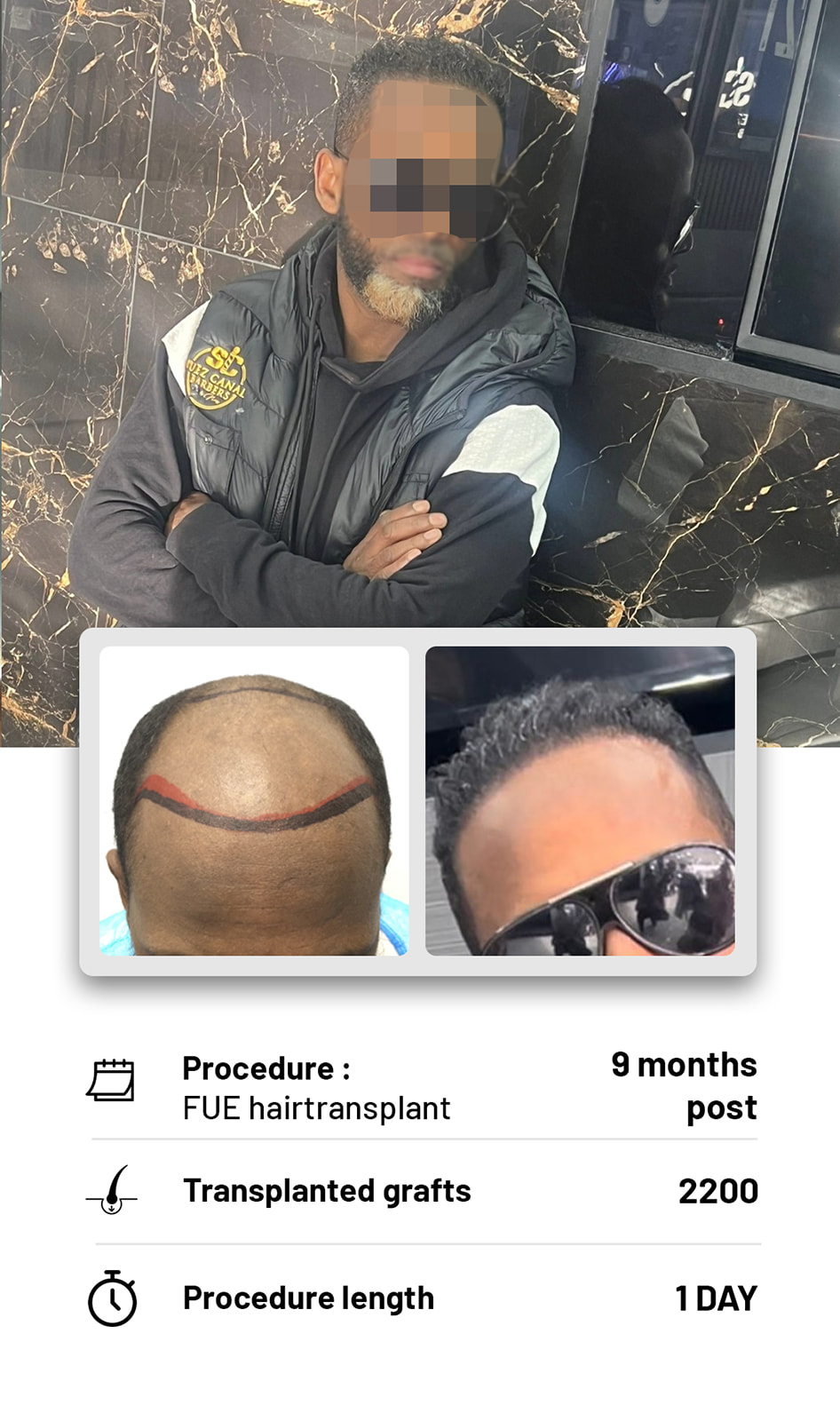
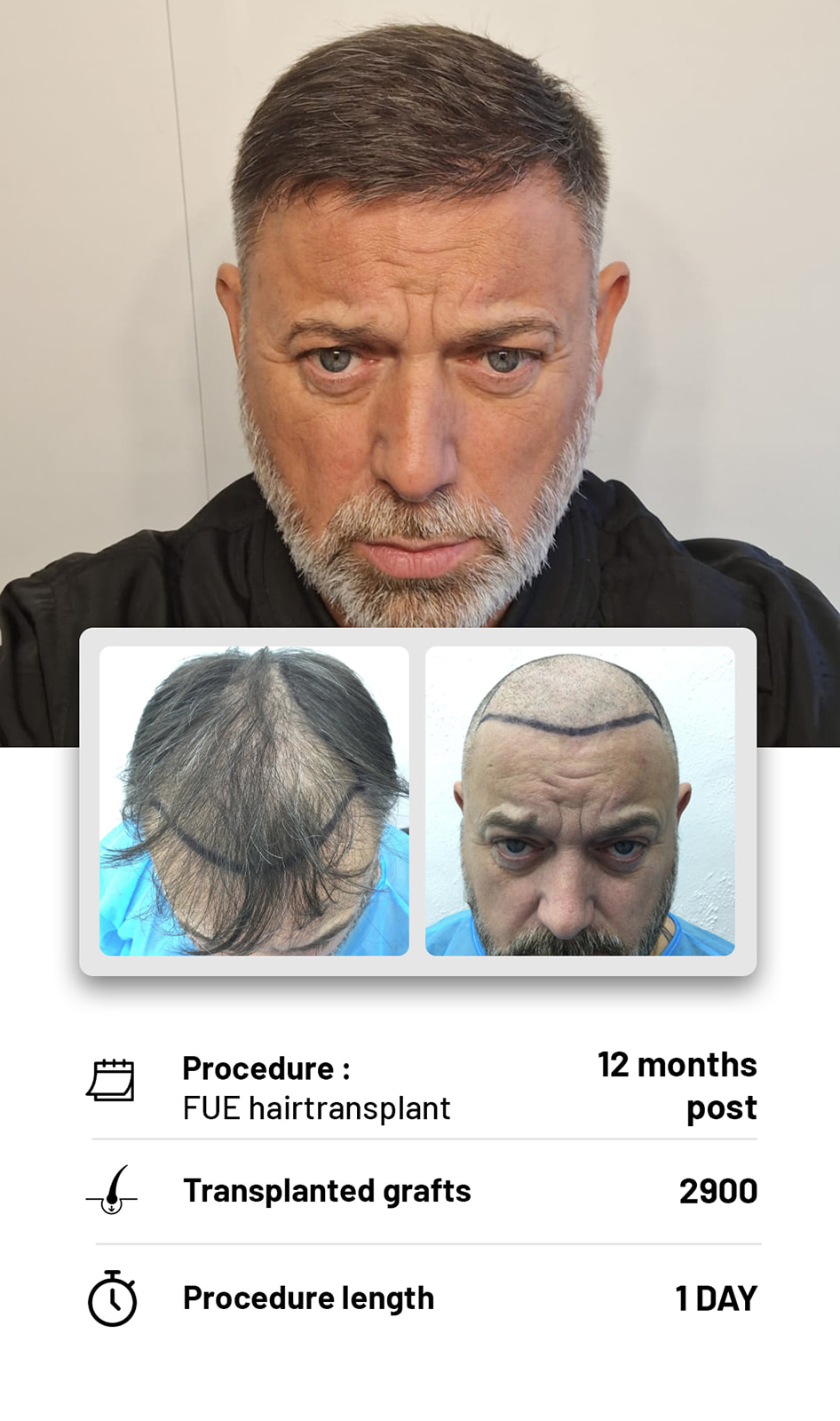
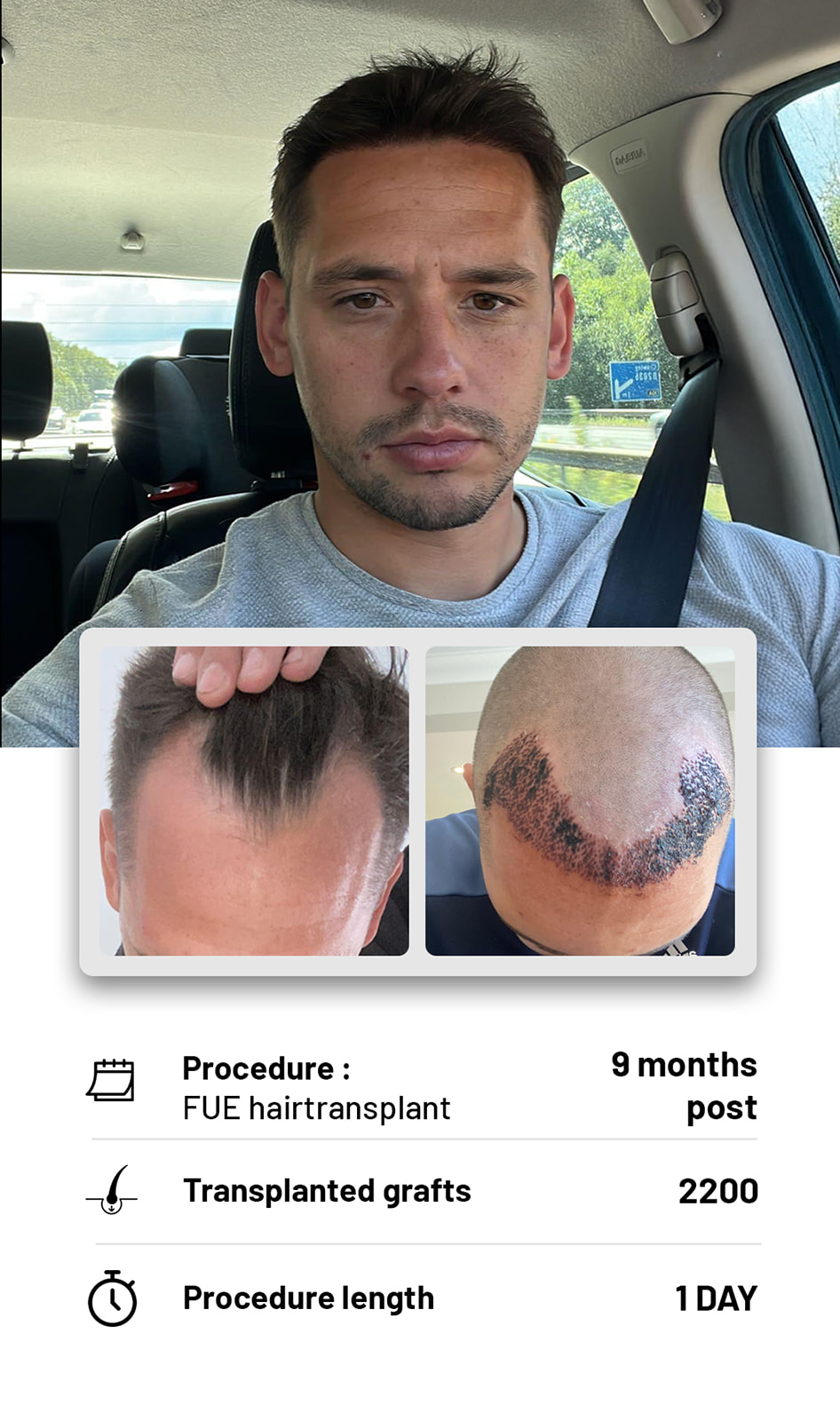
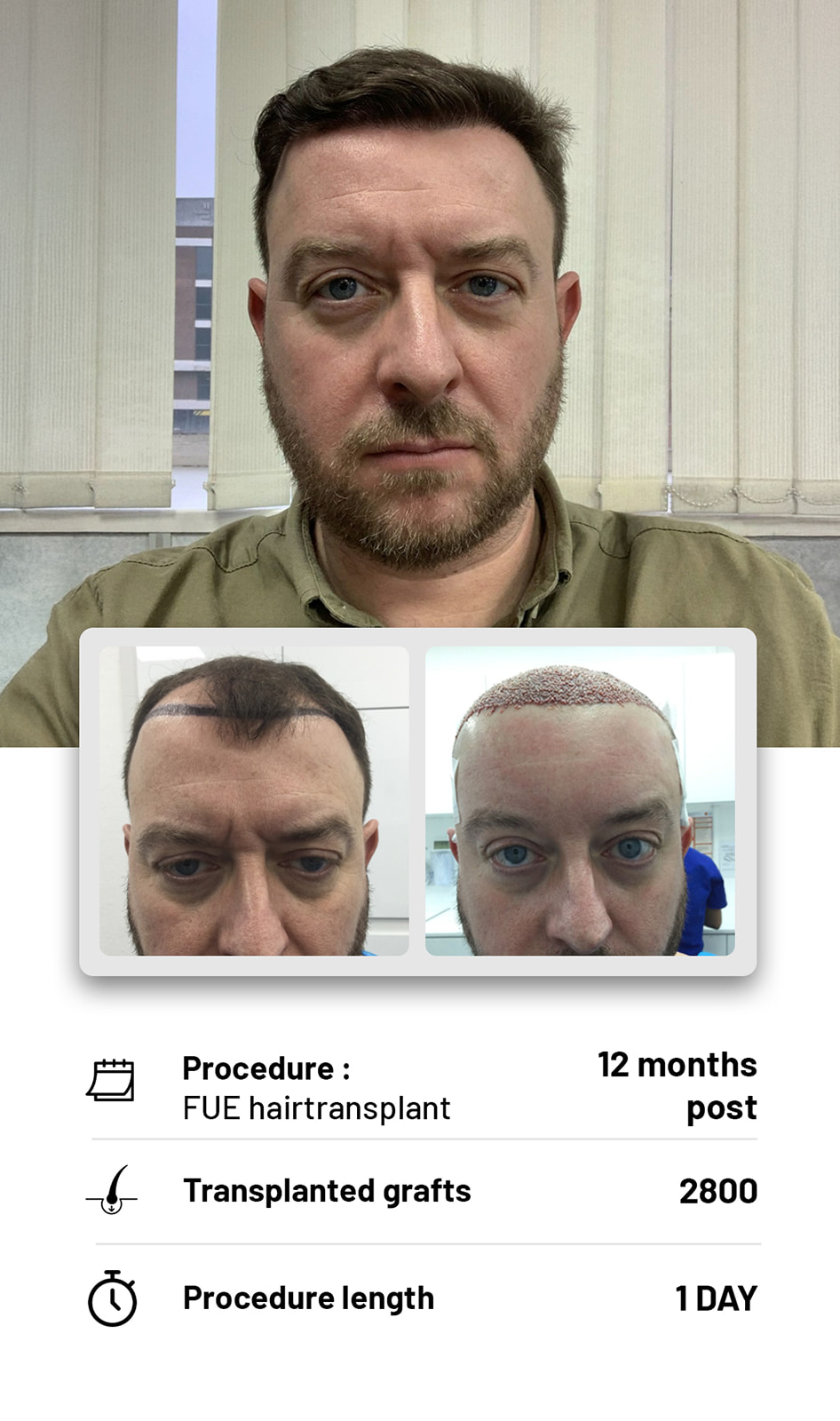
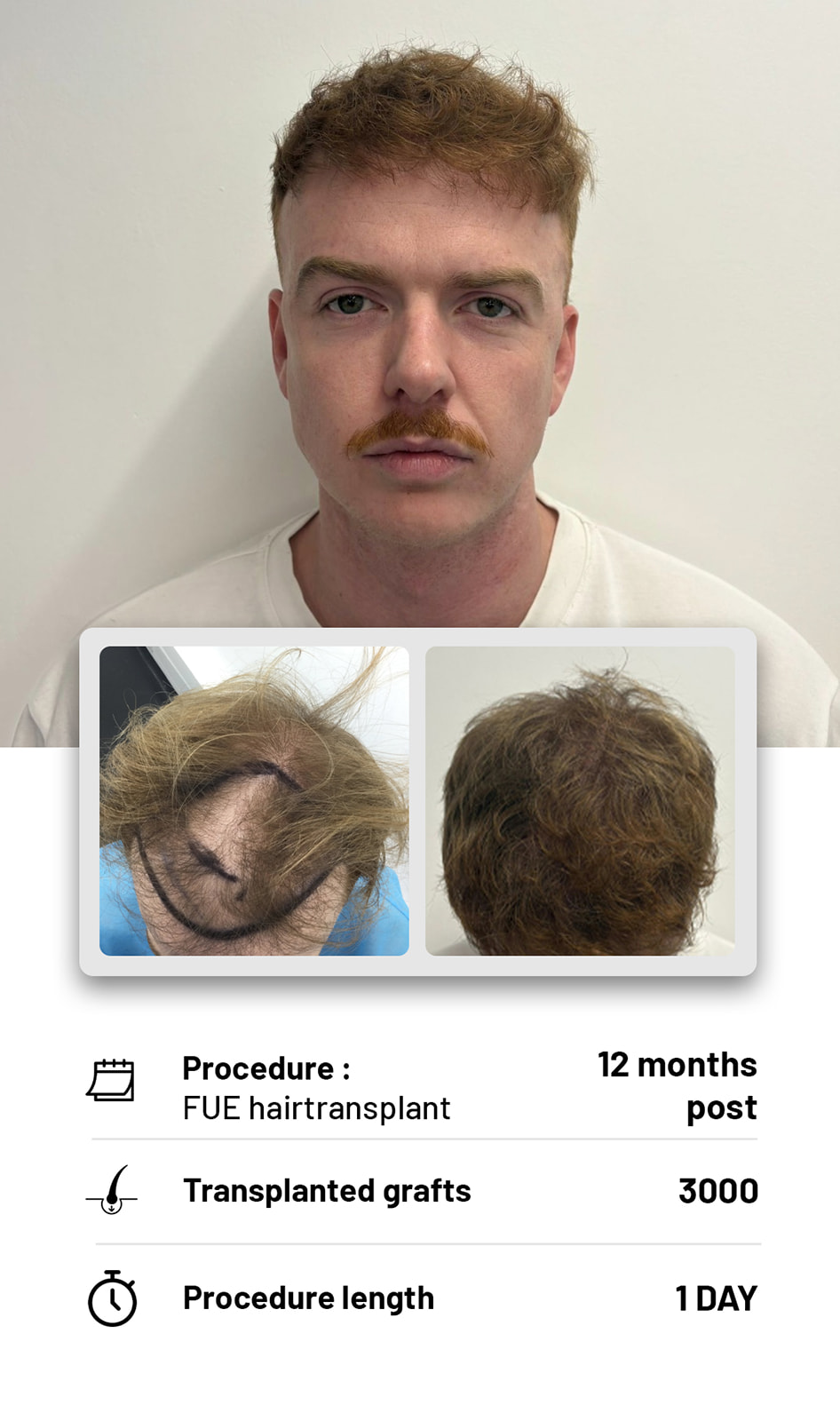
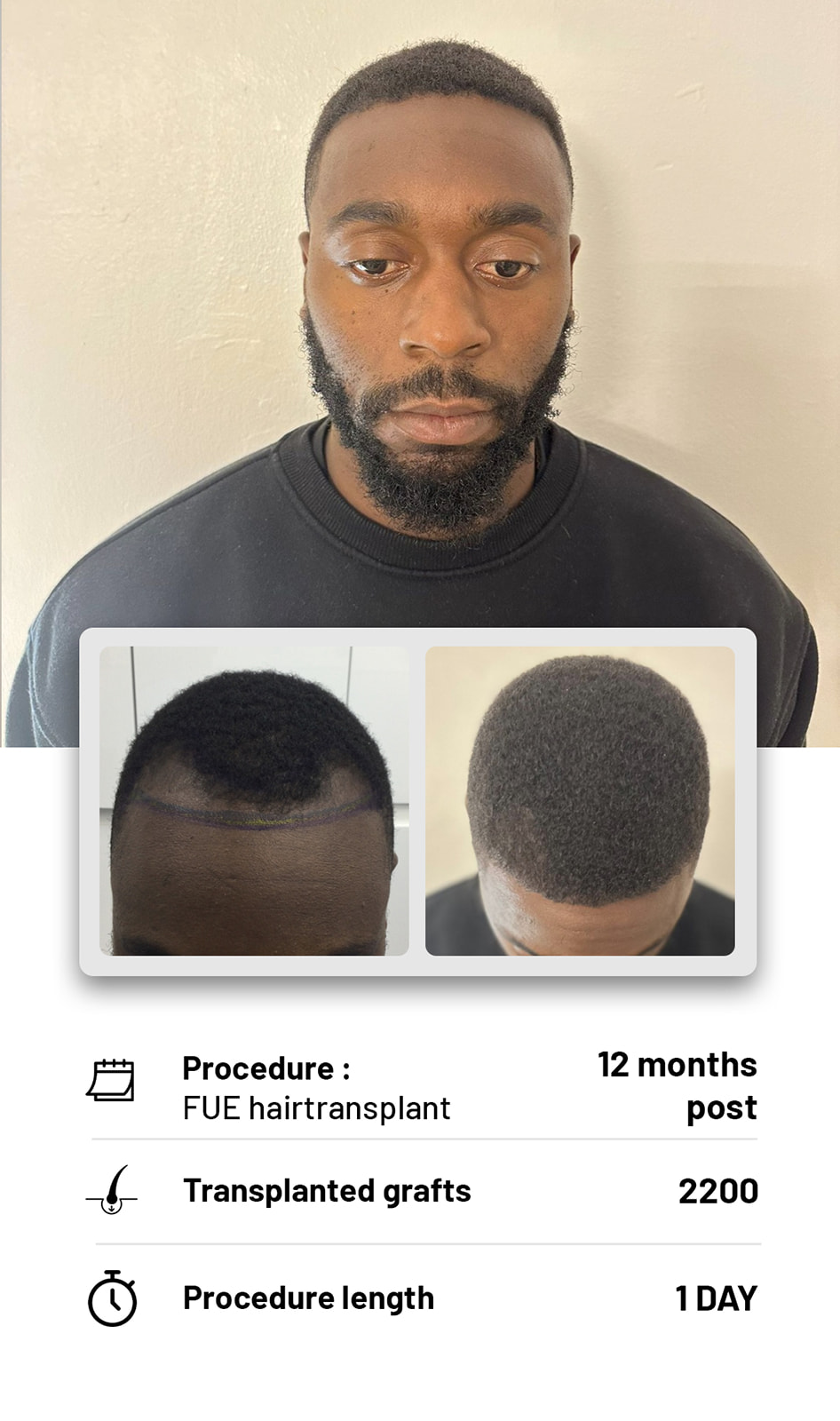
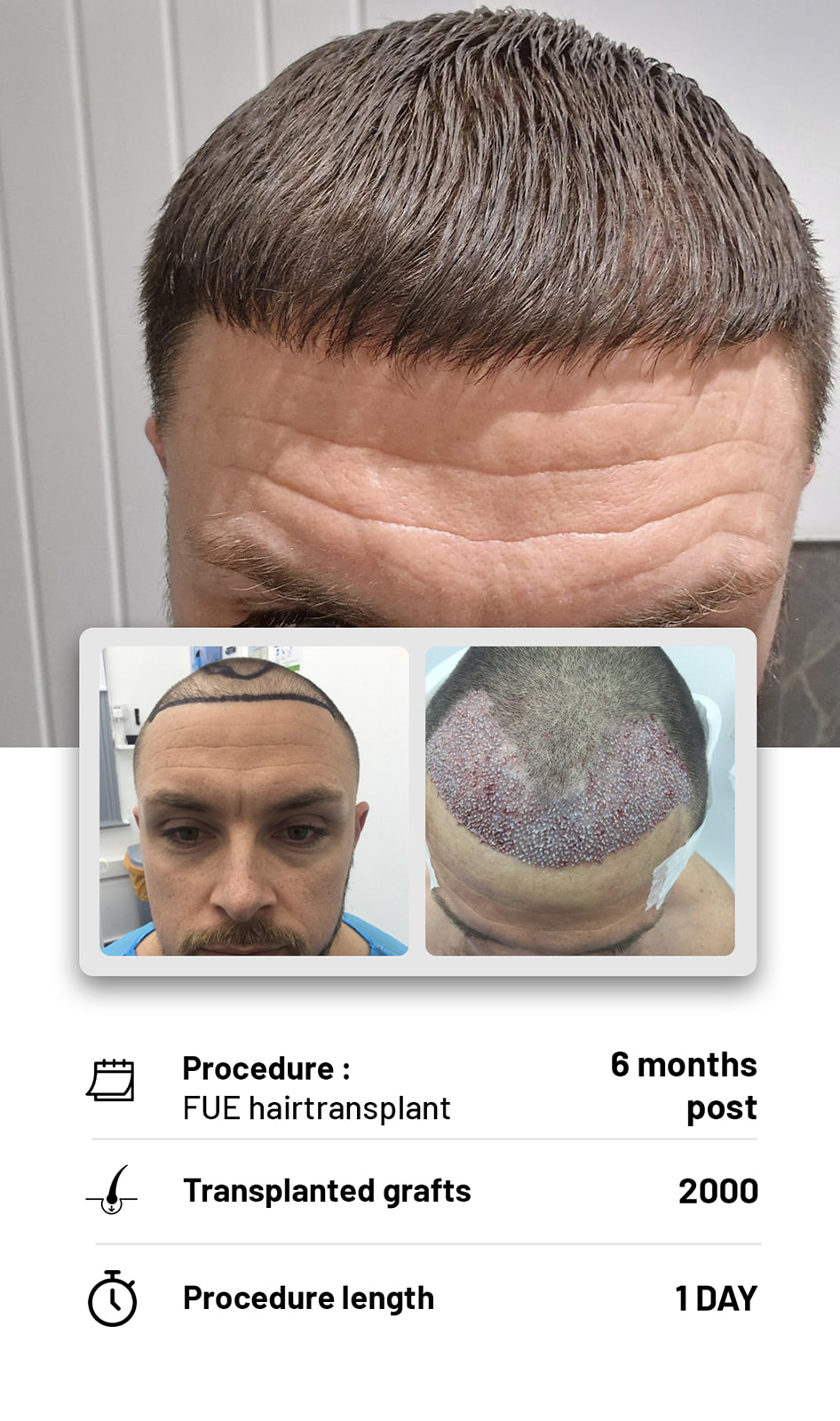
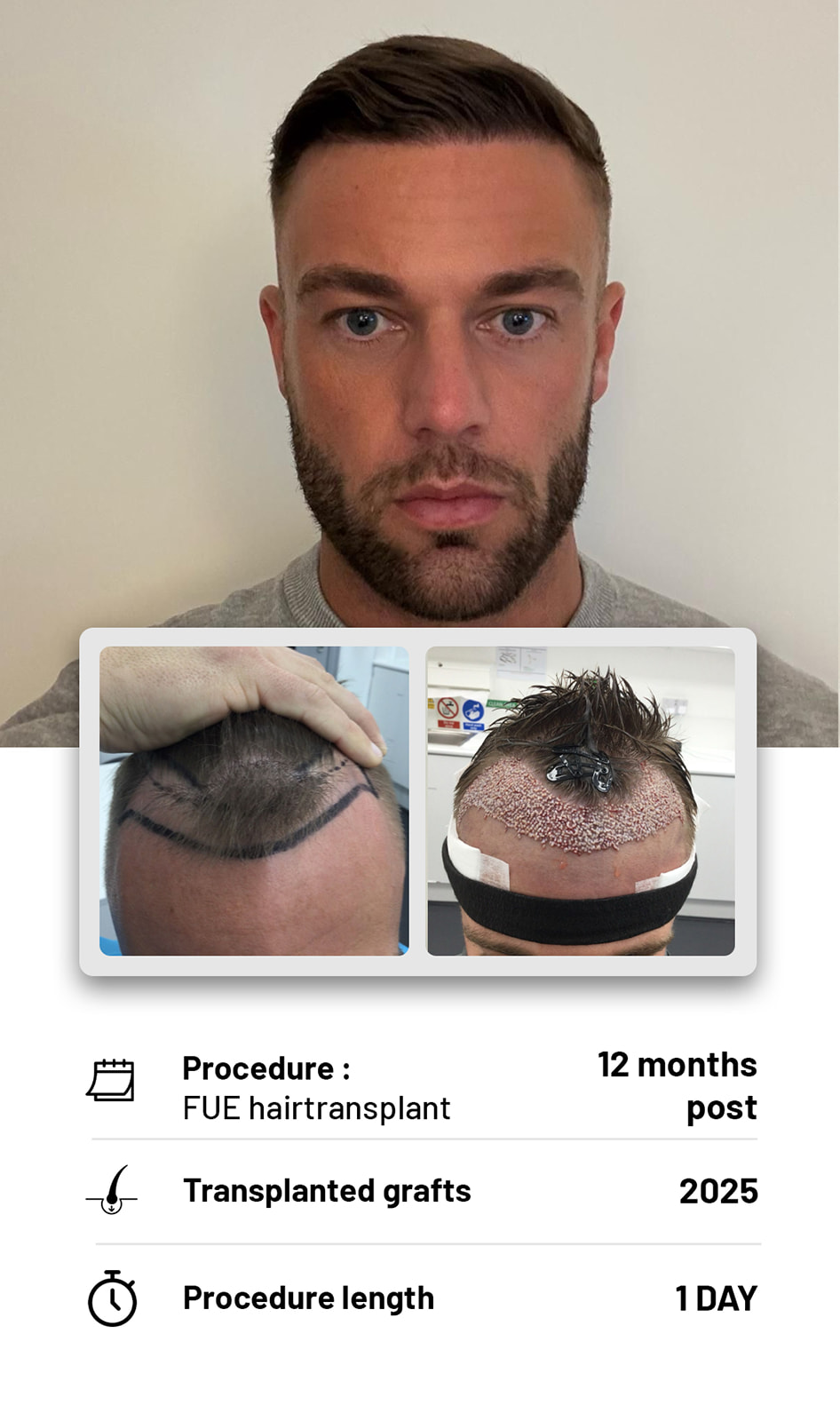
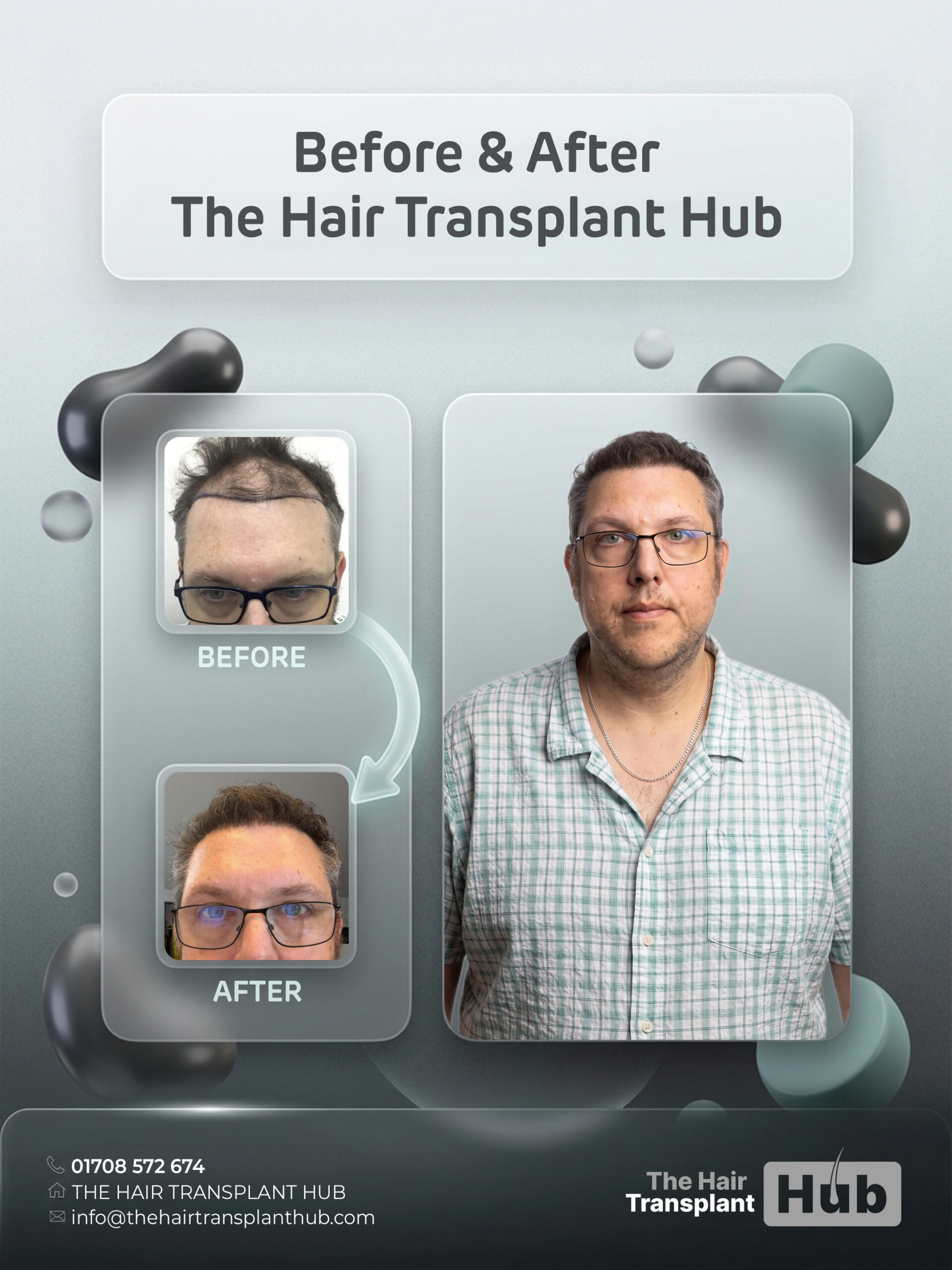
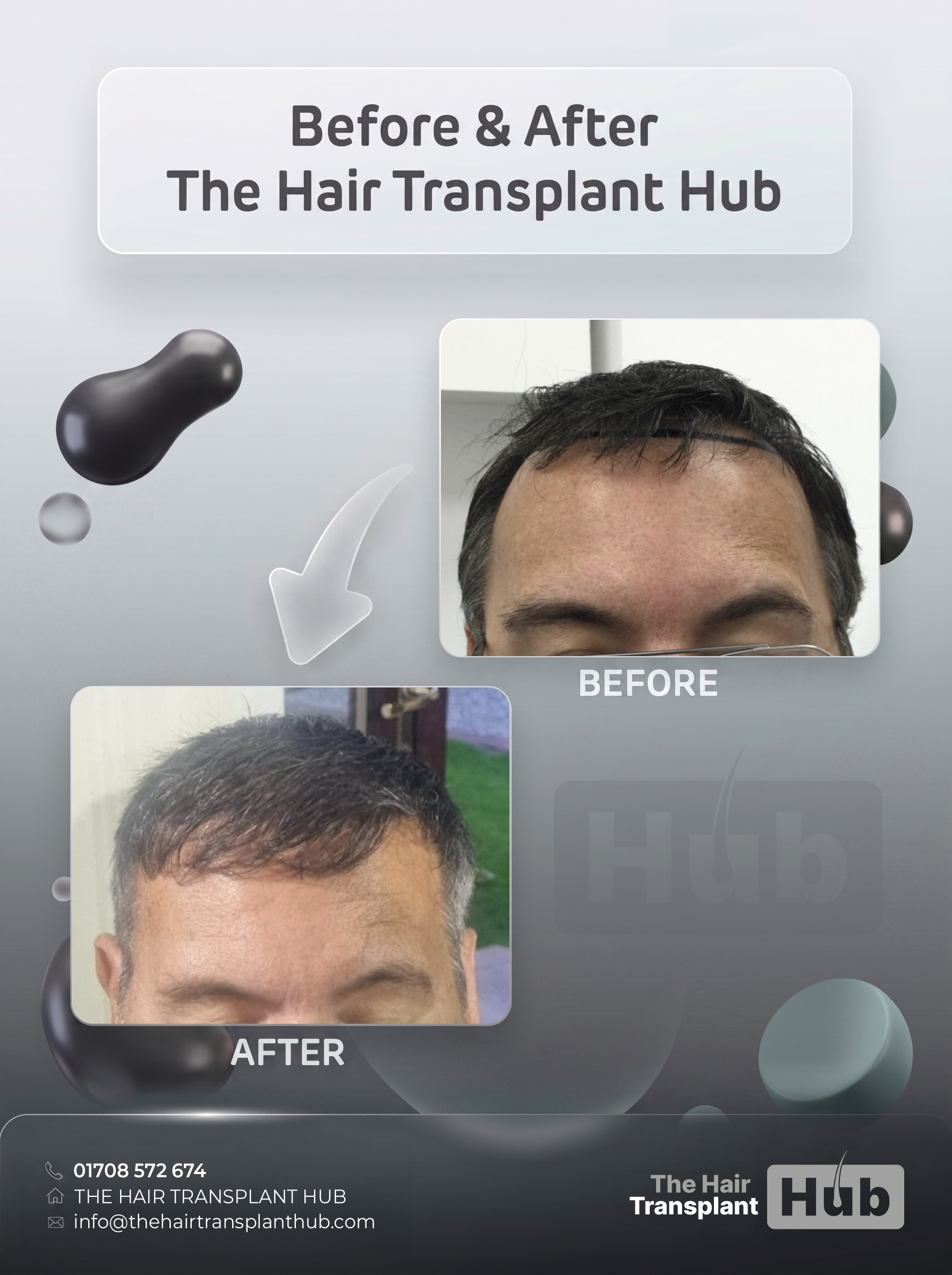
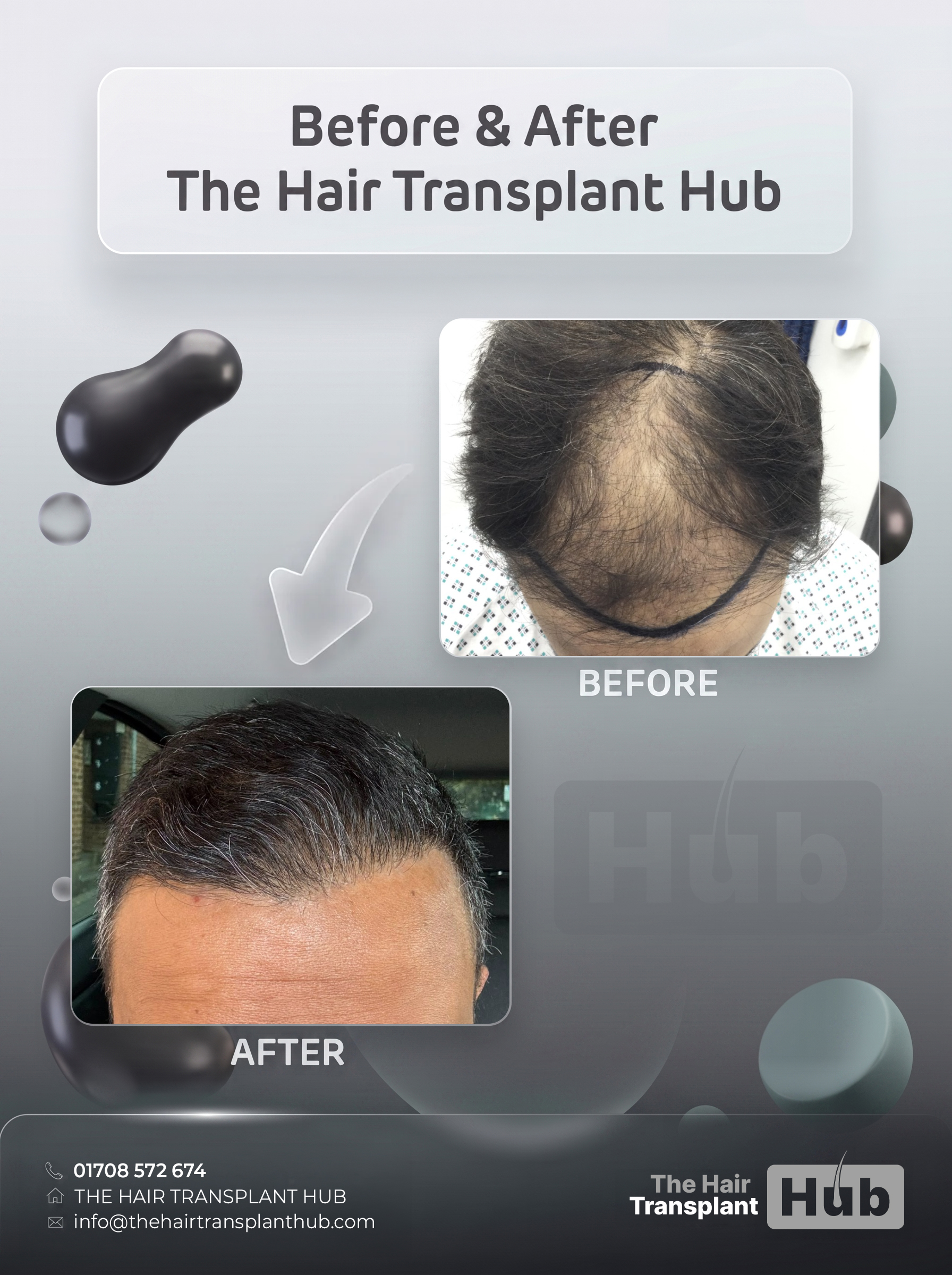
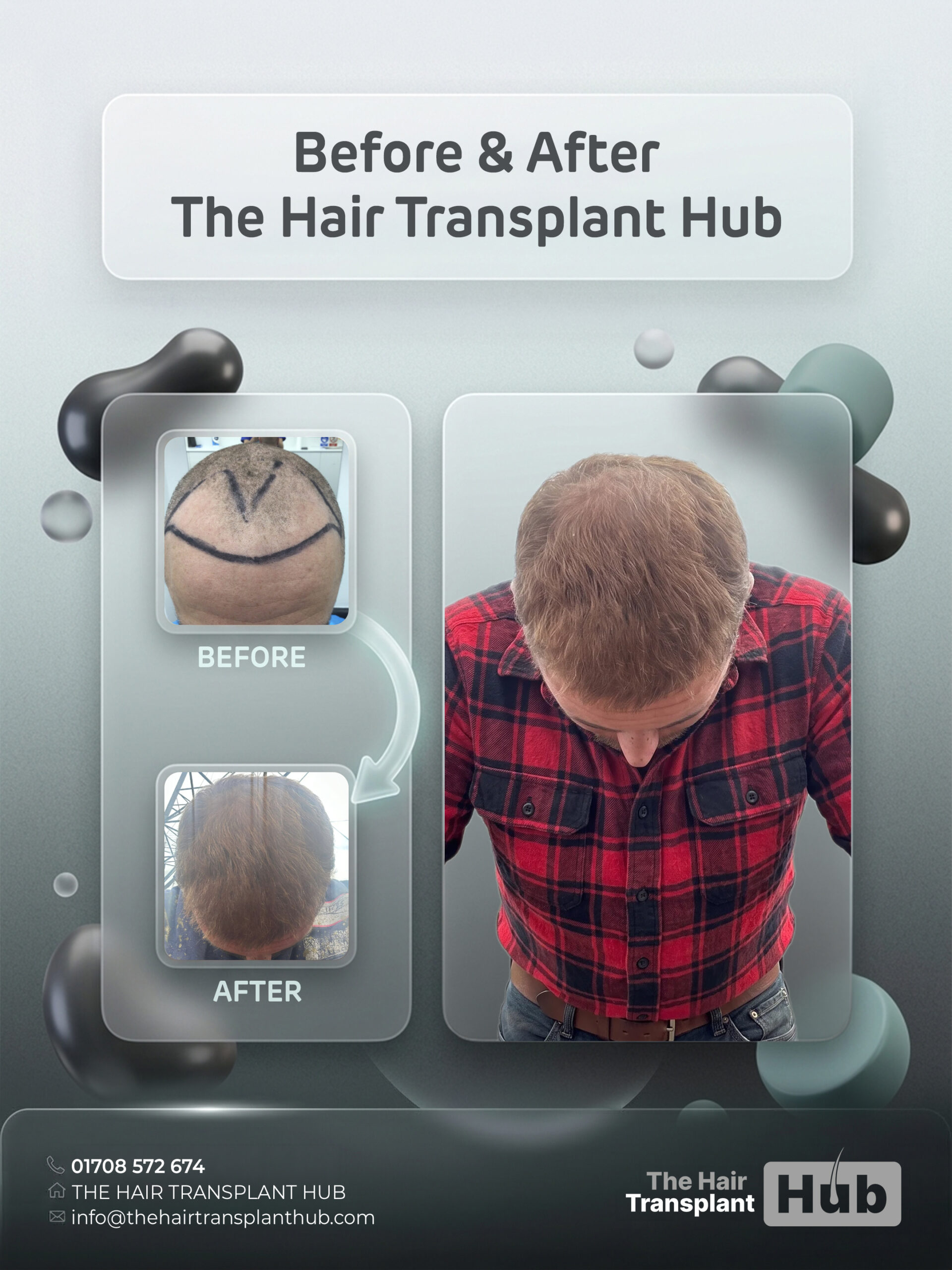
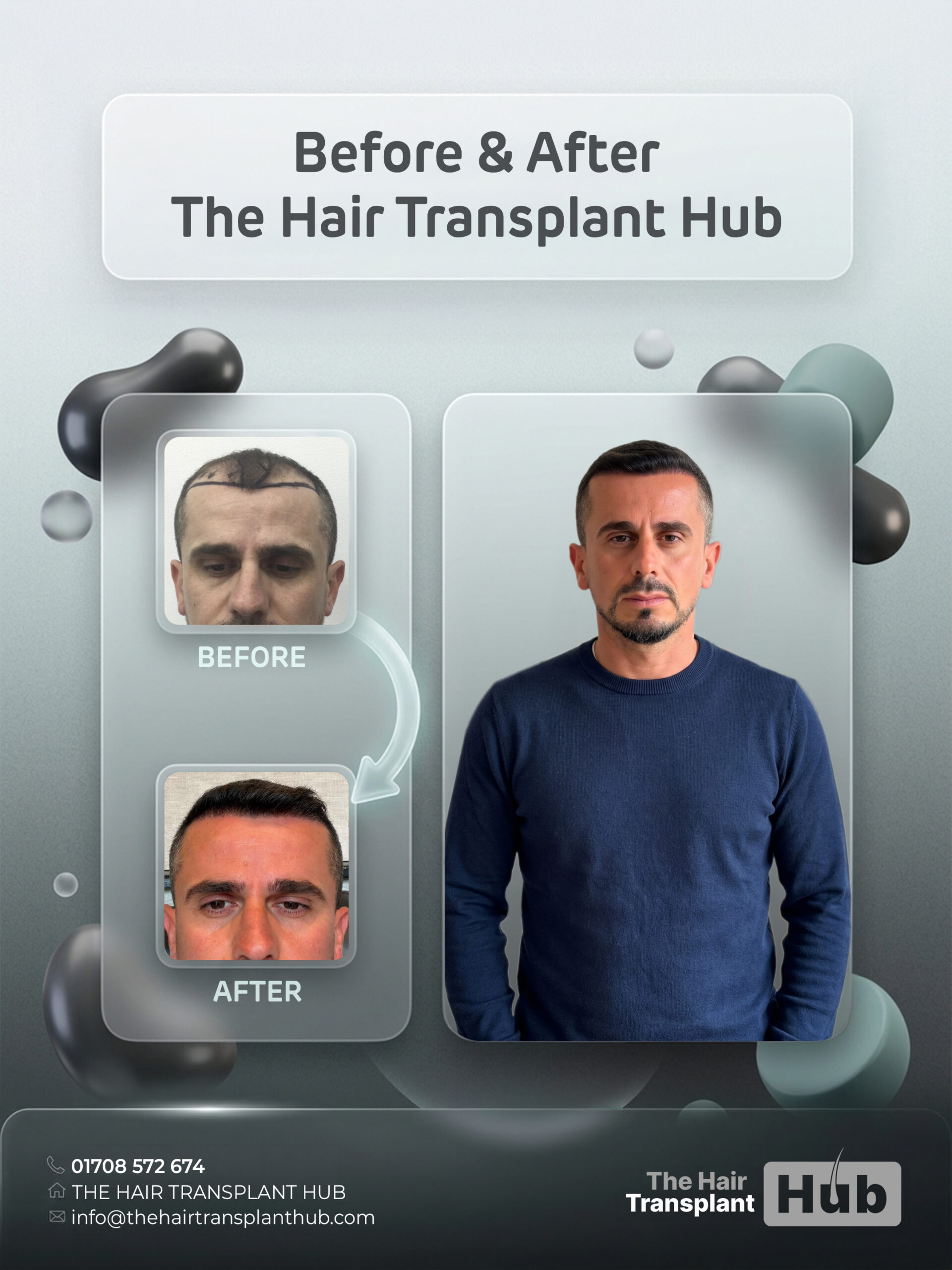
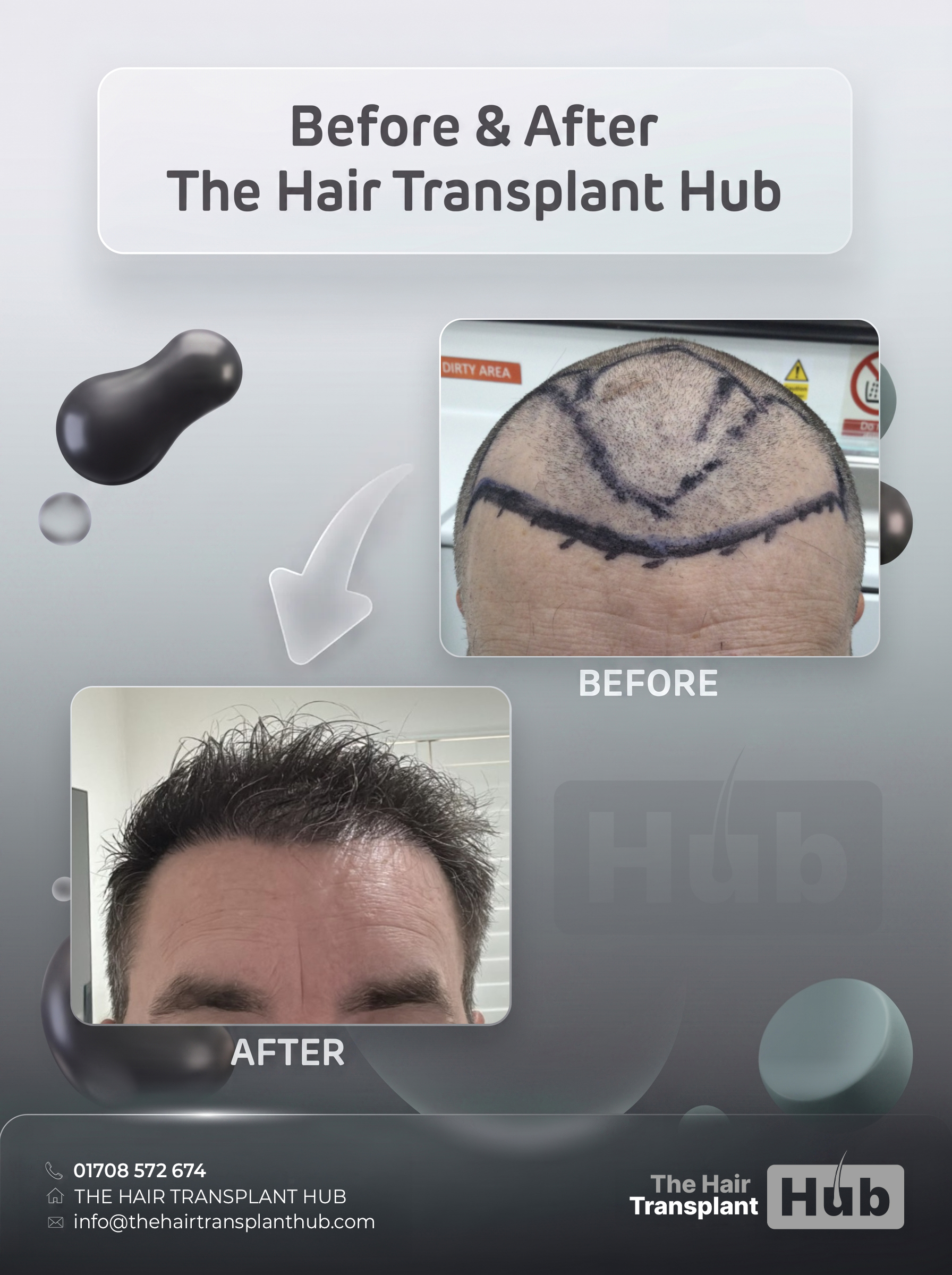
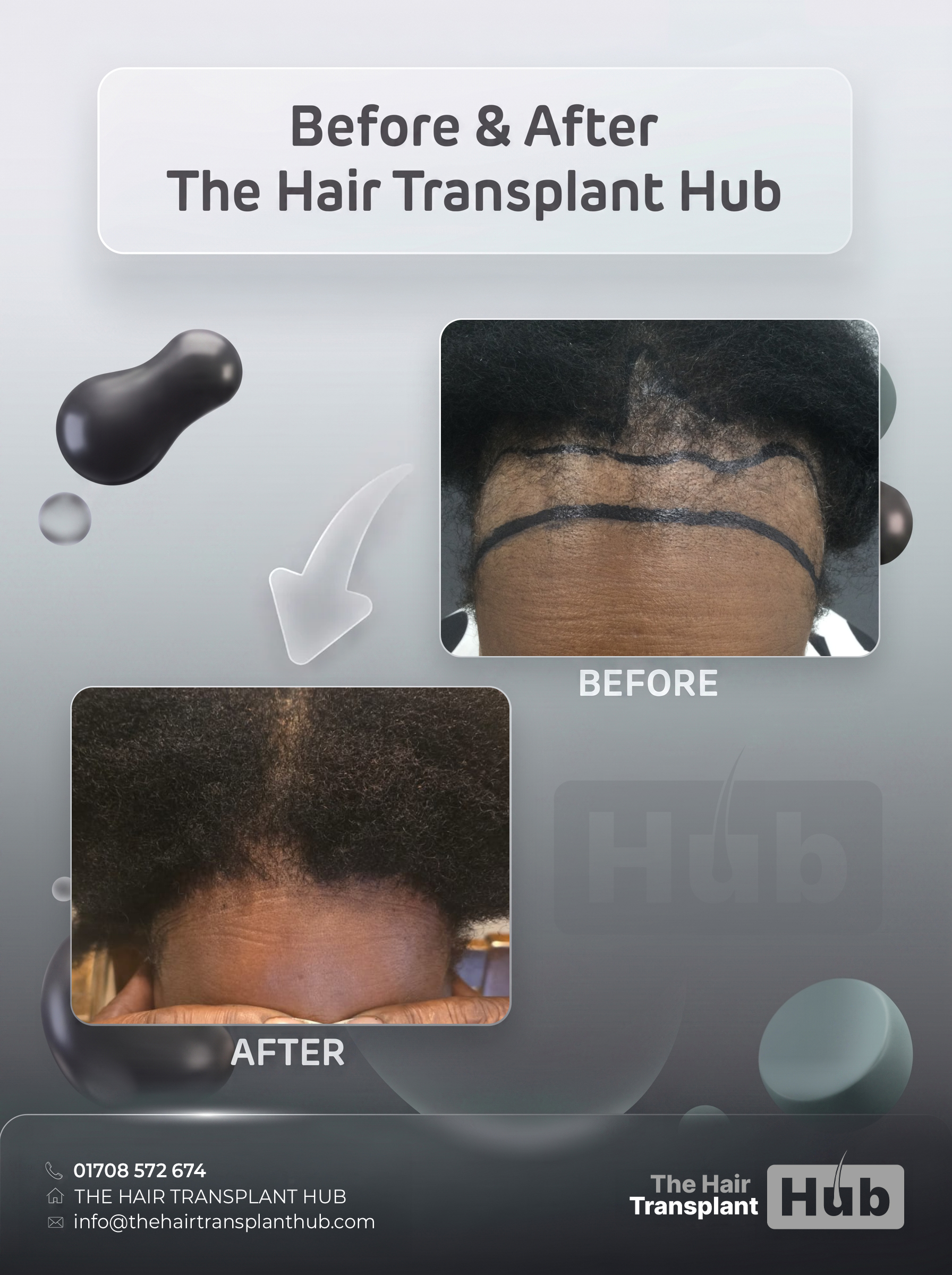
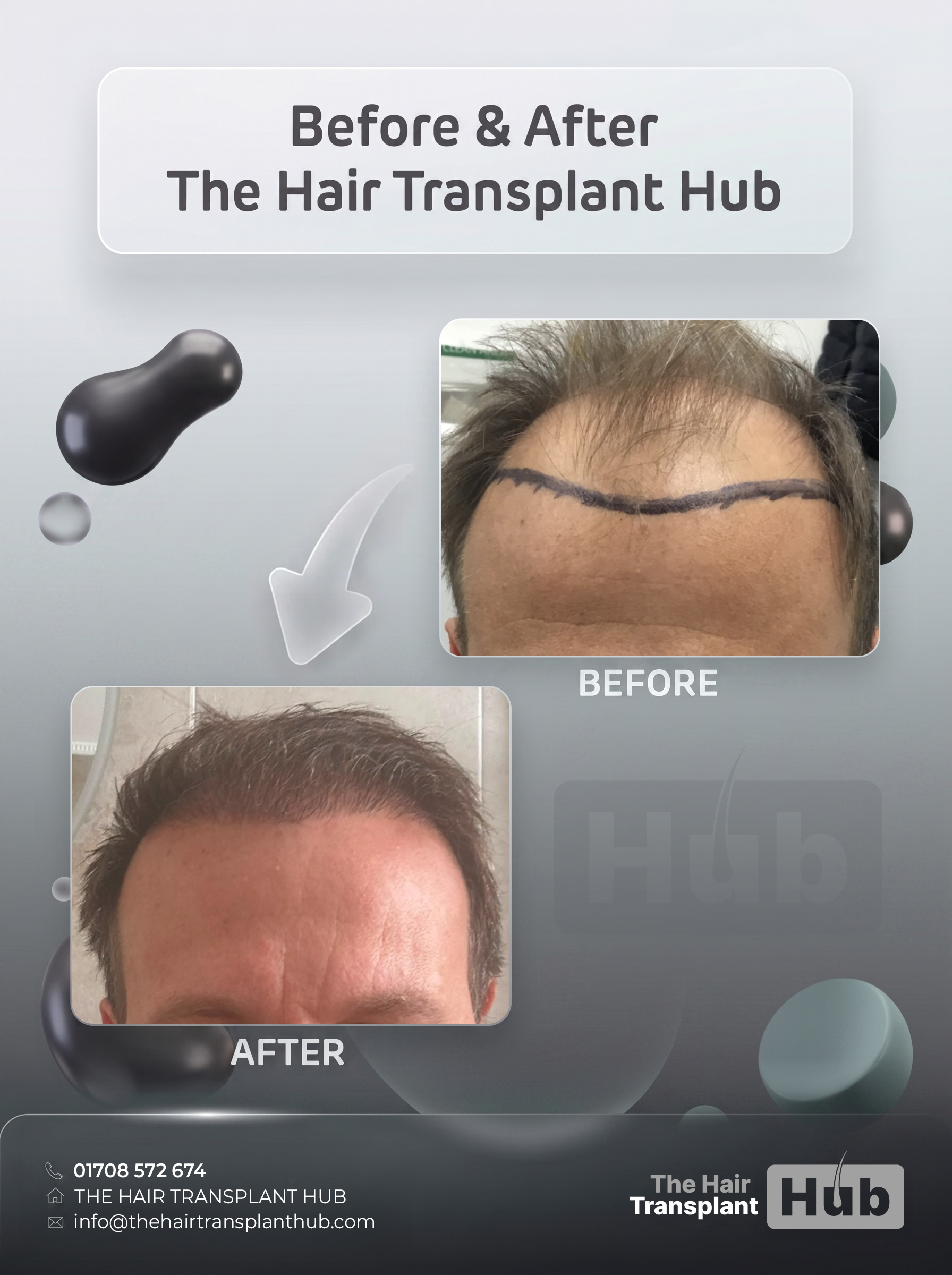
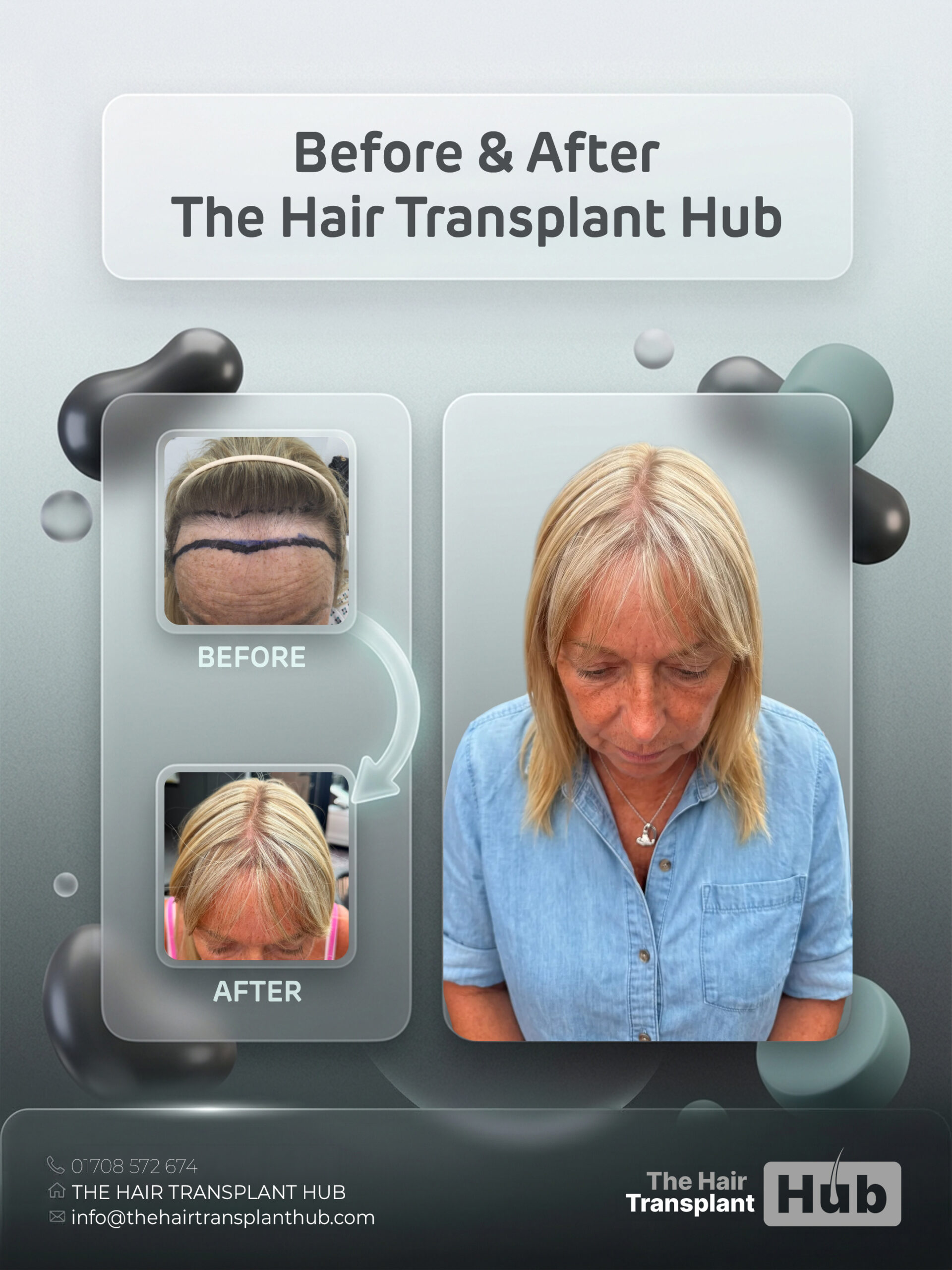
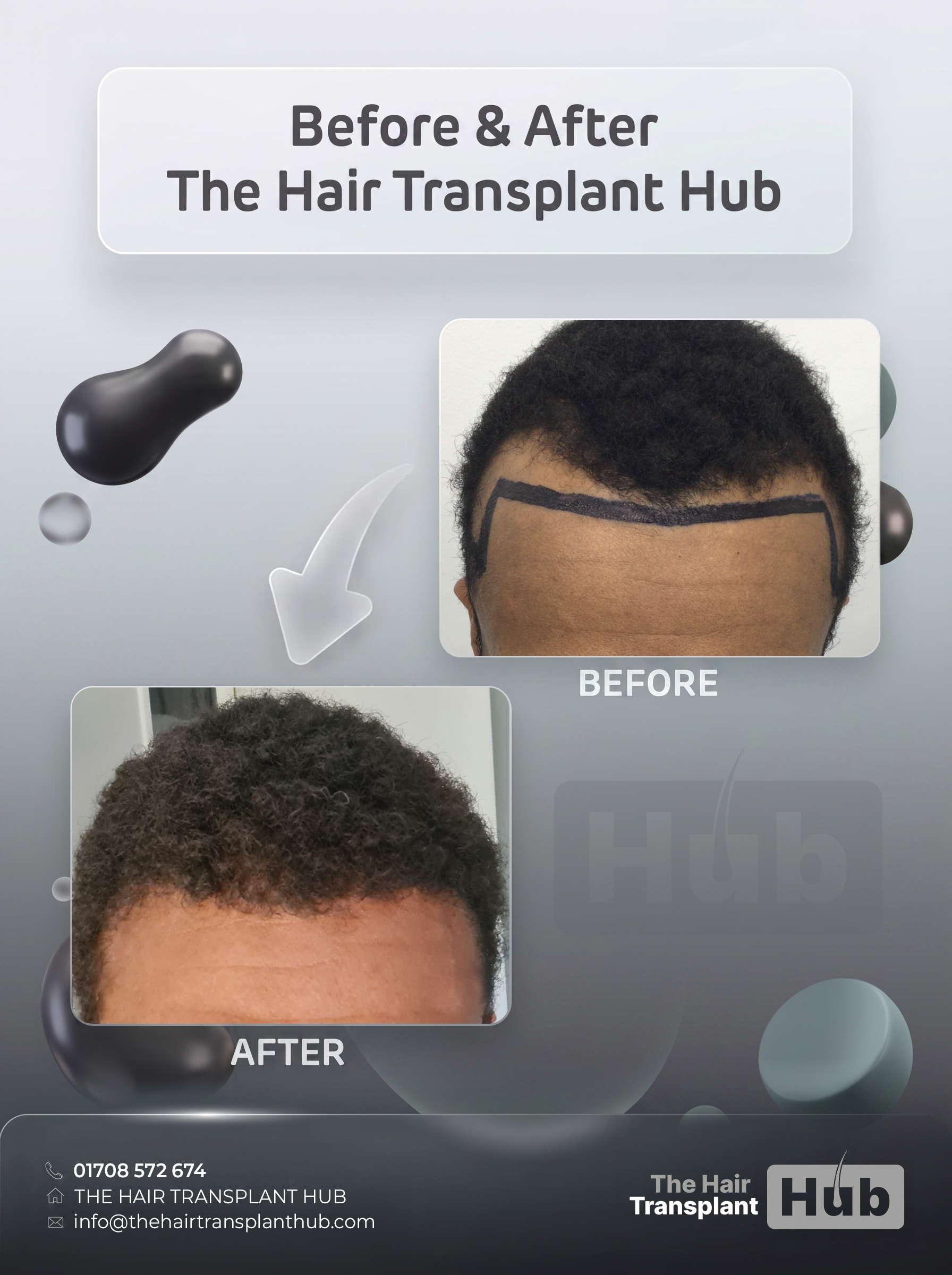
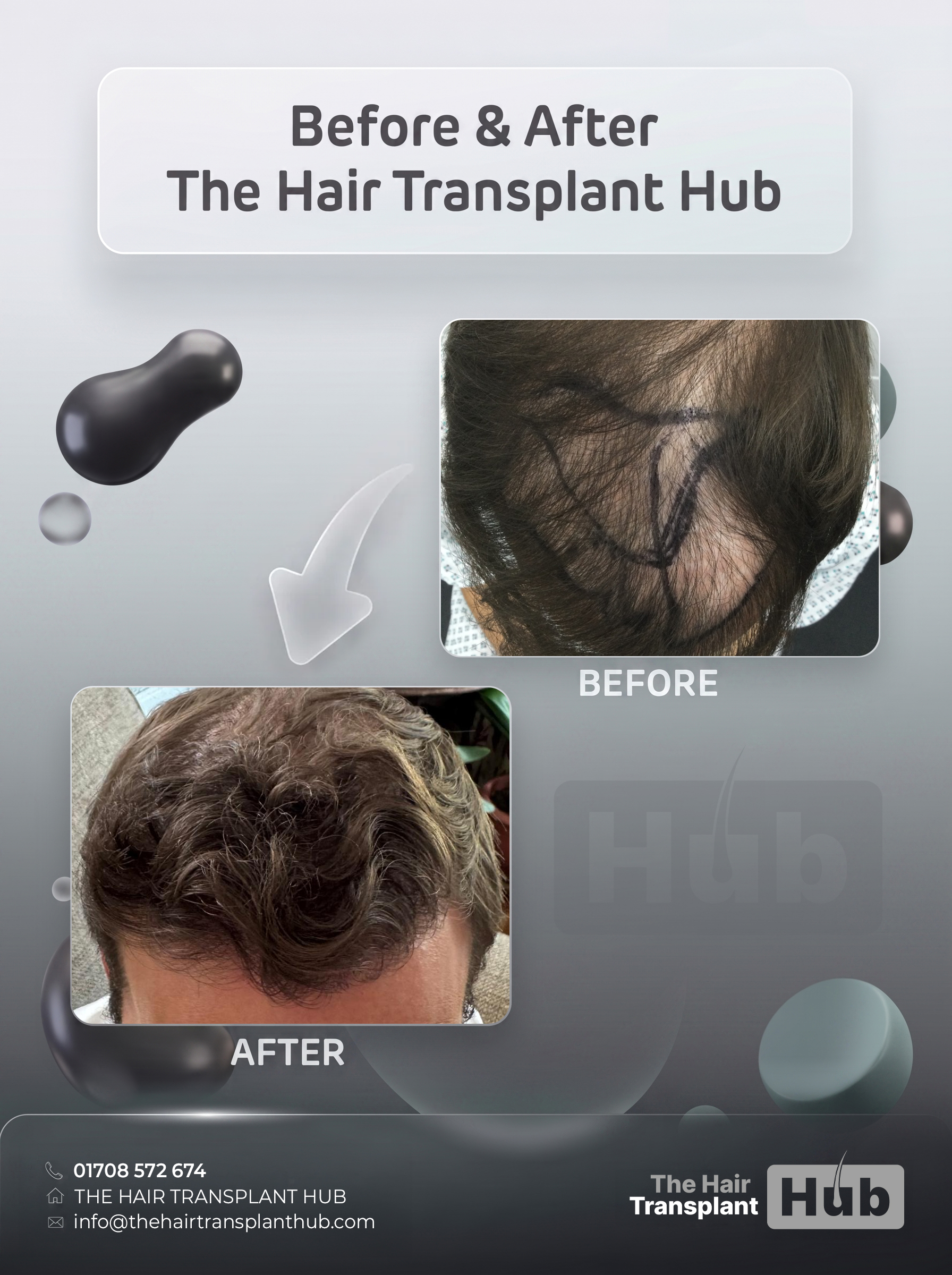
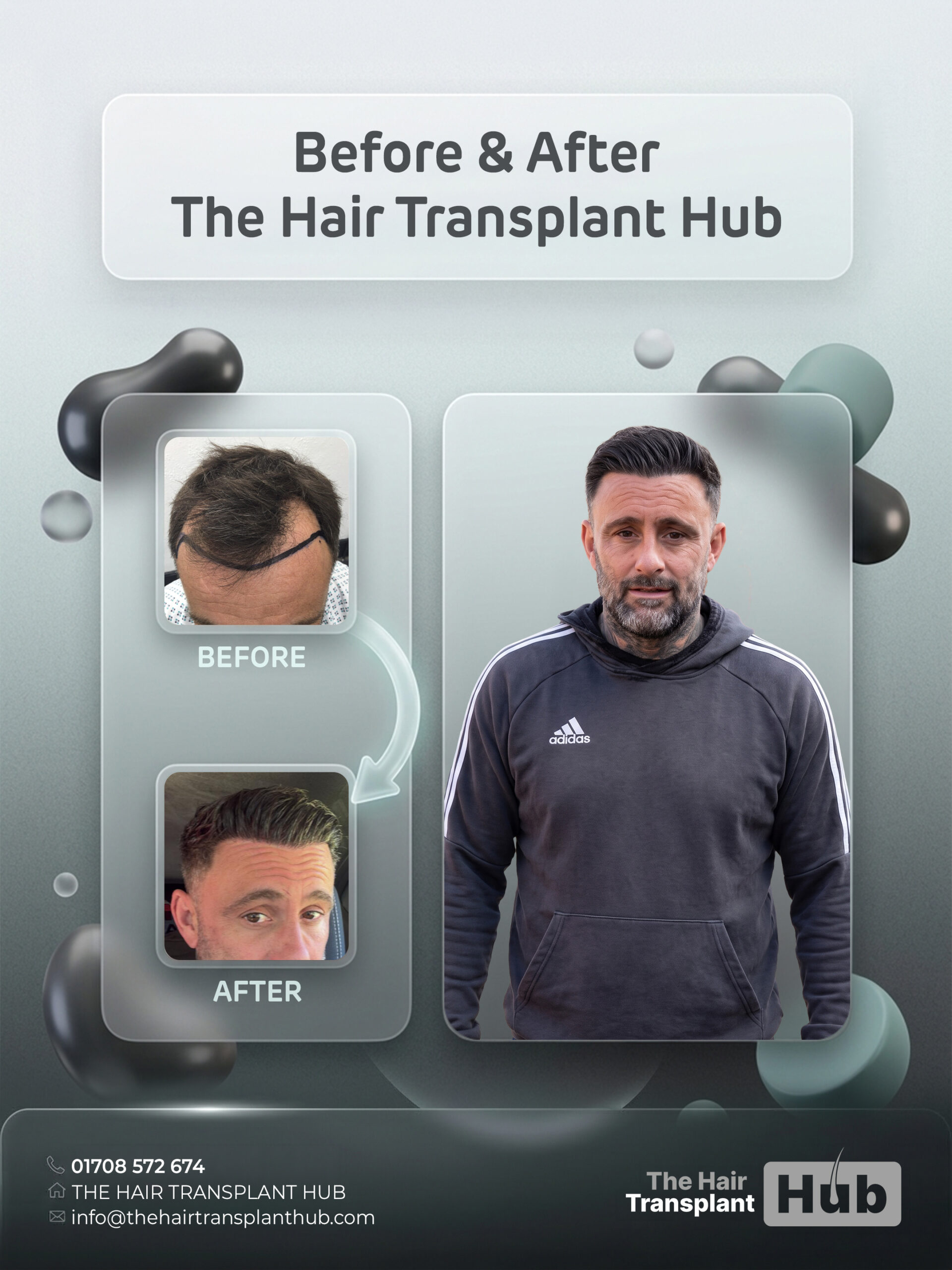
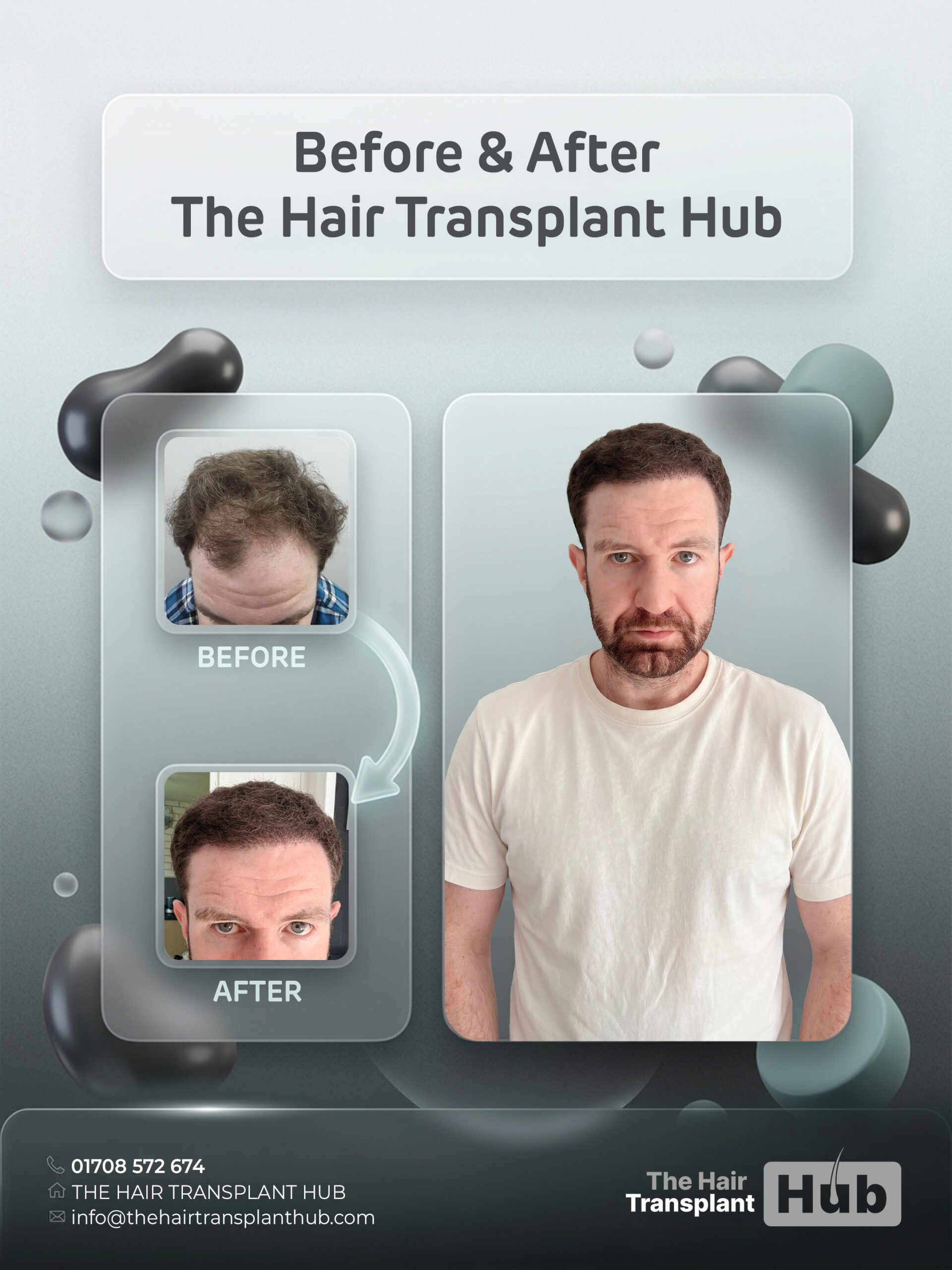
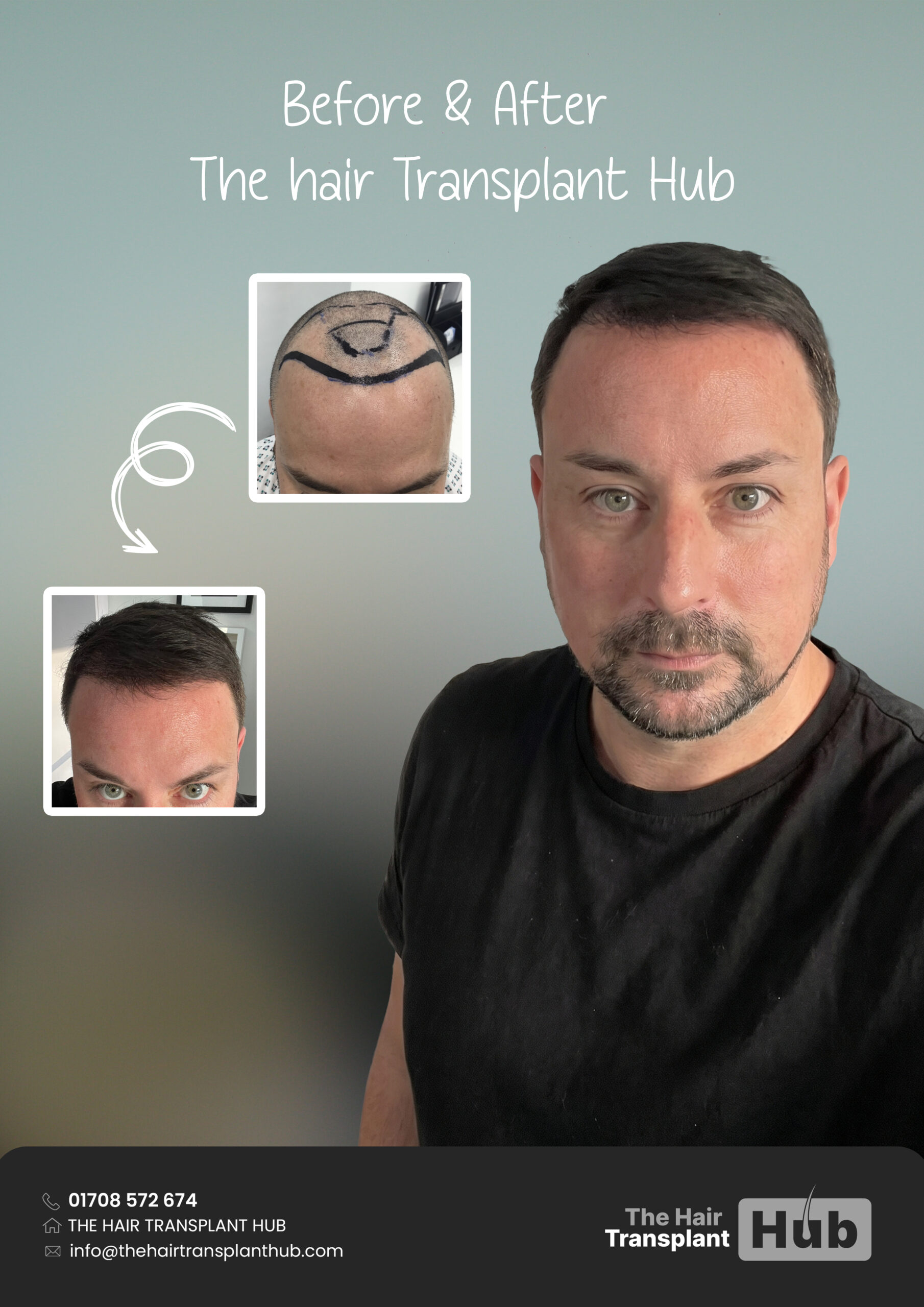
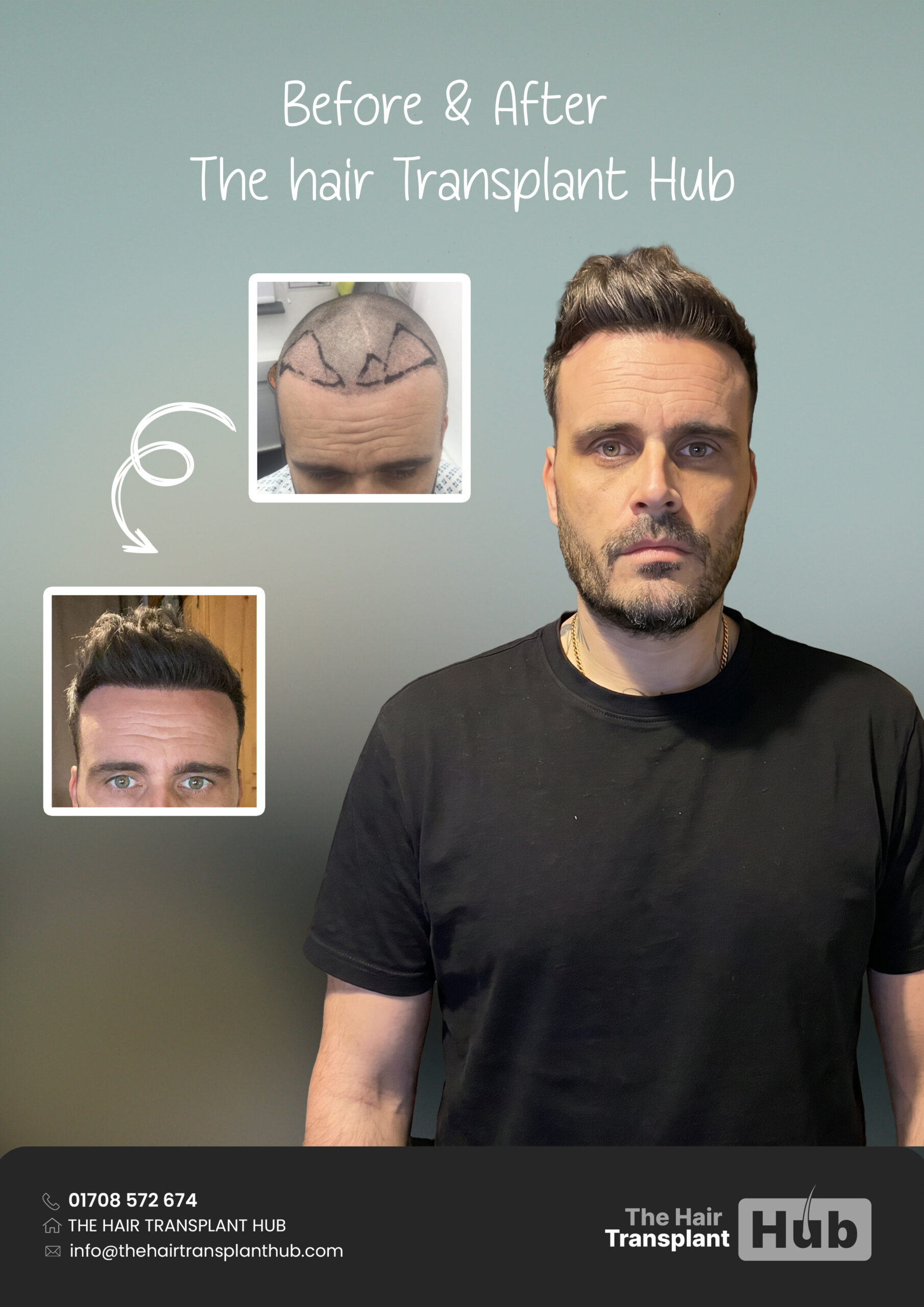
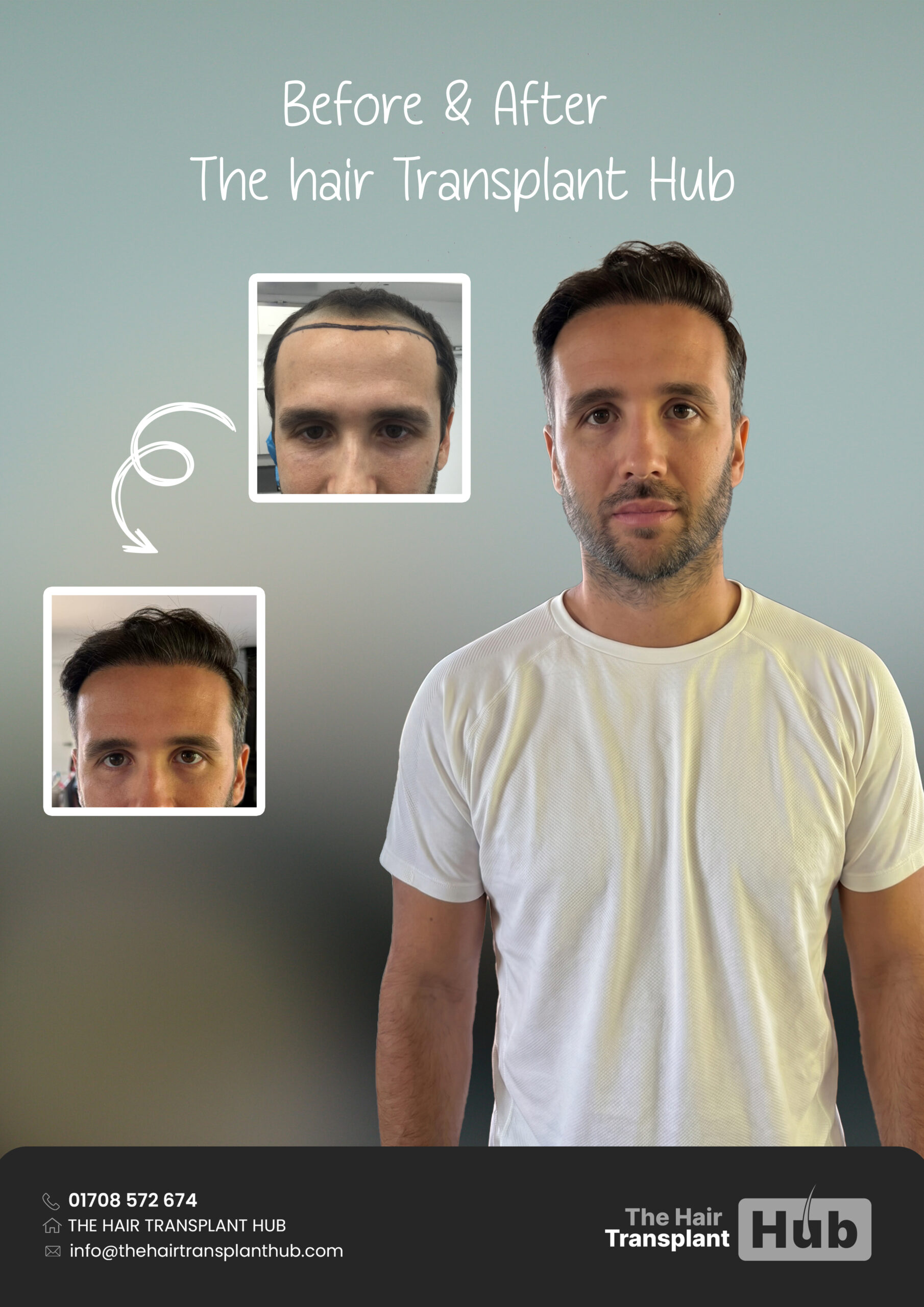
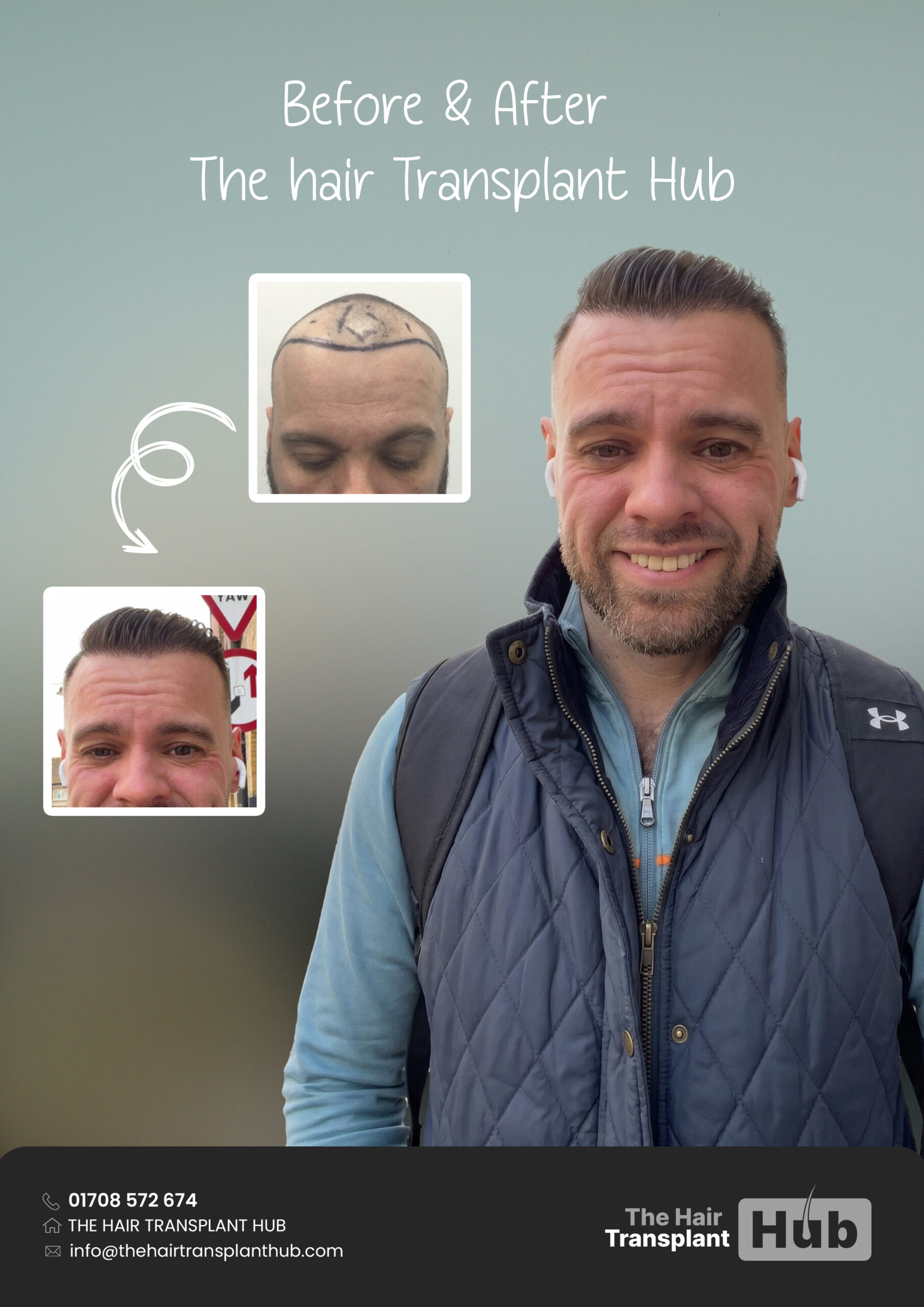
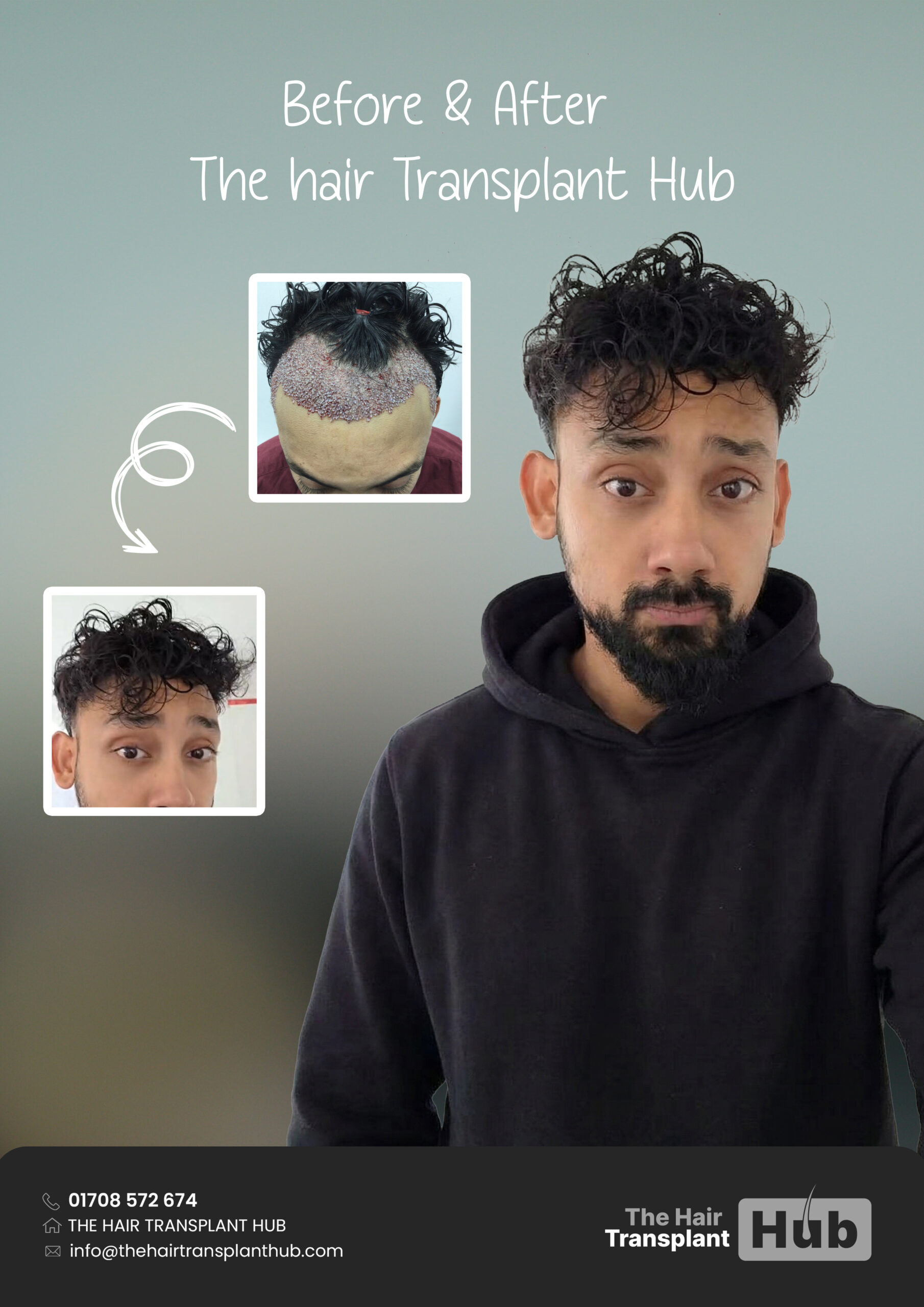
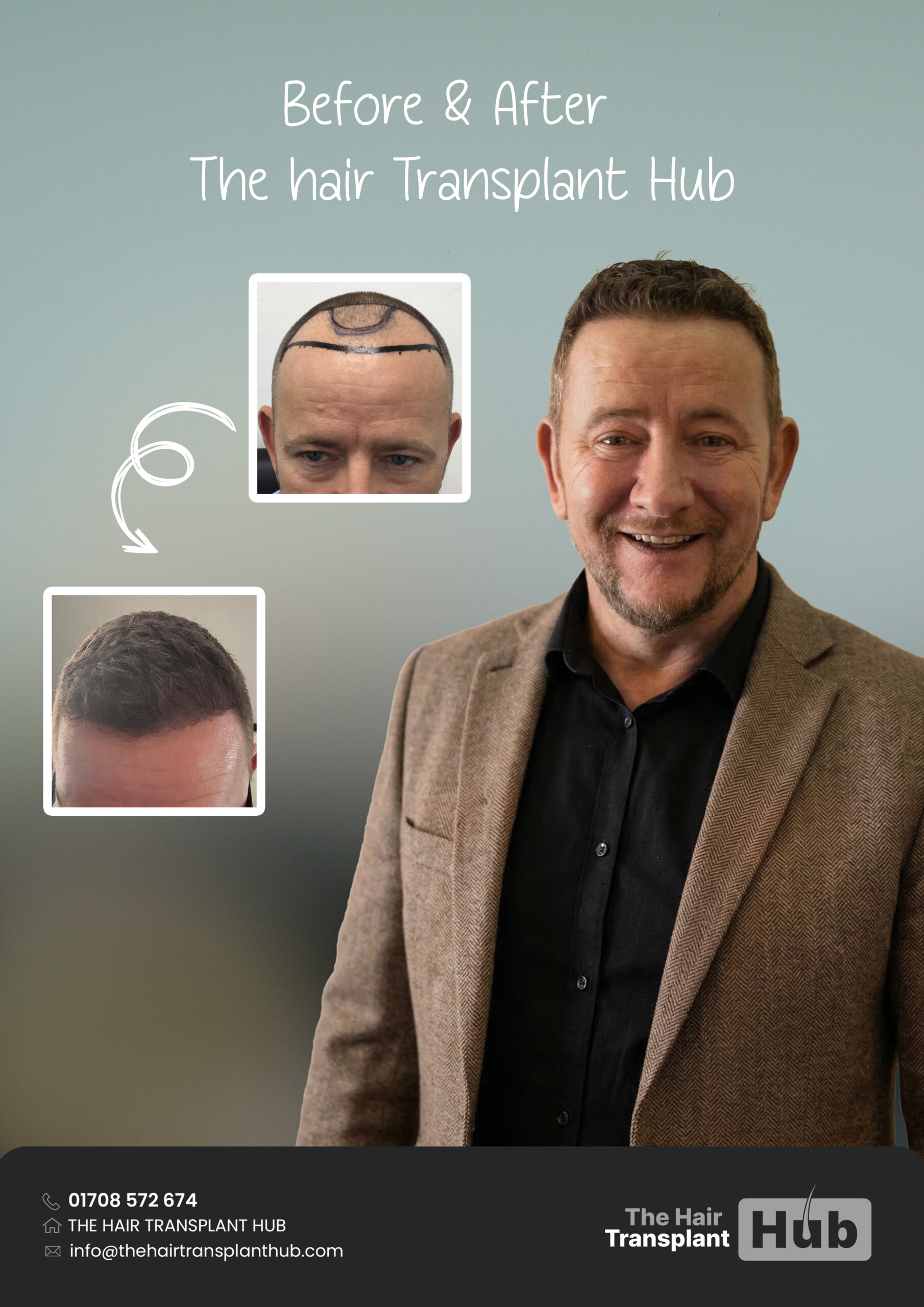
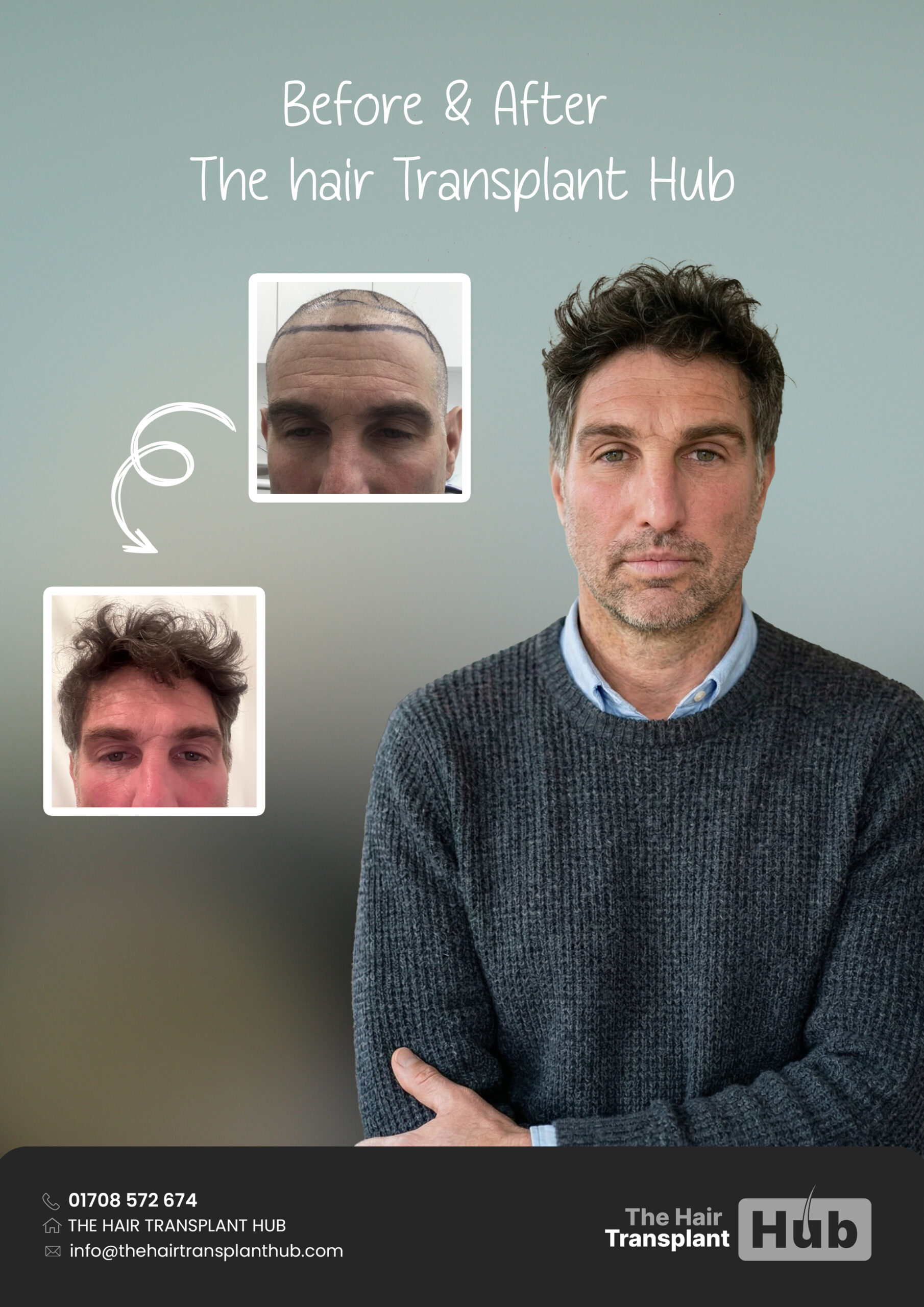
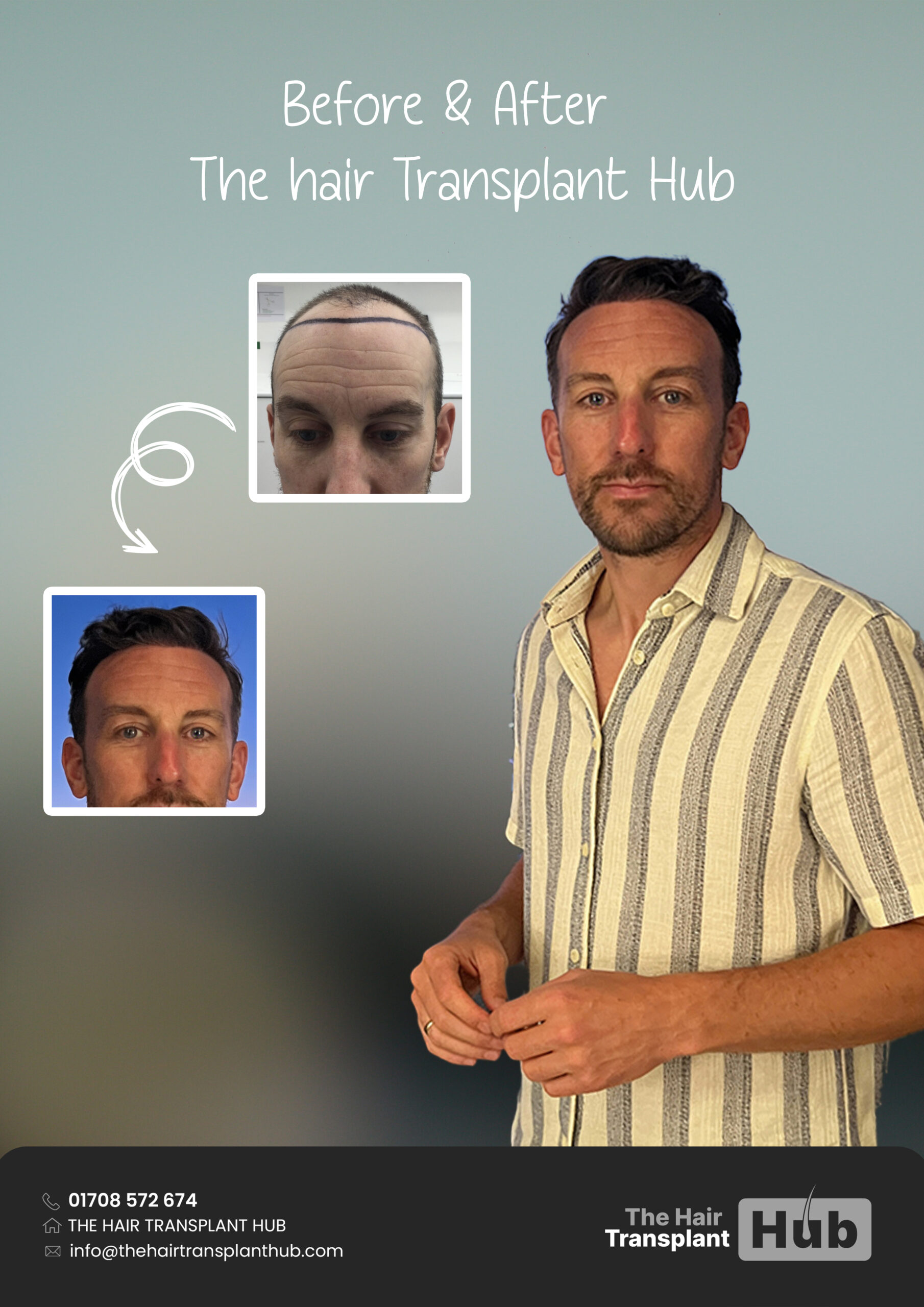
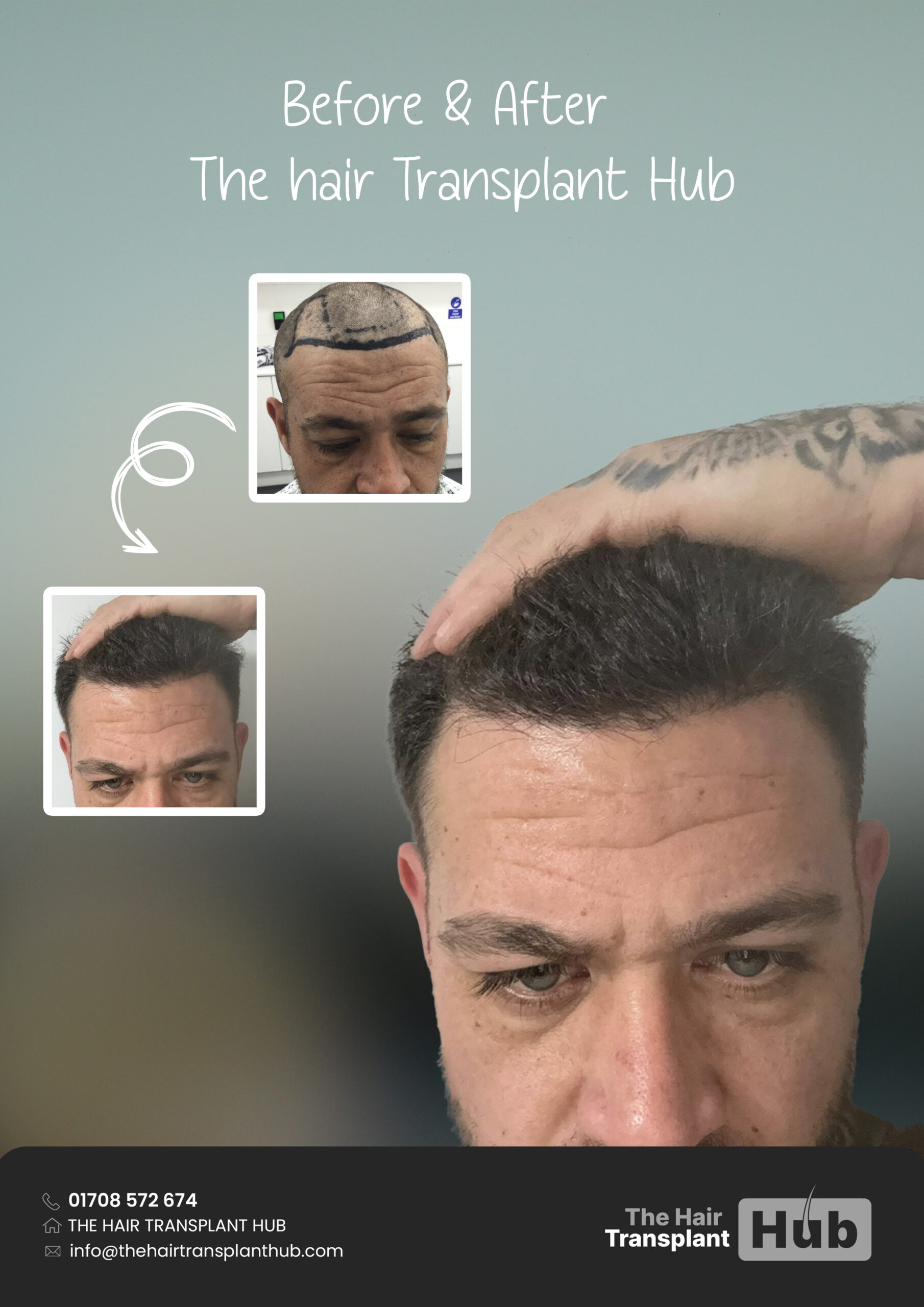
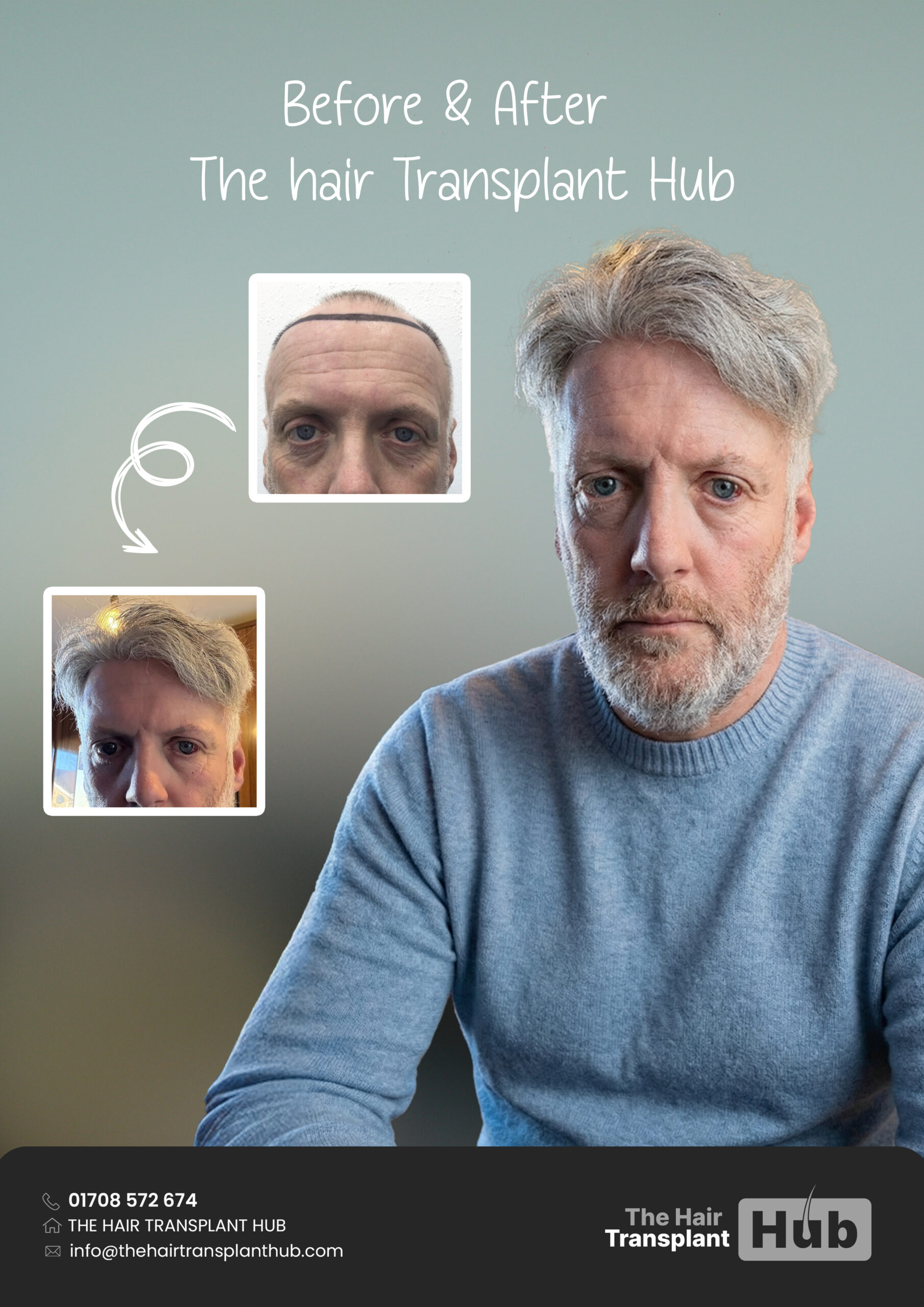
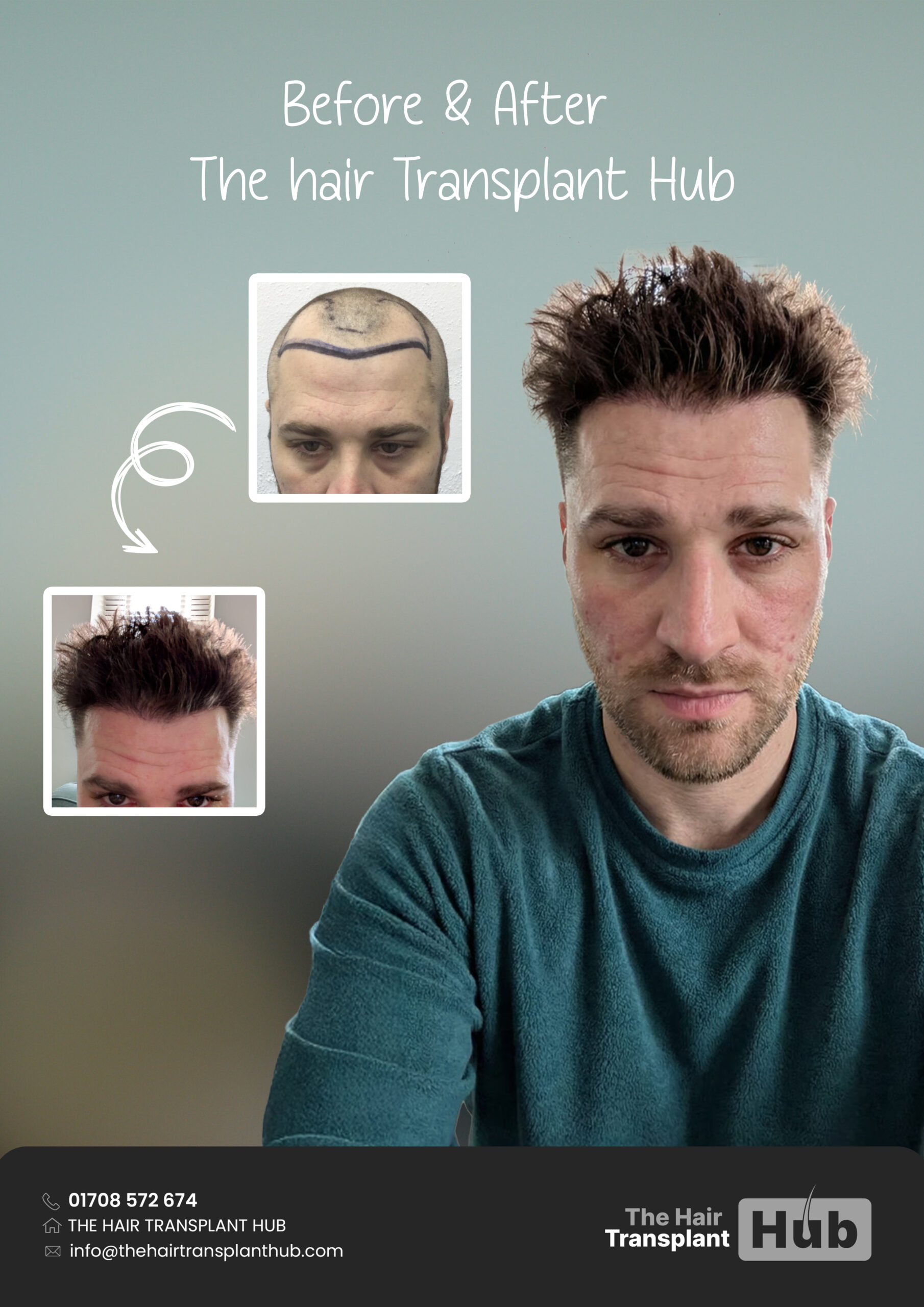
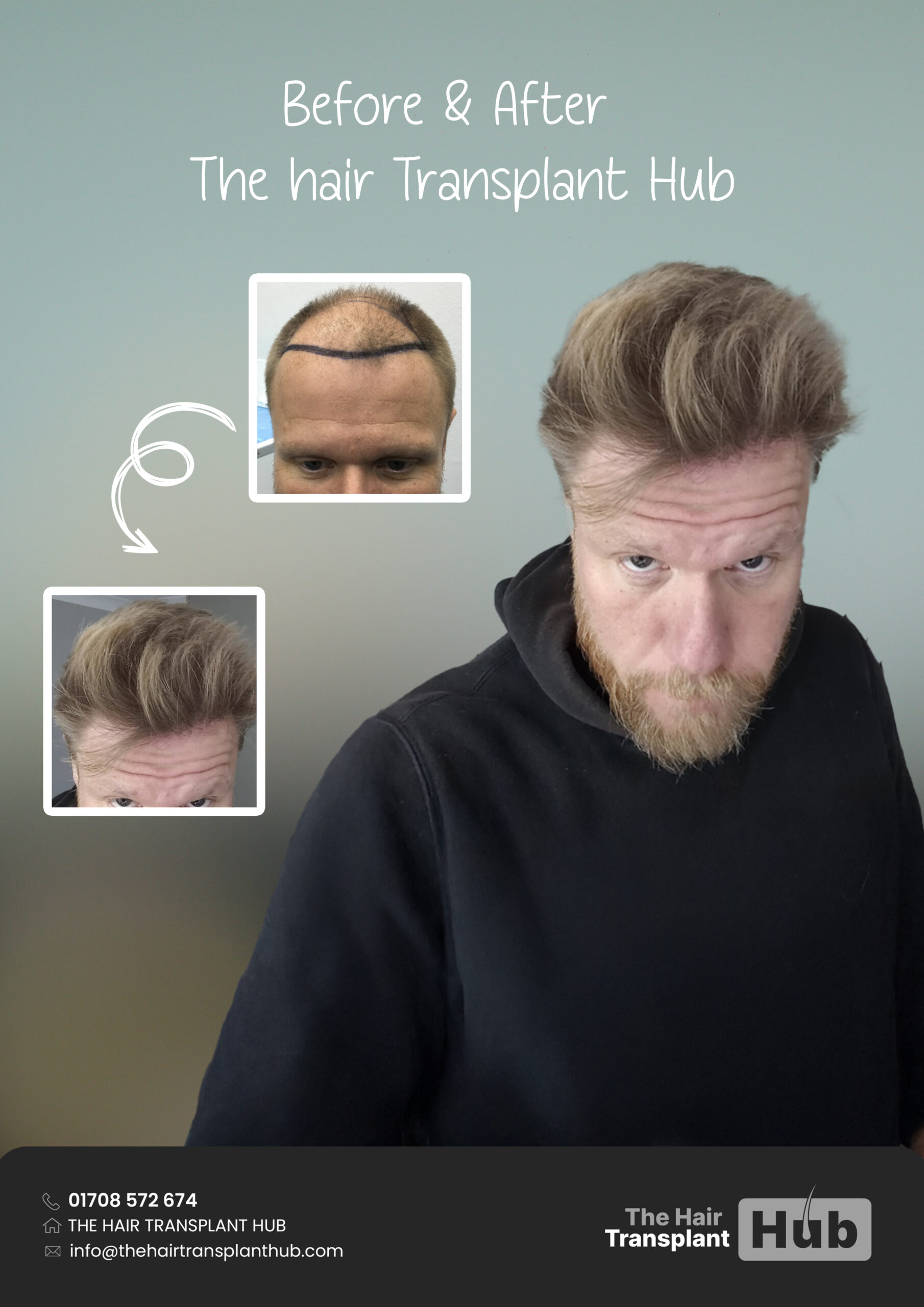
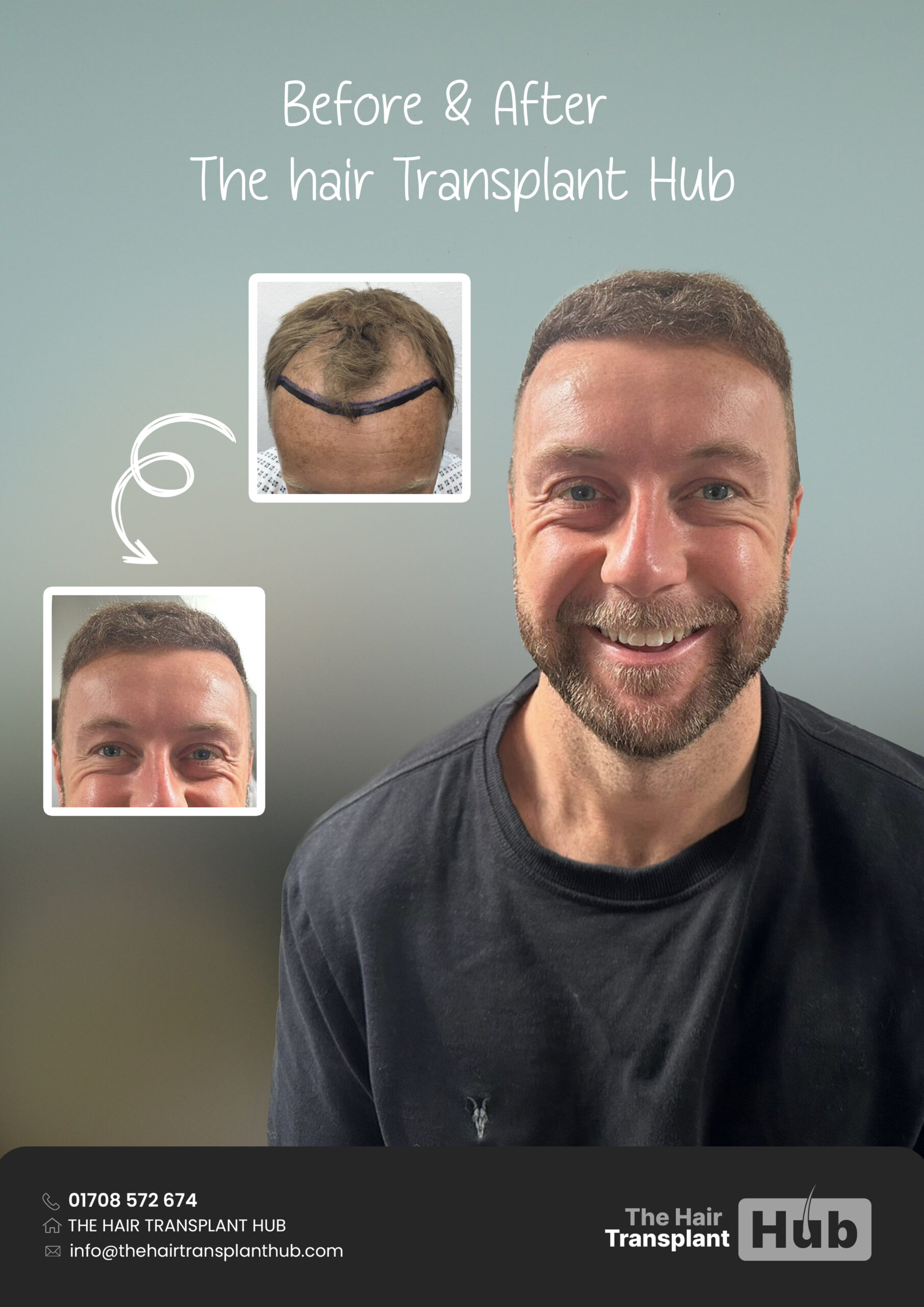
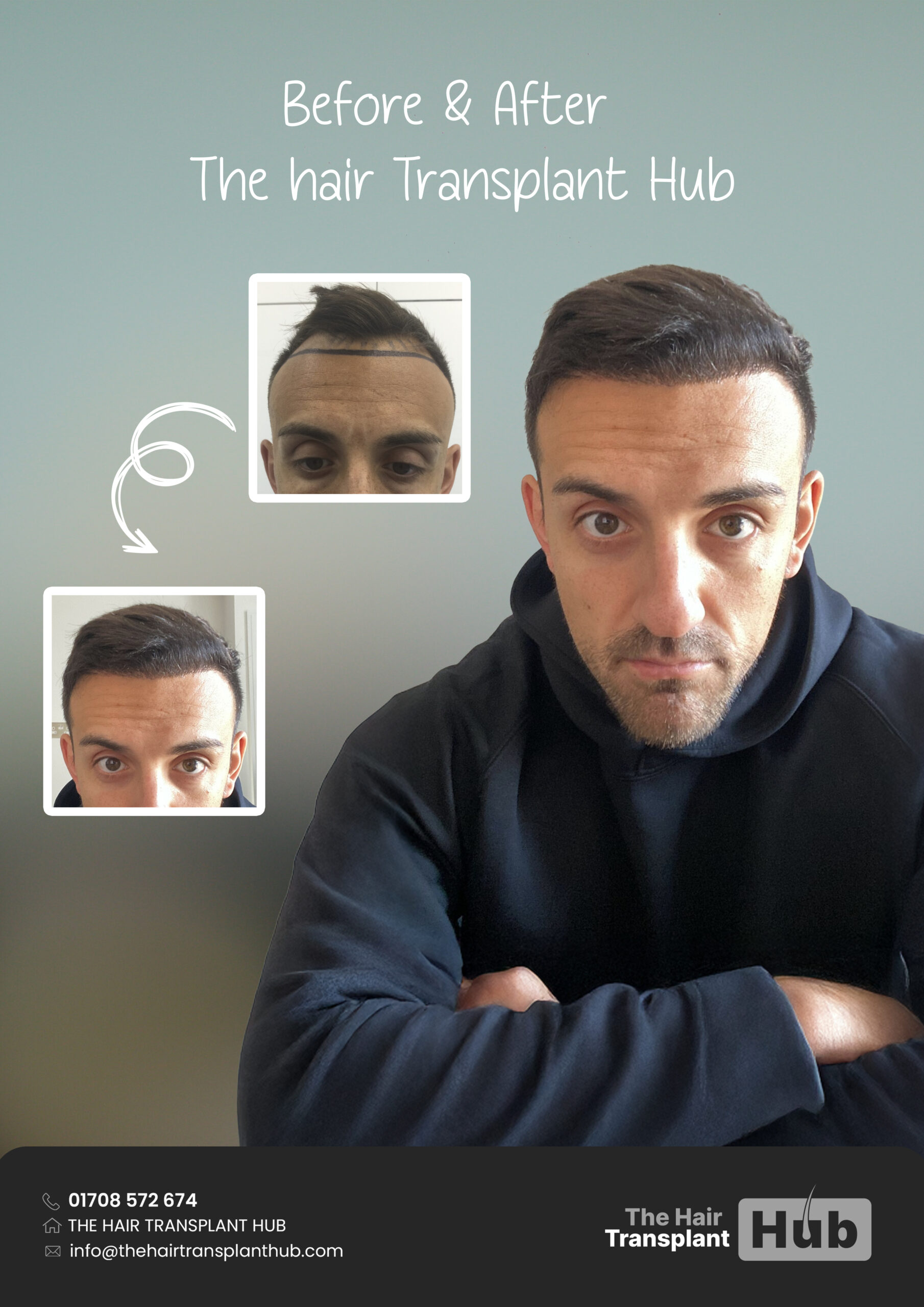
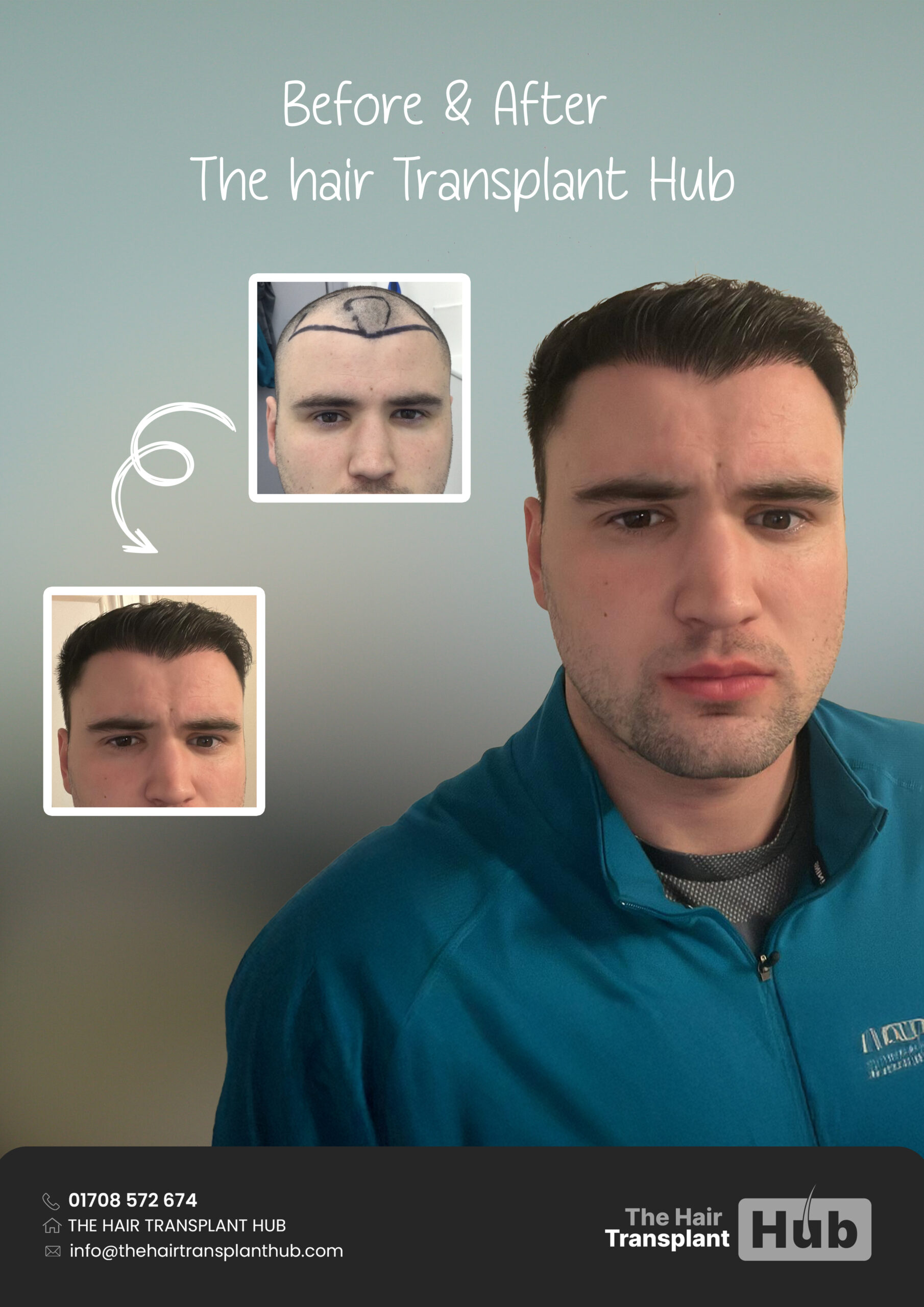
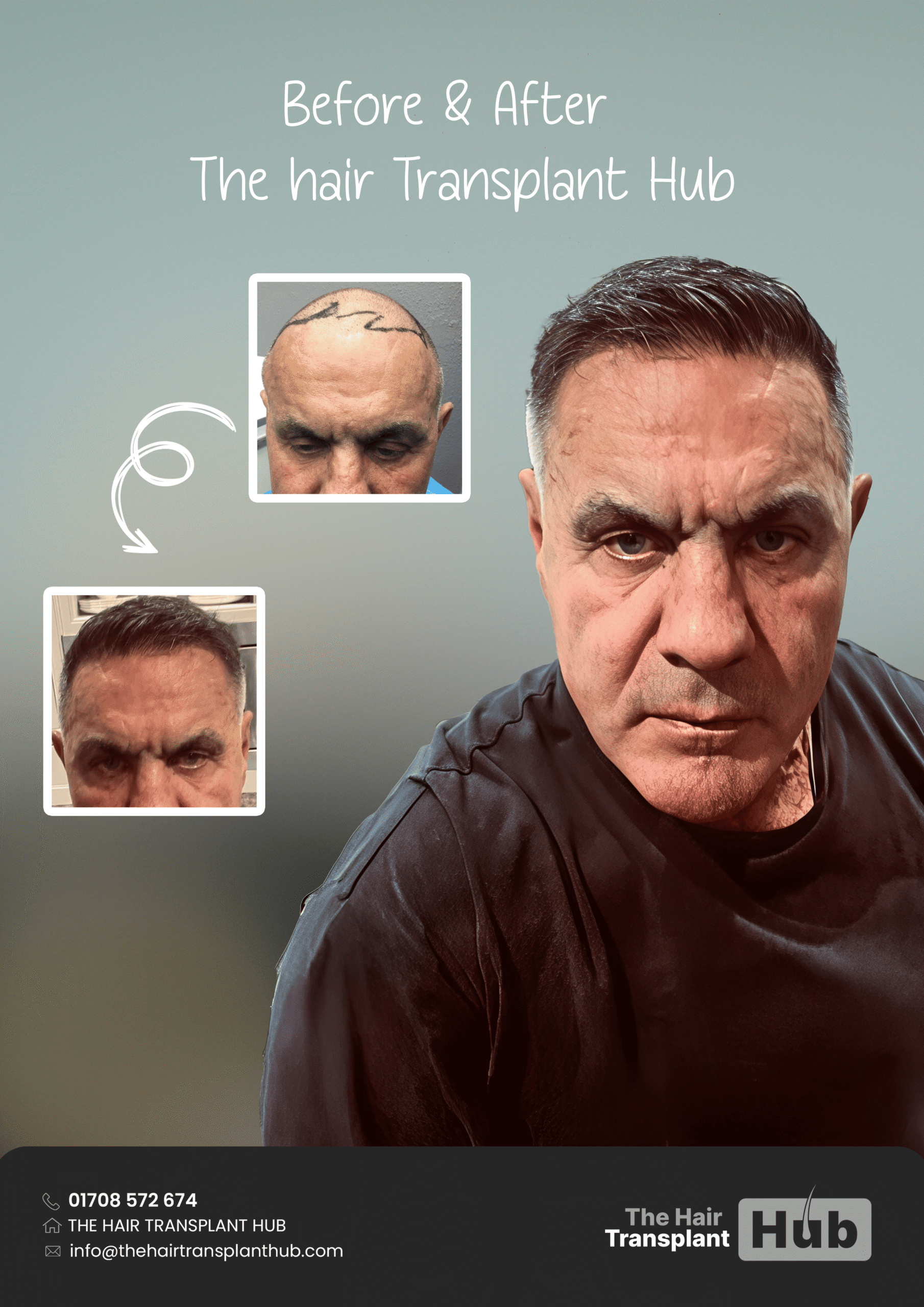
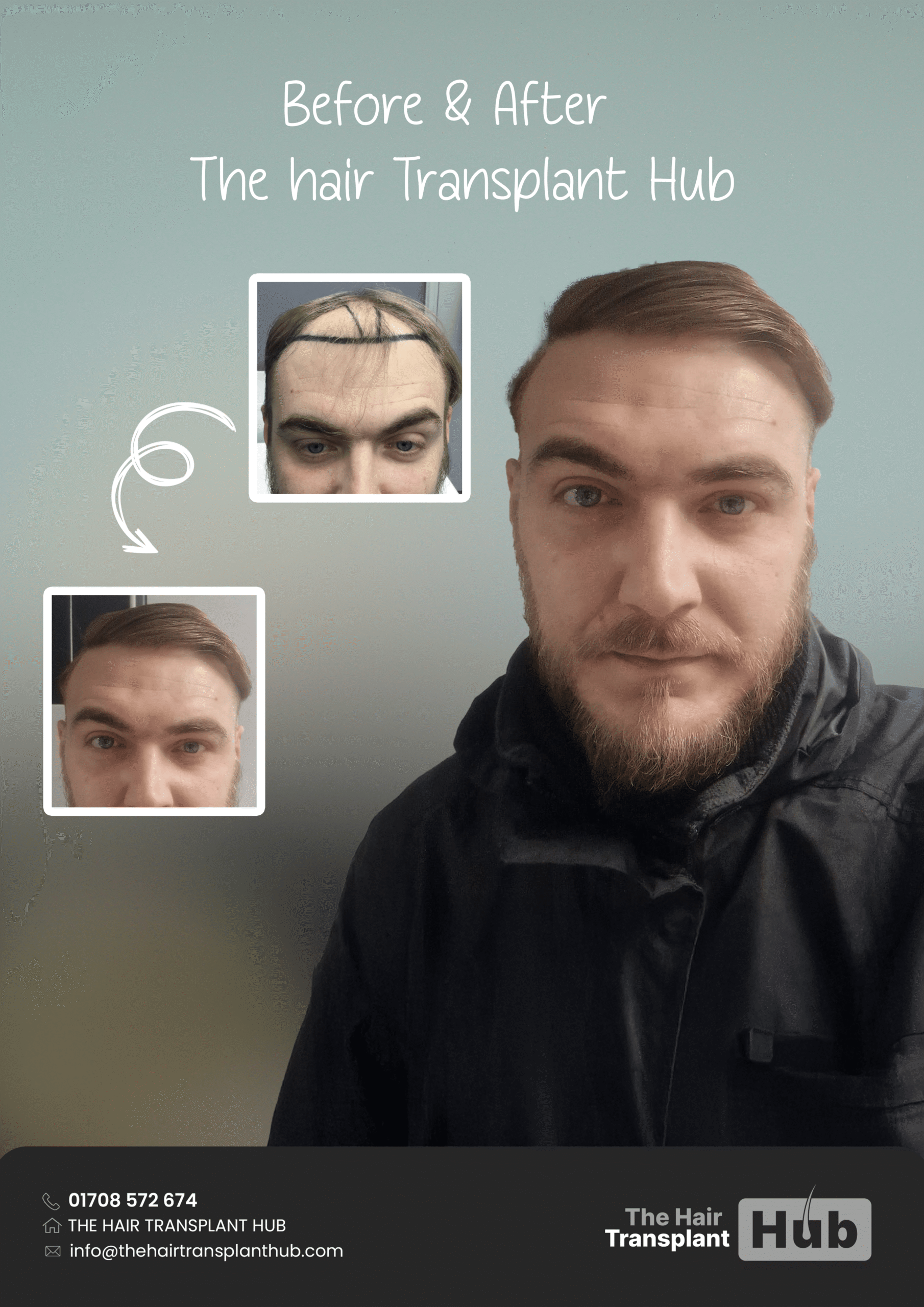
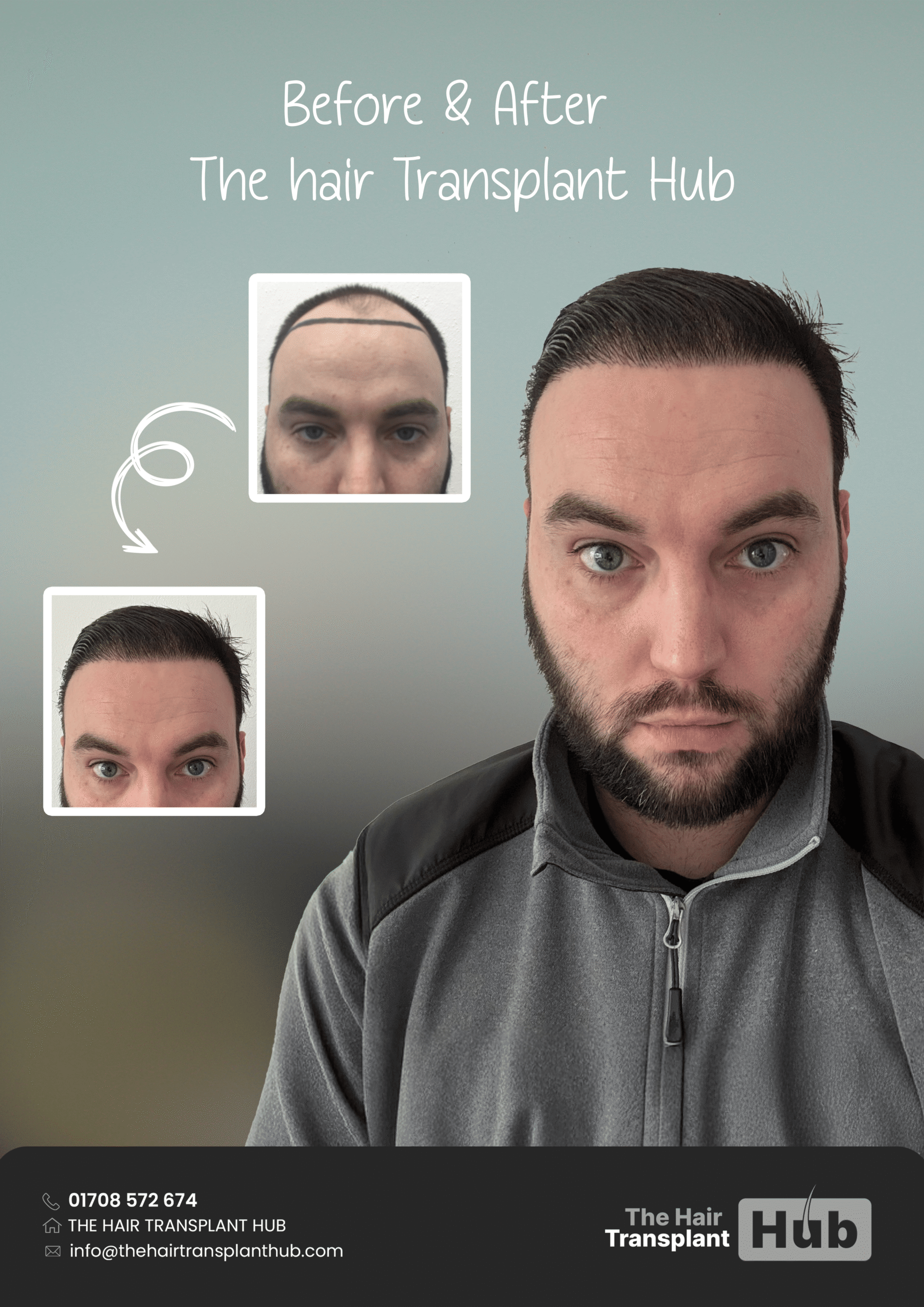
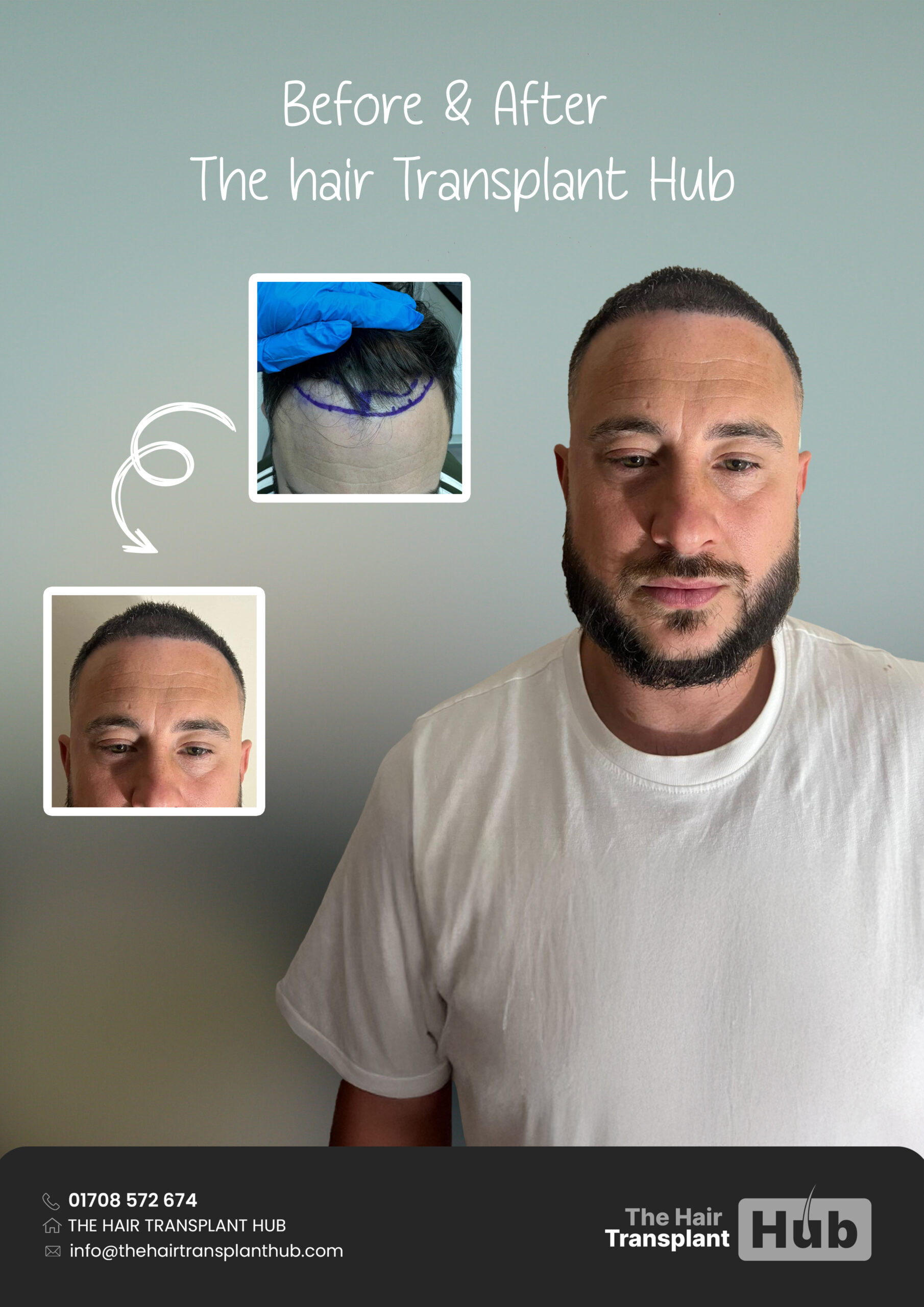
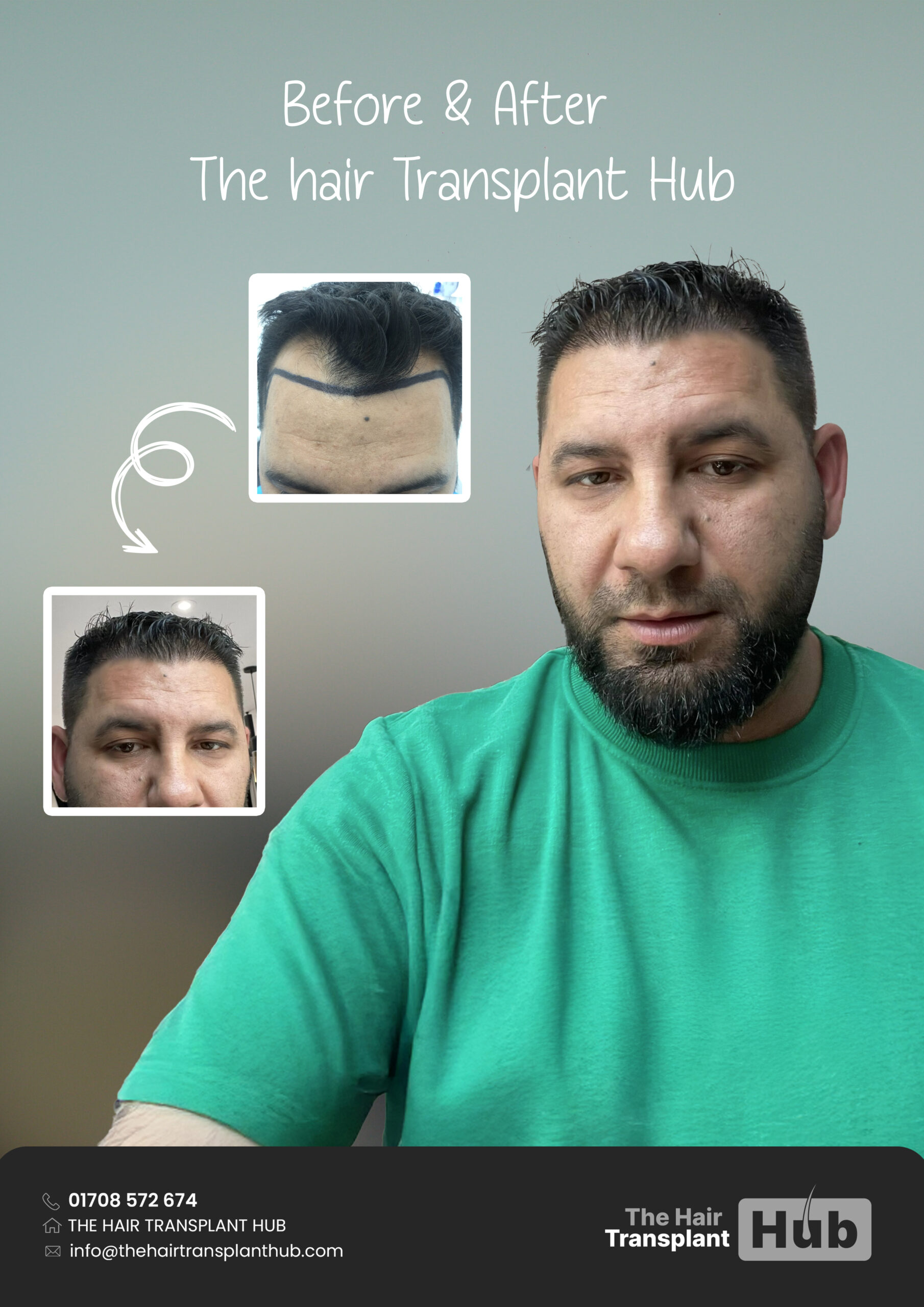
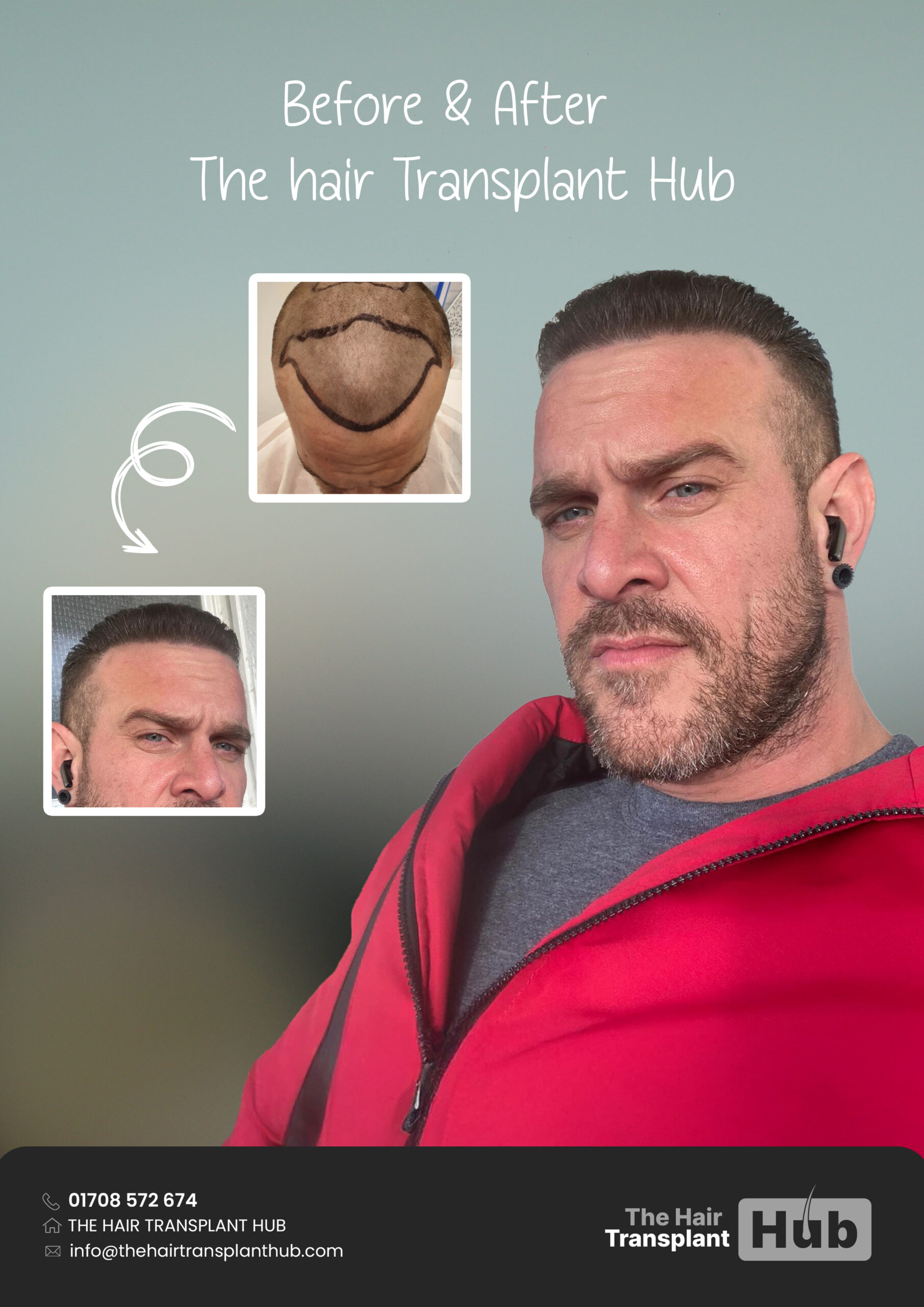
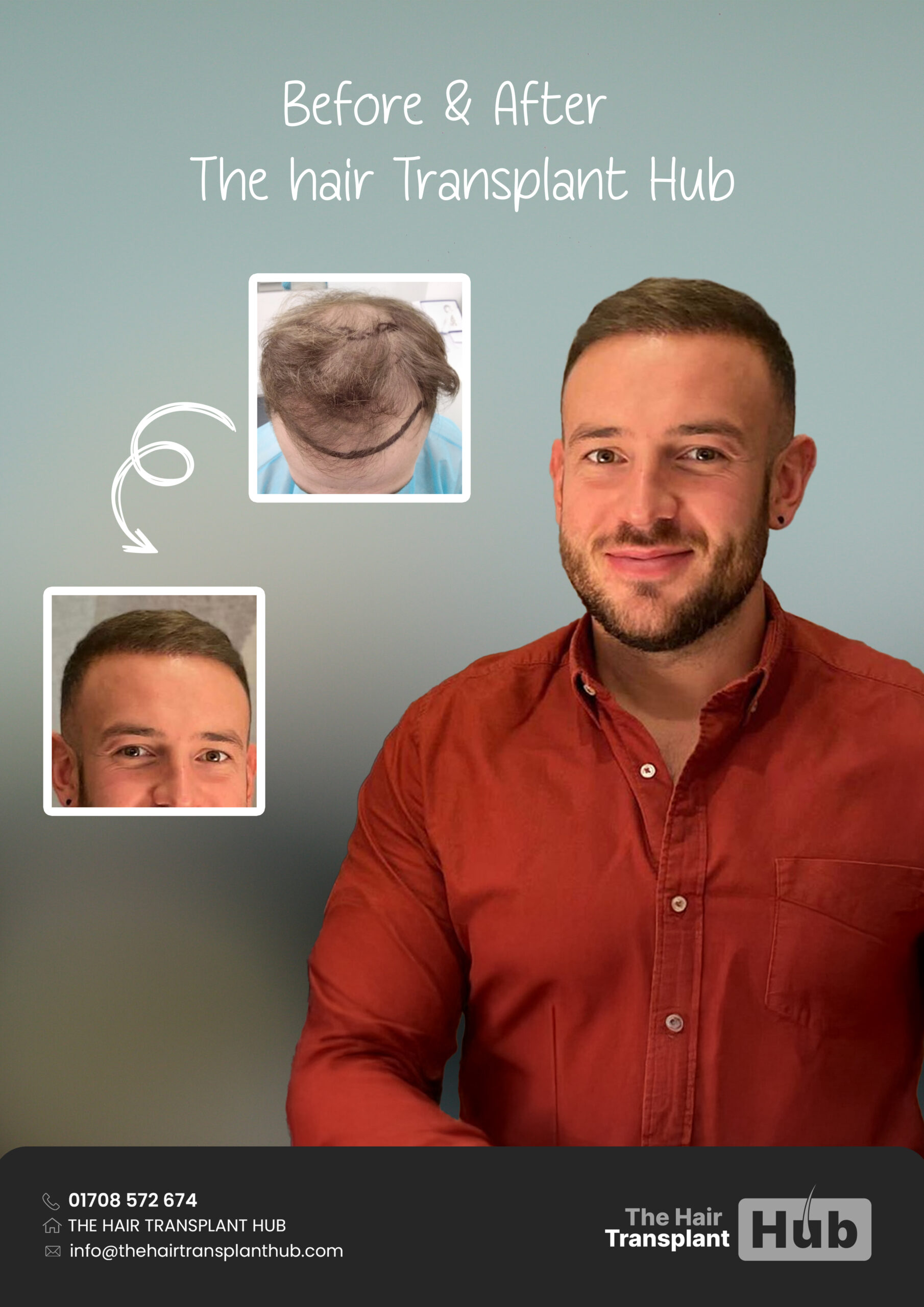
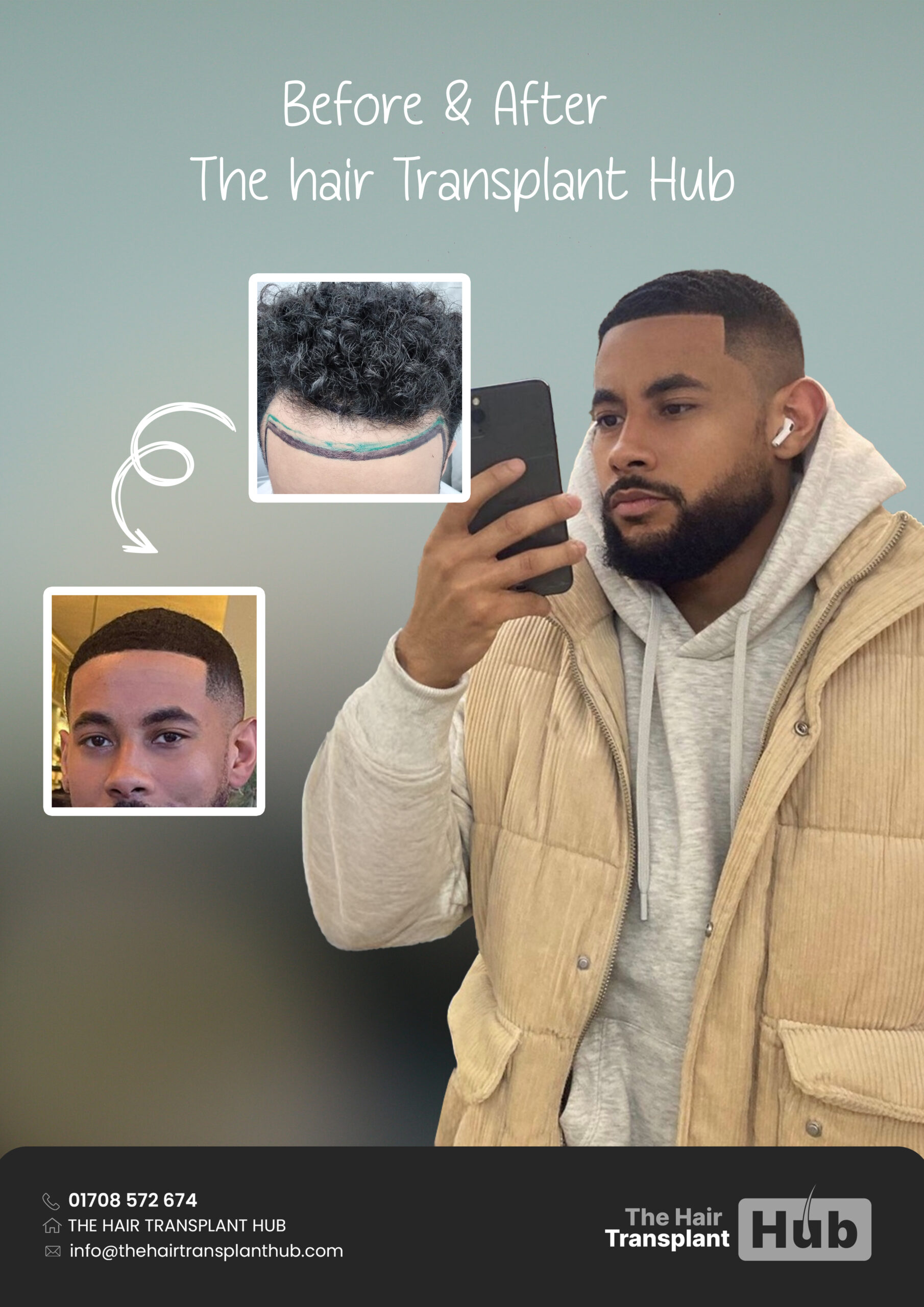
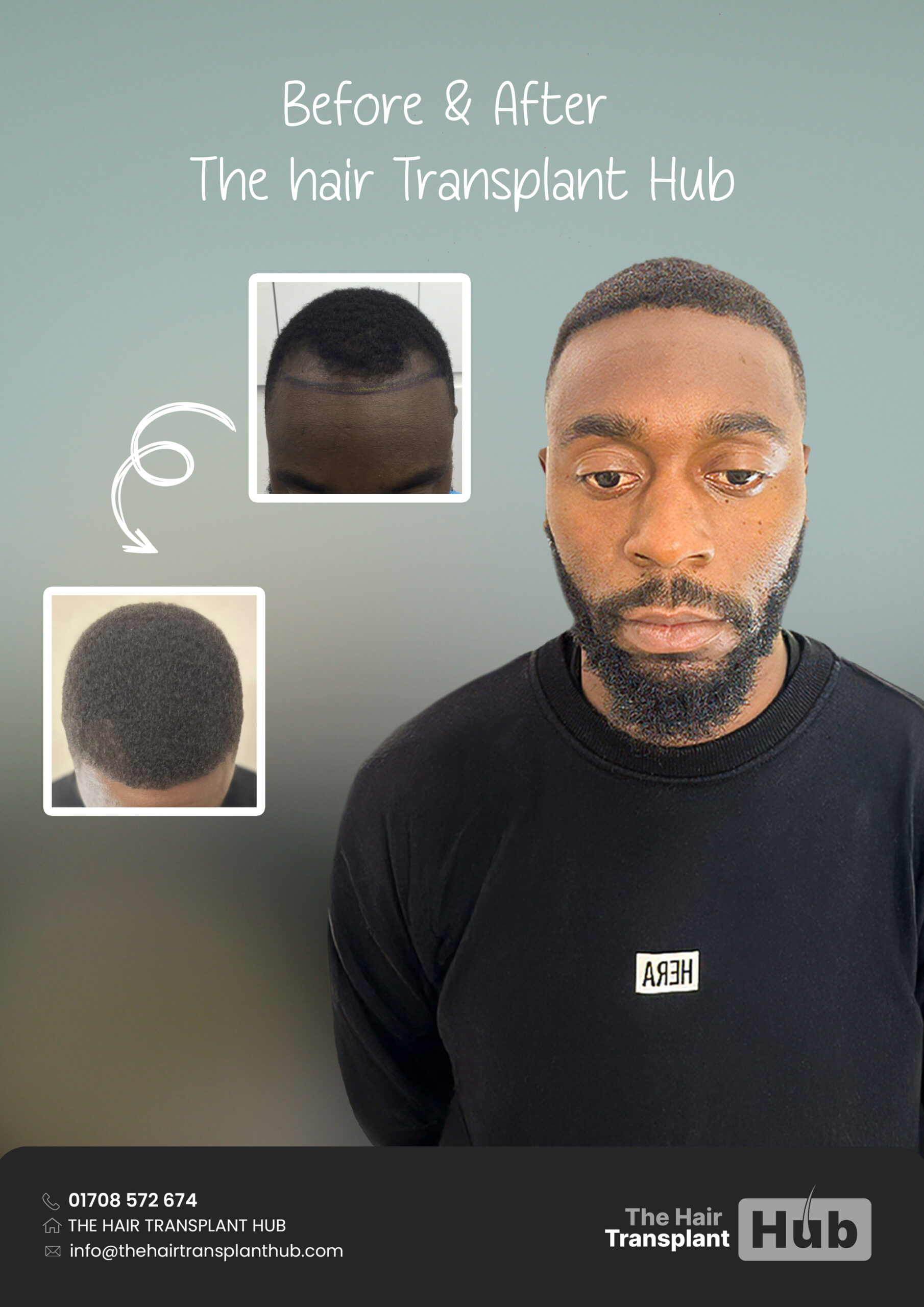
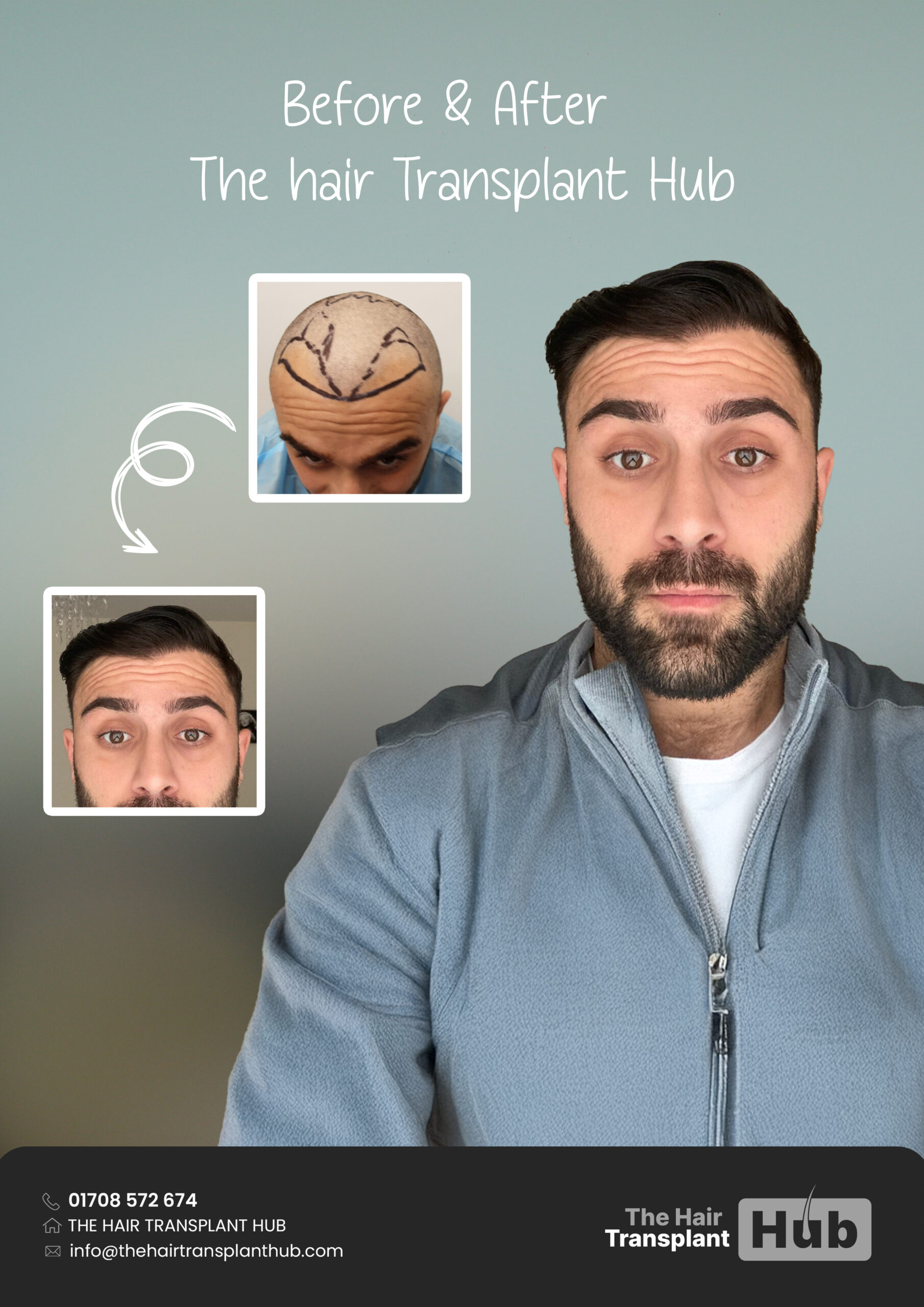
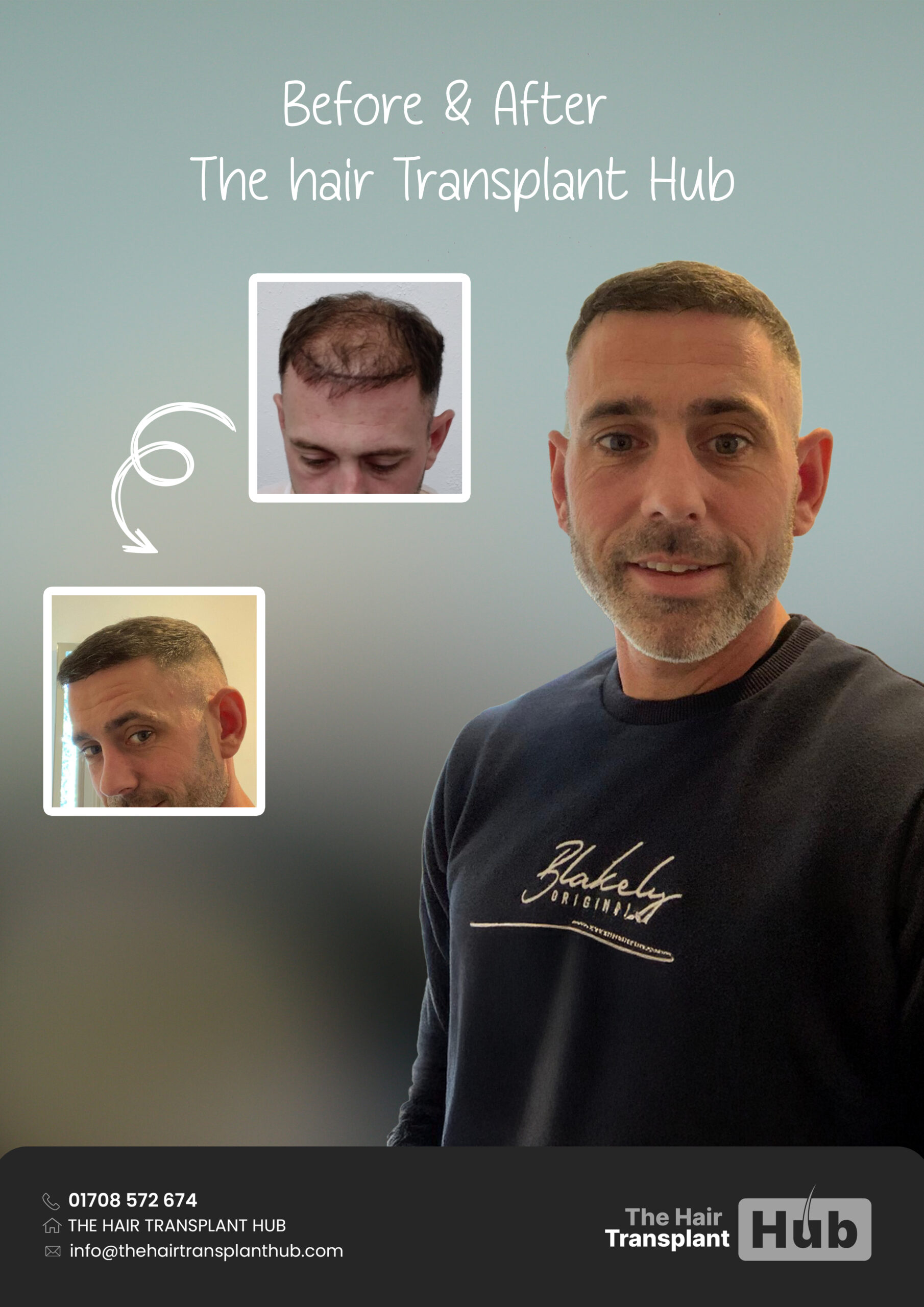
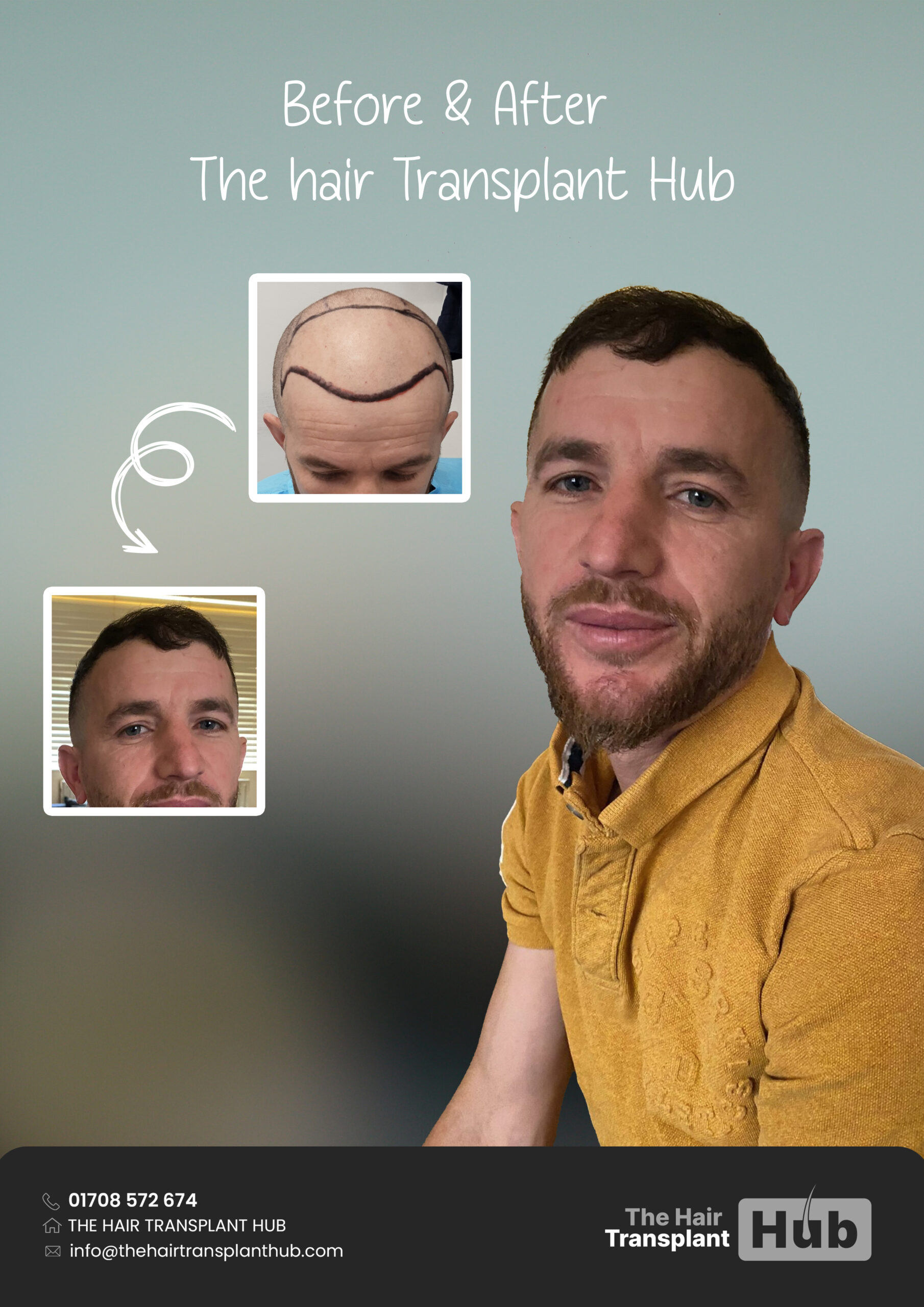
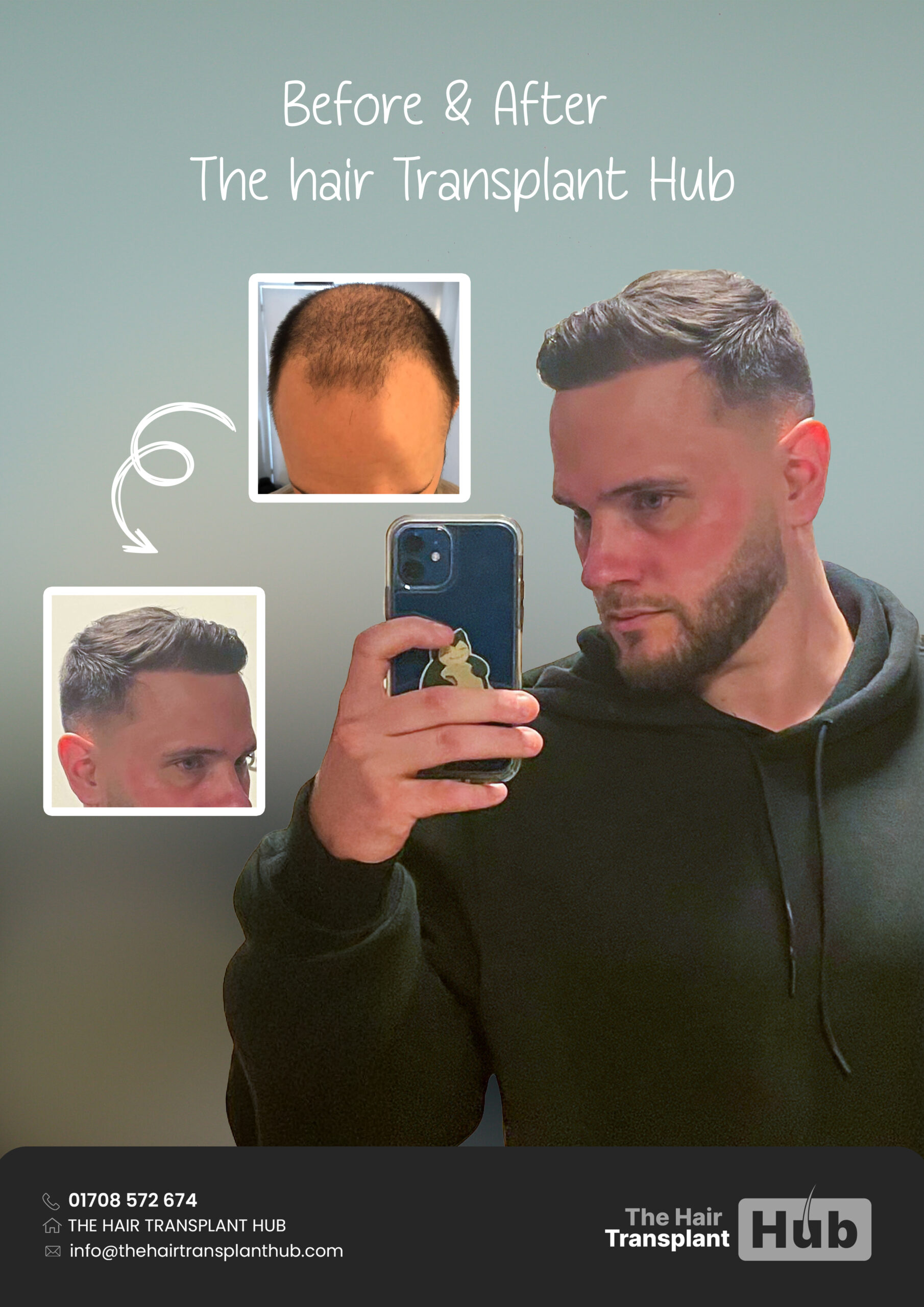
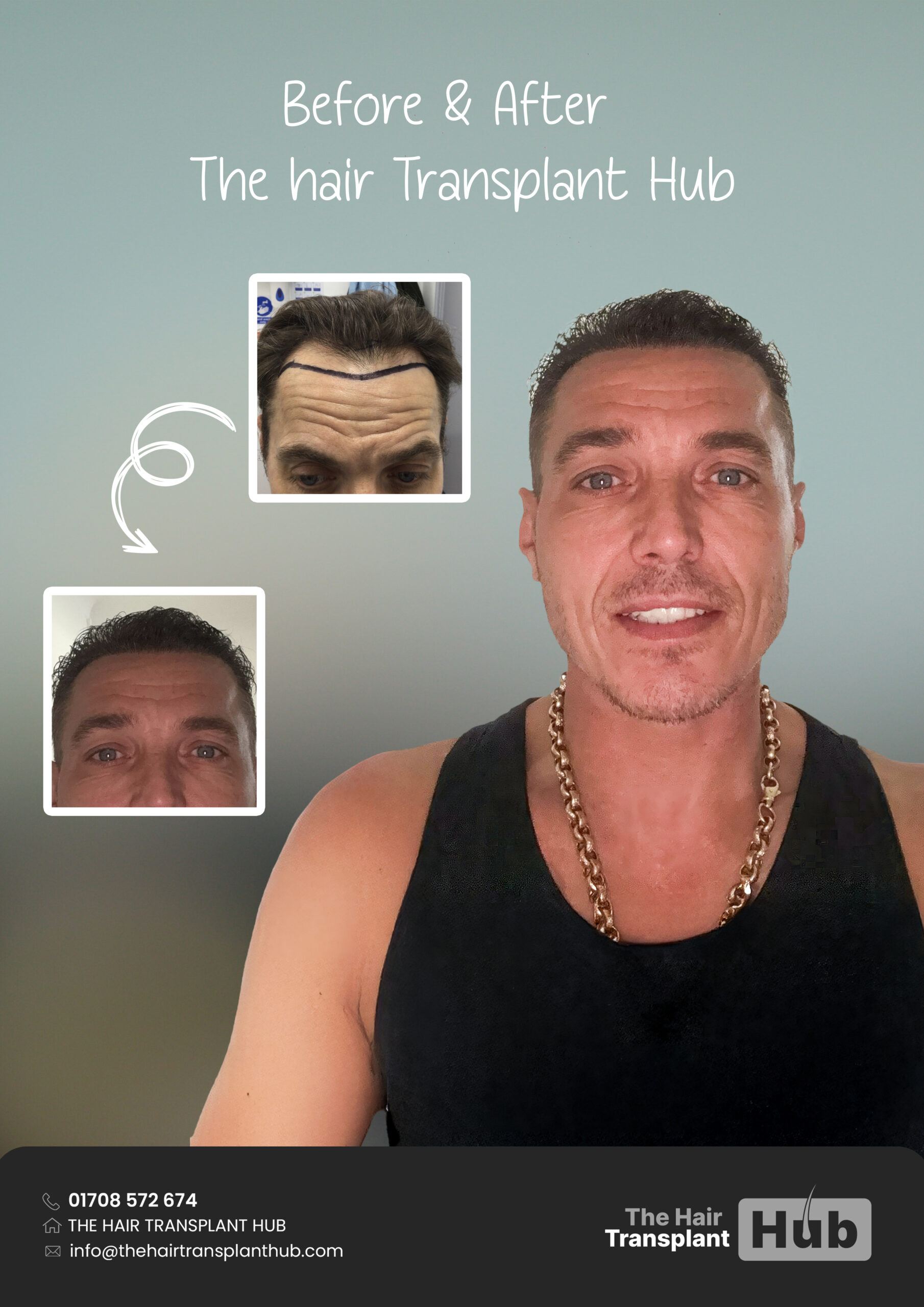
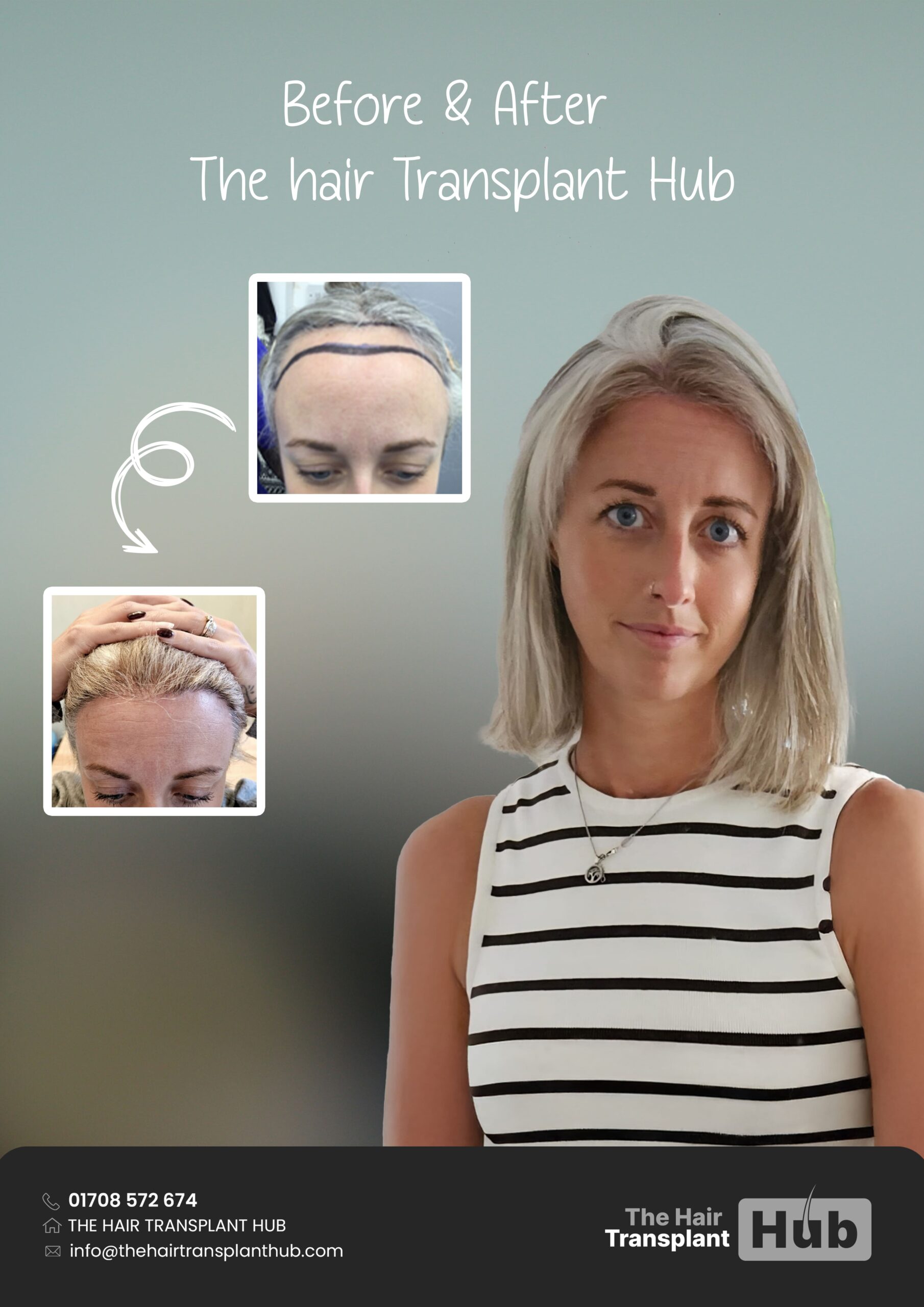
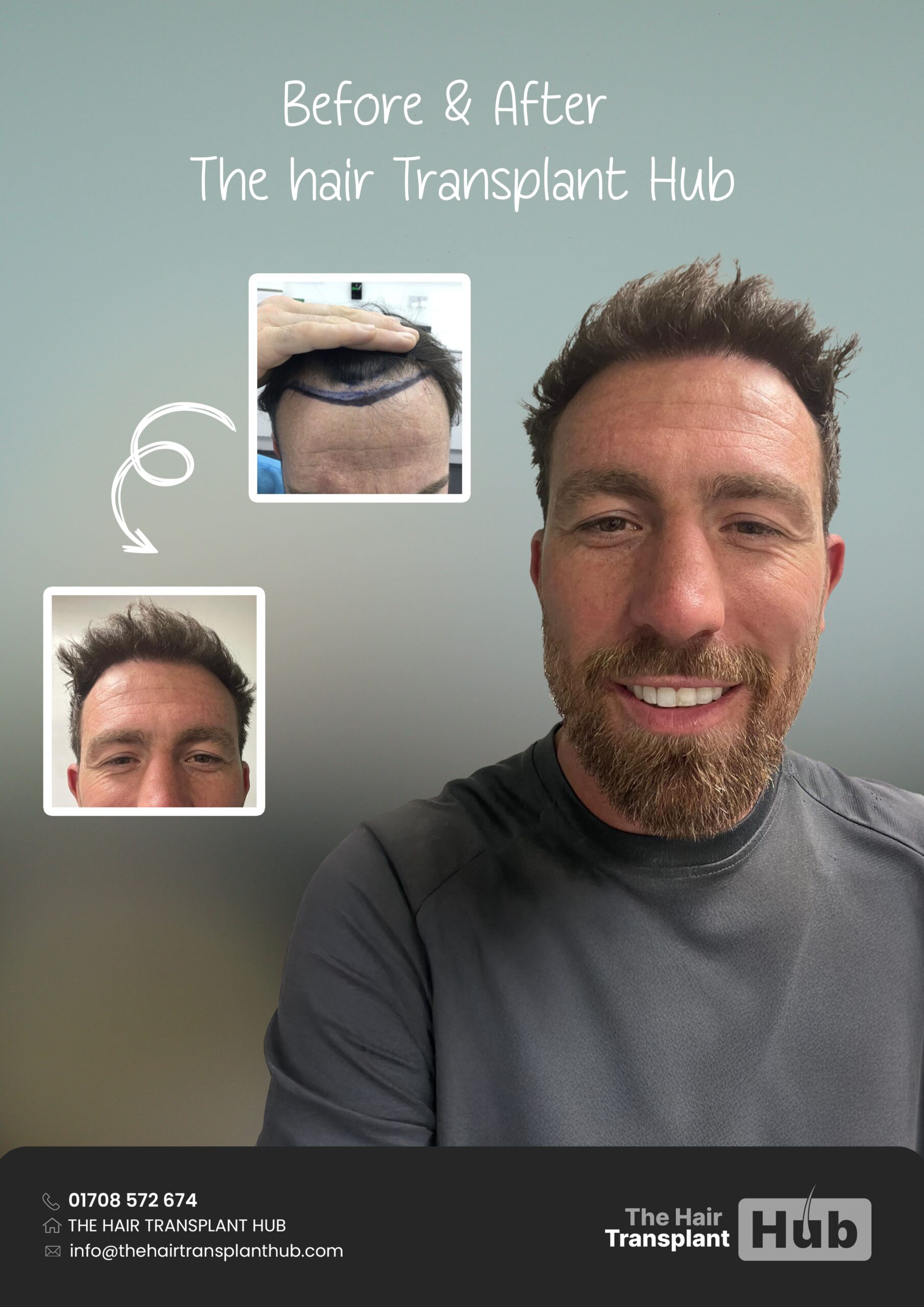
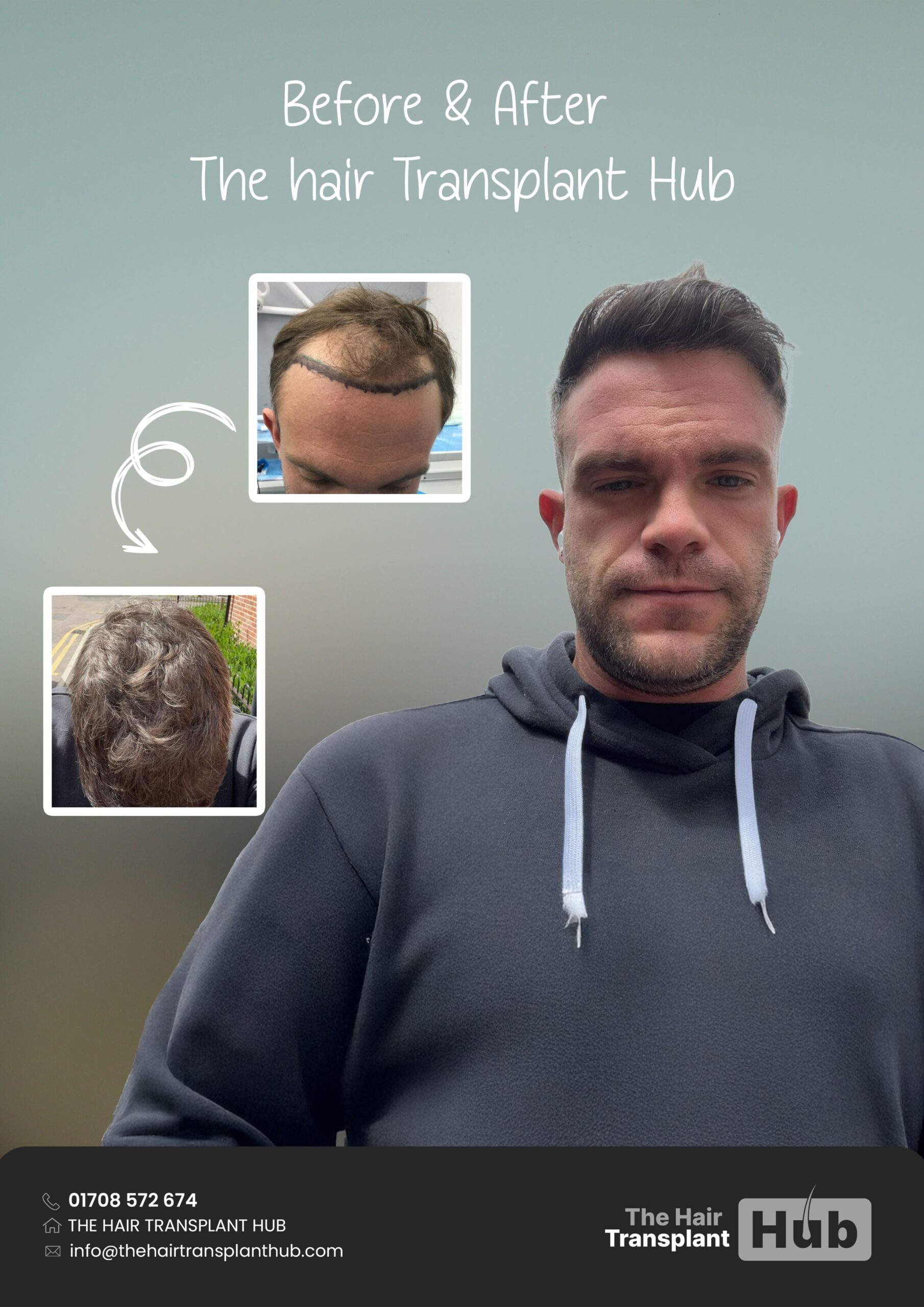
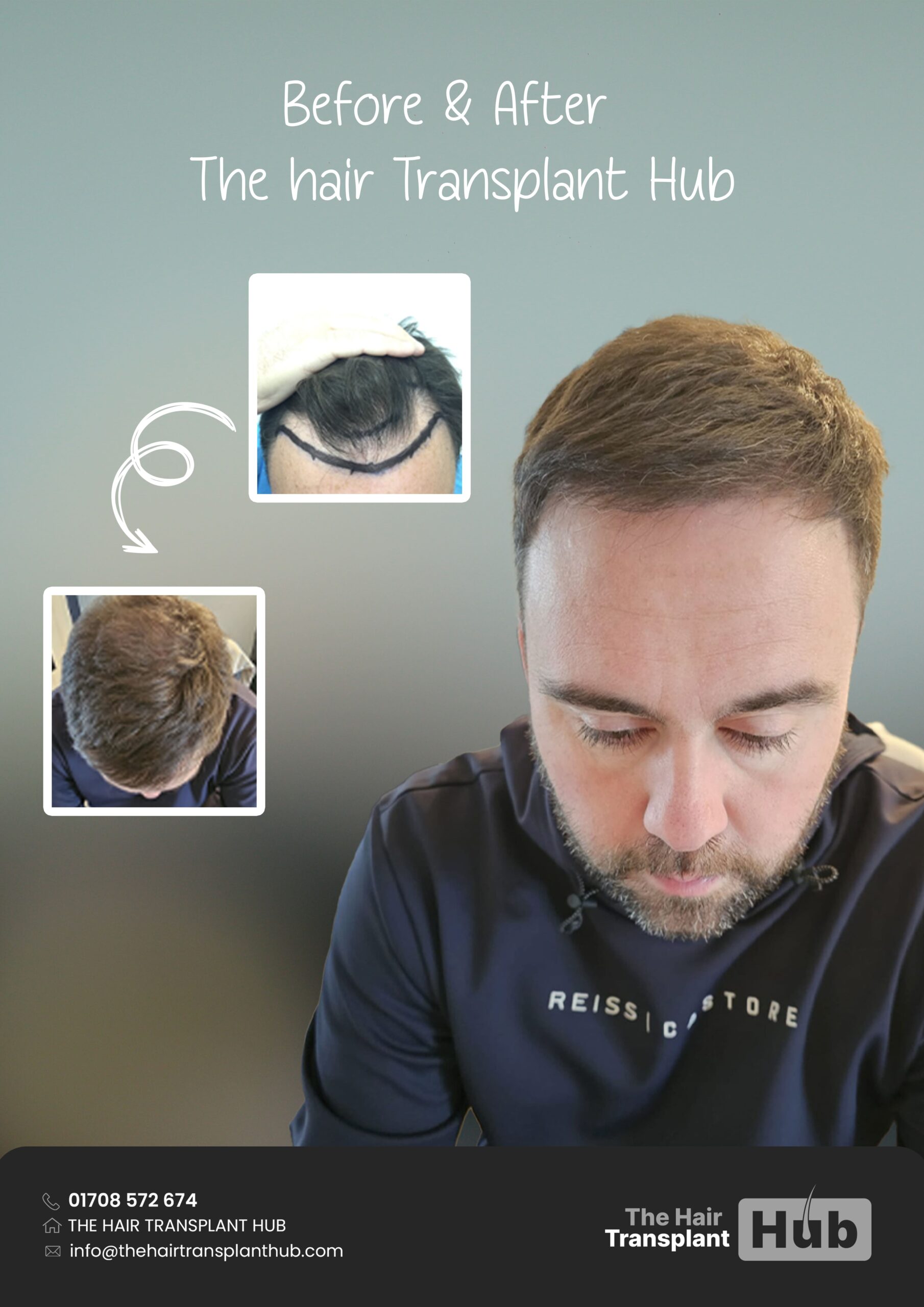
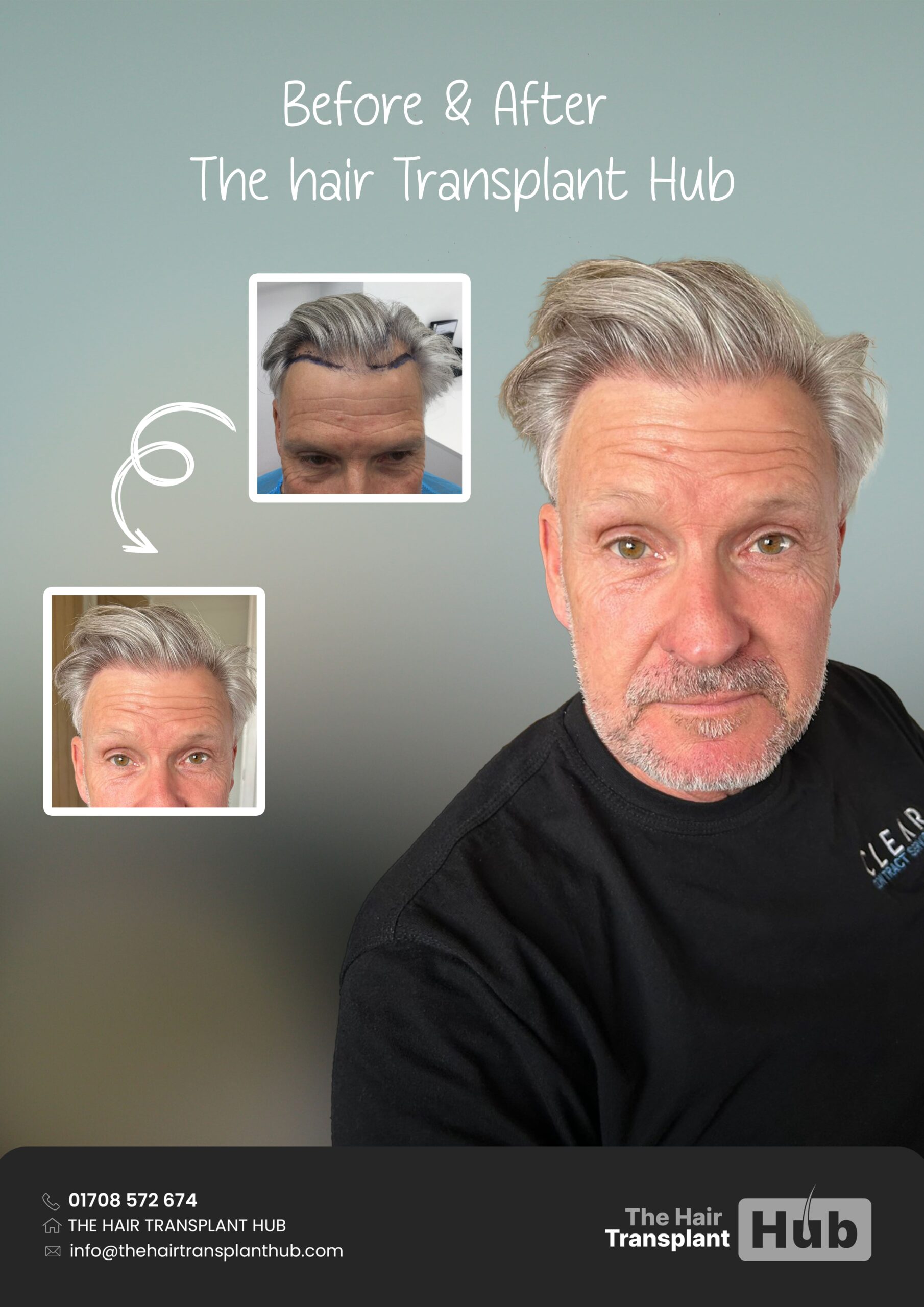
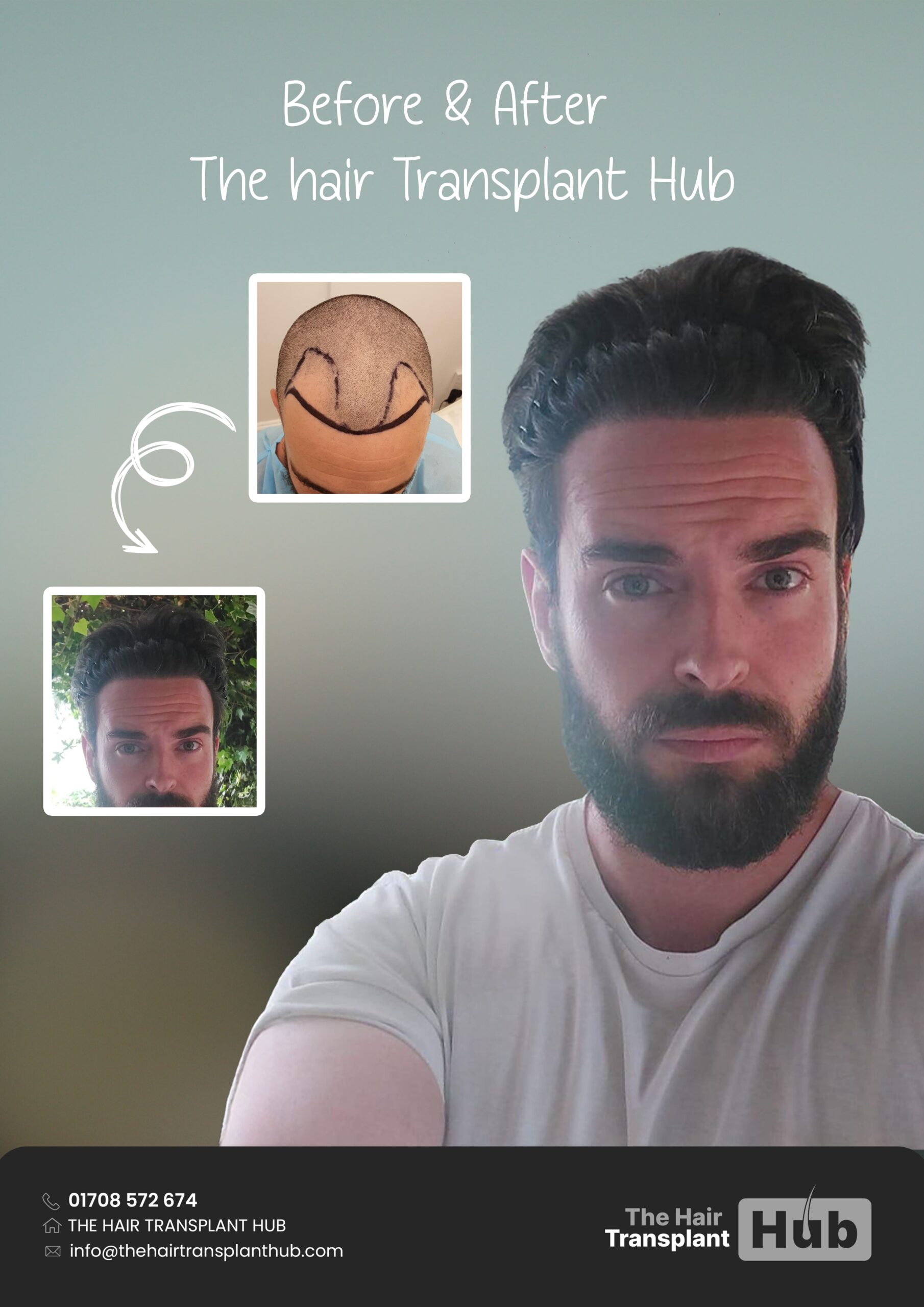
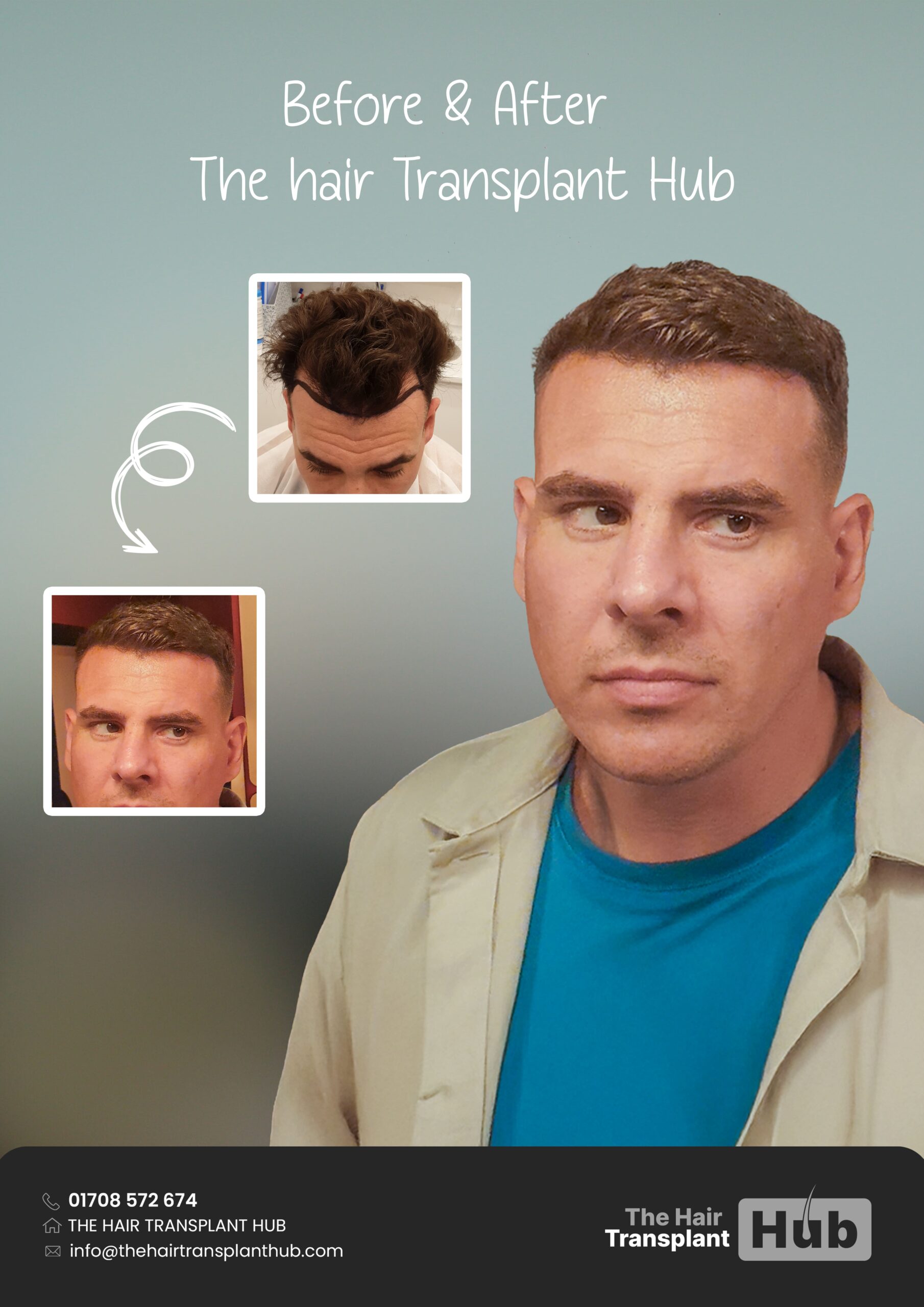
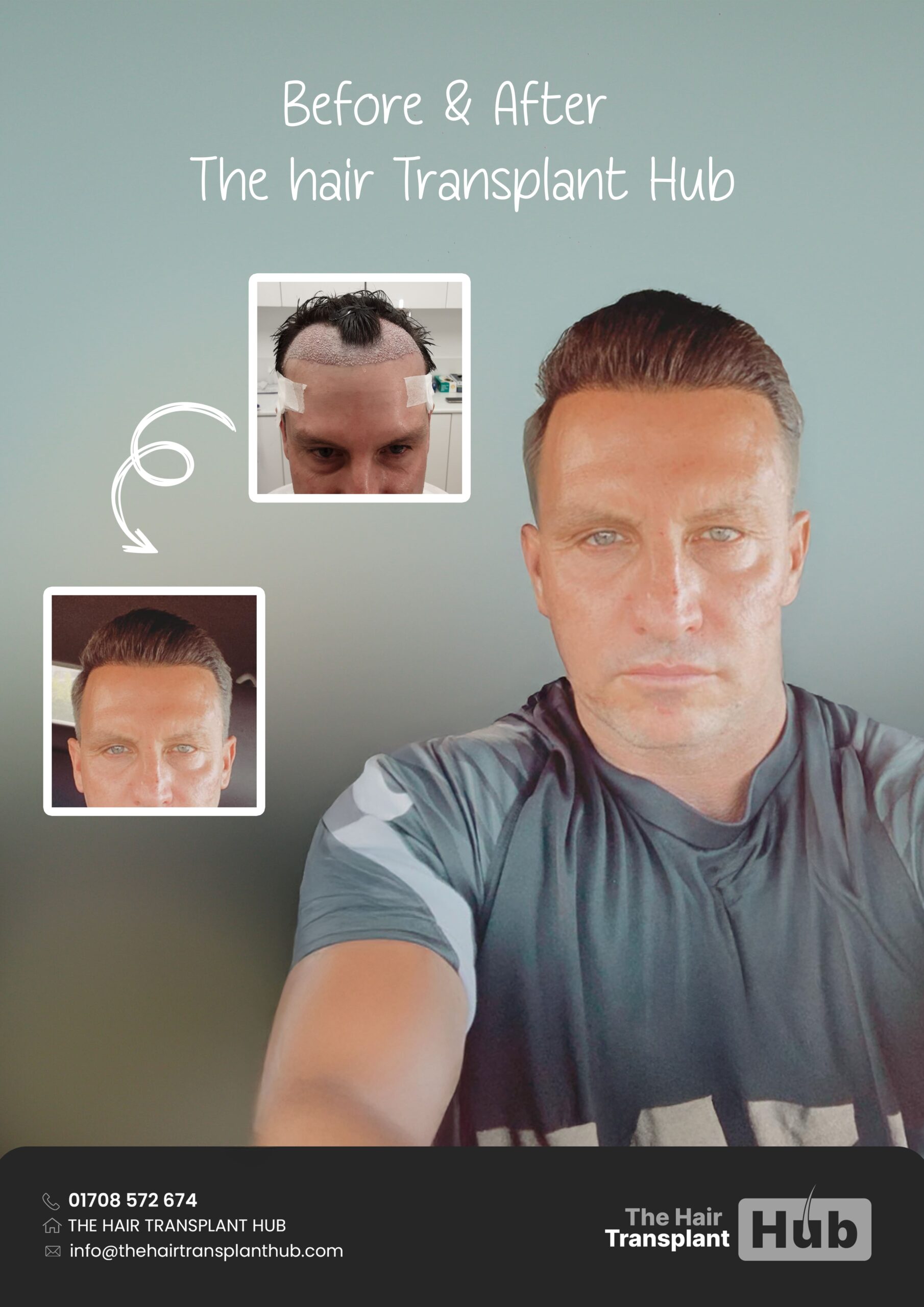
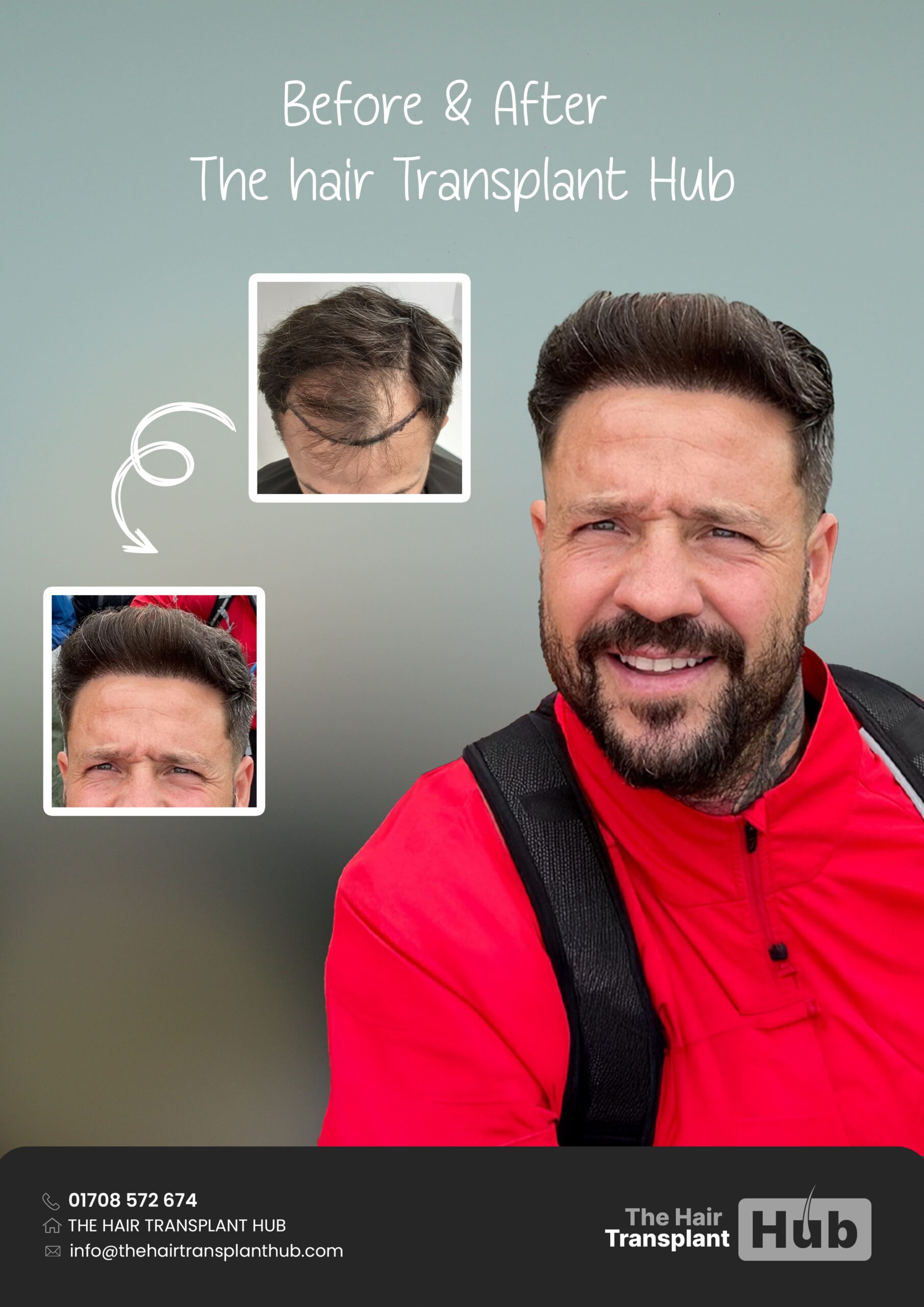
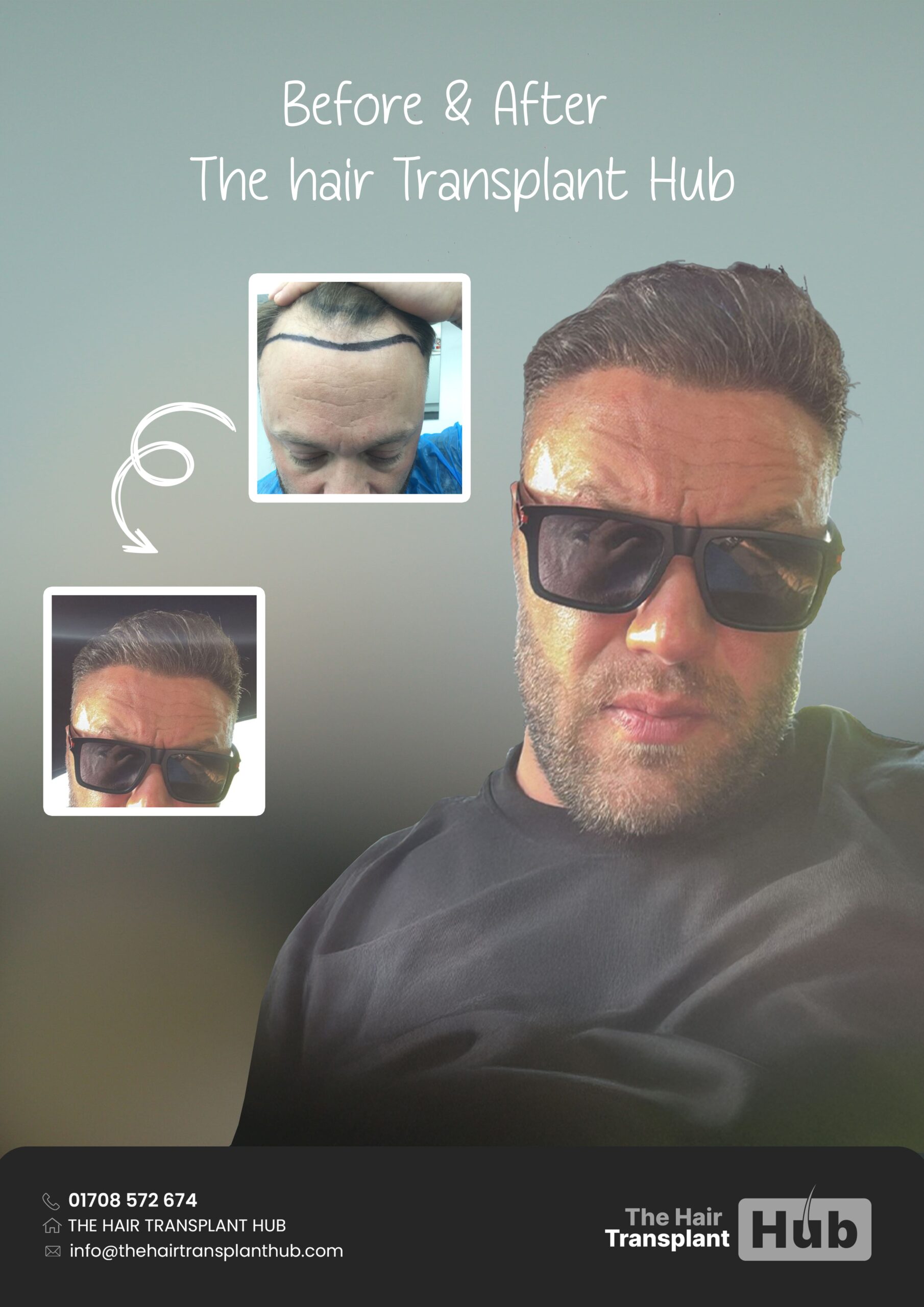
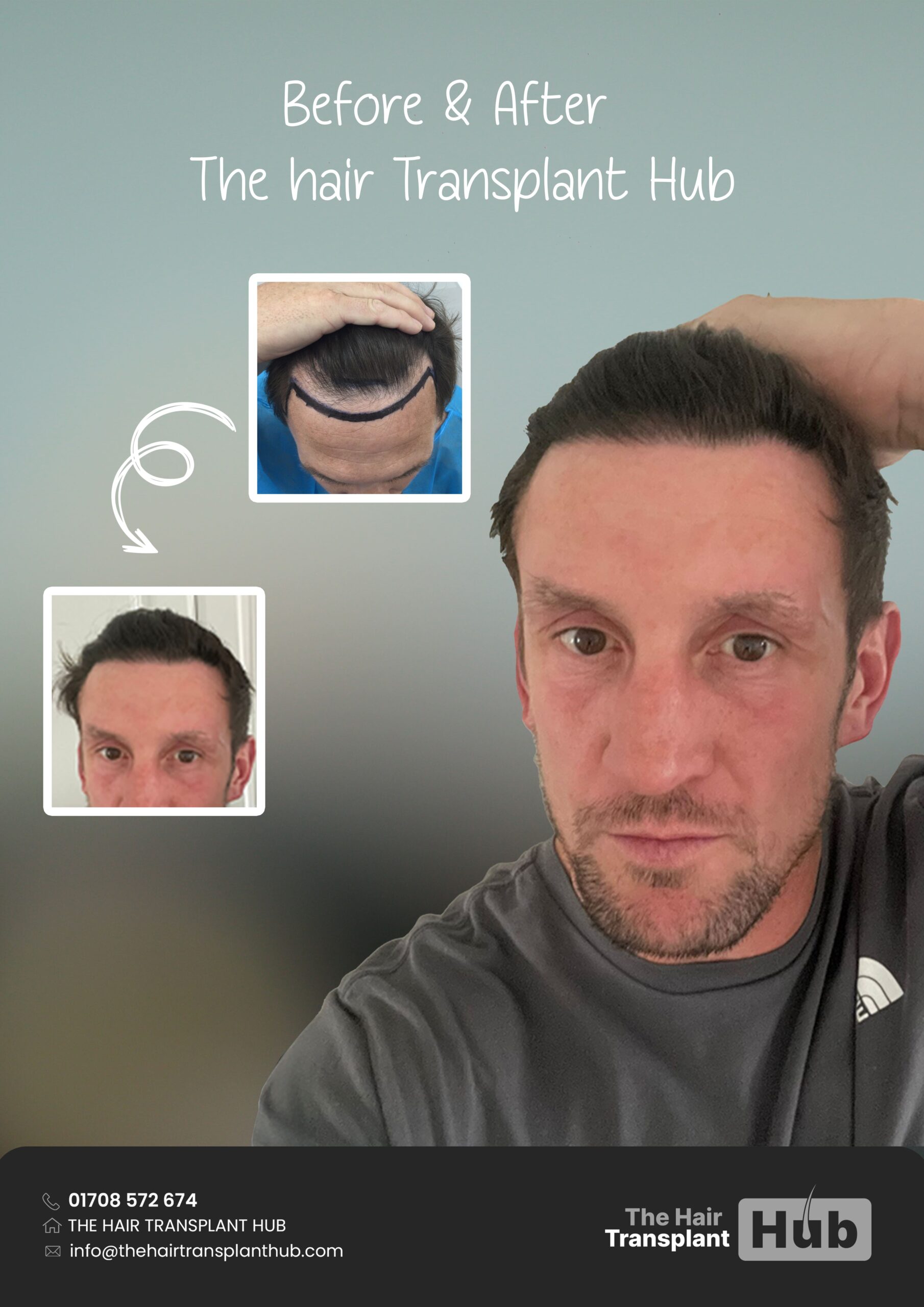
Browse patient stories, before and after photos and a realistic month-by-month timeline of what to expect as your transplanted hair grows.
Browse patient outcomes across different hair loss patterns and treatment approaches.
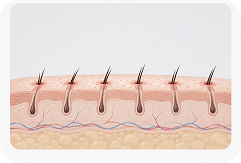
Hair grows slowly. Knowing the stages makes the first months easier.
DAY 0
Grafts are extracted and placed under local anaesthetic.
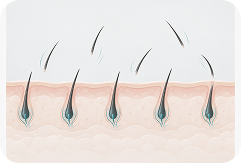
DAYS 7 TO 10
Redness settles and the small crusts around the grafts clear.
WEEKS 2 TO 8
The transplanted hairs fall out. This is expected and temporary.
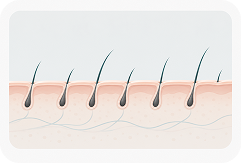
MONTHS 3 TO 4
New hairs begin to come through.
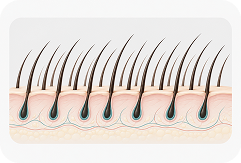
MONTHS 12 TO 18
Density builds month by month to the full result.
Illustrative, not to scale. Typical timings from the clinic’s patient guidance; individual results vary.
A successful hair restoration is not about creating more hair everywhere. It is about thoughtful planning, natural density and a hairline designed to complement your features.
Meet the experienced professionals responsible for assessing your hair loss, planning your treatment and supporting you throughout your restoration journey.
A hair transplant is a procedure that relocates suitable hair follicles from a donor area to areas experiencing thinning or hair loss. It helps restore natural-looking hair growth and improve hair density.
The number of grafts depends on your level of hair loss, donor hair availability, and desired density. Your surgeon will assess your hair during a consultation and recommend a suitable treatment plan.
FUE may be suitable if you have sufficient donor hair and are experiencing hair thinning or hair loss. A consultation with a qualified surgeon will help determine whether this technique is right for you.
A hair transplant procedure typically takes between 4 and 8 hours, depending on the number of grafts required and the complexity of the treatment.
Initial hair growth usually becomes visible around 3 to 4 months after the procedure. More noticeable results develop over 6 to 9 months, with full results typically appearing within 12 to 18 months.
Most patients can return to light daily activities within a few days. However, the scalp may experience mild redness, swelling, or scabbing, which gradually settles during recovery.
The procedure is carried out under local anaesthetic, so most patients feel little more than the initial injections. Some tenderness and swelling in the first few days is normal and is usually managed with simple pain relief and the aftercare guidance we provide.
We use essential cookies to make our website work. With your permission, we would also like to use analytics and video cookies to understand how the site is used and improve it. You can change your choice at any time. Read our Privacy Policy.